Stevan Mraovitch is a New York City Filmmaker Who Brings Both Talent and Ambition to Storytelling
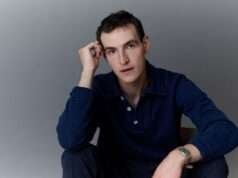
Stevan Mraovitch is a New York City born filmmaker of Taiwanese and Serbian heritage, raised in Paris. His work often braids those cultures together on screen. Mraovitch studied at ESEC in Paris and earned his MFA at Columbia University, where a key mentorship with producer Michael Hausman shaped the way he approaches story and production.
He has collaborated with artists he admires, including David Mamet, Barry Levinson, and Julie Delpy. His debut feature, “Holidays at All Costs”, won both the Audience and Jury Awards at the Austin Film Festival. He has also published a poetry collection that led to a collaboration with Serbian painter Petar Omcikus, which still impacts his visual storytelling.
You can read our review of his film “Doctor, Doctor” here.

INFLUX: What are you currently working on that you can share with us?
MRAOVITCH: Over the past 18 months I completed two indie features. “Doctor, Doctor” is available on Apple TV and Tubi. My French feature “Where There Is Love, There Is No Darkness” is on the festival circuit and it has already received Best World Cinema Narrative Feature at Kansas City FilmFest International and a Special Jury Award at the Arizona International Film Festival. I am also writing a new project to be shot in France. It is early, so I cannot share more, but I am excited about where it is headed.
INFLUX: What are your hopes for your current project?
MRAOVITCH: Like most indie filmmakers, I want the widest possible audience and a real conversation afterward. “Doctor, Doctor” uses farce and dark comedy as a lens on our recent reality, so I hope it sparks debate as much as laughter. “Where There Is Love, There Is No Darkness” is a humanistic social drama, and my hope is that Seydou’s journey nudges viewers toward empathy for the invisible workers who keep our cities running. Together they show two sides of my voice, political satire and intimate social realism.

INFLUX: What sparked “Doctor, Doctor,” and why tell it as a farce?
MRAOVITCH: The film grew out of the pandemic’s absurdity and a personal moment with overprotective gear that felt funny and poignant at the same time. Farce and surreal comedy let me examine fear, manipulation, and isolation inside a rural clinic without turning the movie into a lecture. The tone tips its hat to Molière while staying contemporary, so humor disarms the audience before the darker truths land. The goal was to follow a frightened hypochondriac who finds courage when a corrupt system pushes him too far.
INFLUX: How did you shape the look and camera language of “Doctor, Doctor”?
MRAOVITCH: We built a cohesive pastel palette and precise compositions, then paired that with single take medium shots on a 35 mm lens to let performances breathe. A consistent mid wide perspective was our home base, which kept geometry honest in the clinic, let jokes play in frame, and made the staging feel immediate. The blend of playful color and disciplined blocking keeps the film buoyant while a low simmer of suspense runs underneath.
INFLUX: What role does the score play, and why those instruments?
MRAOVITCH: The music avoids heavy thriller cues and leans into a quirky, enchanting tone that tracks Oliver’s anxiety and the villains’ charm. We used jaw harp, bass clarinet, contrabassoon, strings, and drums, plus found sounds and the composer’s own voice to create a playful but propulsive texture. That palette keeps the suspense light on its feet and lifts the emotional turn at the center of the story.
INFLUX: Why cast Steven He, and what did he bring to the film?
MRAOVITCH: Casting Steven was both artistic and symbolic. At a time of rising anti Asian sentiment, we wanted a lead who could embody resilience and undercut stereotypes while bringing precise comedy craft. Steven also bridges digital and film cultures, which sharpened our timing on set and helped the character feel specific, modern, and human
INFLUX: What do you hope audiences feel and discuss after “Doctor, Doctor”?
MRAOVITCH: I want people to laugh hard, then talk about fear, the systems that exploit it, and how acceptance can turn a perceived weakness into strength. The ideal ride is a mix of suspense and release that ends in a real sense of self acceptance and connection. If viewers leave energized, a little braver, and ready to argue and reflect, the film has done its job.
INFLUX: What have been your greatest challenges as an indie filmmaker?
MRAOVITCH: Financing without losing the soul of the project, and then cutting through the noise on release, are the twin hurdles. Wearing multiple hats as writer, director, producer, and editor can be brutal, so I build lean workflows and rely on transparent communication to keep crews safe, focused, and inspired. Because my stories straddle languages and countries, scale is a constant puzzle that balances ambition and resources. On “Doctor, Doctor,” navigating production during the strike meant problem solving under SAG-AFTRA’s interim agreement. On “Where There Is Love, There Is No Darkness,” we shot during the Paris Olympics and worked within tightly limited permit windows.
INFLUX: What has been your most significant accomplishment as a filmmaker?
MRAOVITCH: My first feature, “Holidays at All Costs,” won both the Jury and Audience Awards at the Austin Film Festival. That milestone validated my voice and gave me the confidence to keep taking bold risks. More recently, “Where There Is Love, There Is No Darkness” earned Best World Cinema Narrative Feature at Kansas City FilmFest International and a Special Jury Award for Bridging Cultures at Arizona IFF. These recognitions encouraged me to remain human centered while pushing my craft.
INFLUX: Tell us about some of your past projects and where we can watch them if they’re available?
MRAOVITCH: “Doctor, Doctor” is a dark comedy starring Steven He, Damian Young, Guillermo Ivan, and Francesca Root Dodson. It follows a neurotic hypochondriac who is forced to impersonate a doctor and who stumbles into a clinic’s web of corruption. You can watch it now on Apple TV and Tubi. “Where There Is Love, There Is No Darkness,” starring Oumar Diaw and Albert Delpy, follows a Senegalese delivery rider in Paris whose unexpected friendship with an elderly Parisian becomes a small light in a difficult city. The film continues its festival run.
INFLUX: What goals to you have for yourself moving forward?
MRAOVITCH: Now that I have proven I can make features with almost nothing and make them connect, I am ready to step up. My goal is to partner with established production companies and studios while protecting the voice that brought me here. A larger budget means more shooting days and room to craft scenes with precision. It also opens the door to richer design, locations, and camera movement, so the story can be expressed at its full potential.
INFLUX: What advice would you give to your younger self just starting out?
MRAOVITCH: Care less about what people think and focus on the work. Set short term, mid term, and long term goals, then reverse engineer the steps each day until they are real. Protect your focus, and tune out the voices that only say it is impossible.
Want to learn more or follow the career of Stevan Mraovitch?
Doctor Doctor on Apple TV
His Personal Instagram