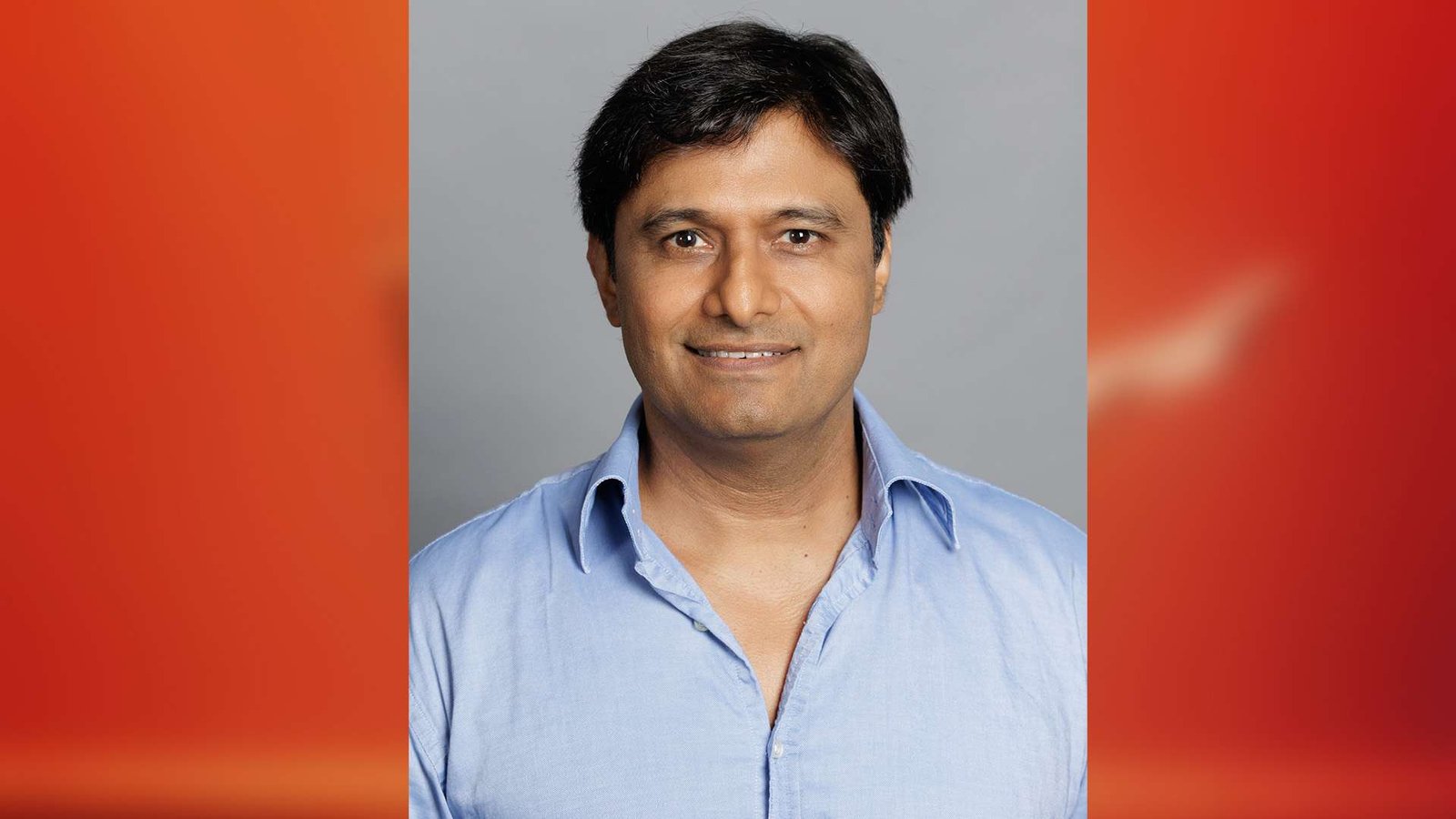

For Anmol Mishra, filmmaking is less about answers than unease, and the stories that linger are the ones that gently shift your sense of reality long after the screen goes dark.
Following our recent review of Romancing Sydney, a film we praised for its heartfelt performances, clearly defined characters, and emotional sincerity, INFLUX sat down with writer-director Anmol Mishra to talk about his creative journey. Known for his character-driven storytelling and grounded, emotionally honest approach, Mishra has spent years working independently across writing, directing, and hands-on production, developing a voice that blends cinematic craft with a documentary-like sensitivity to real people and real moments.
In this wide-ranging conversation, Mishra discusses the challenges and rewards of indie filmmaking, the philosophy behind Romancing Sydney, and his ambitions for the future, including an upcoming Lovecraftian project that leans into psychological unease rather than spectacle. From collaboration and constraint to cosmic horror and creative doubt, Mishra offers thoughtful insight into what drives his work and why he continues to chase stories that feel intimate, human, and quietly powerful.
You can read our review of Romancing Sydney here.
INFLUX: Thanks for taking some time for the interview. Can you tell us what you are currently working on?
Mishra: I’m deep into developing a mind‑bending Lovecraftian film that revolves around the mythology of Cthulhu — not just in the loud, tentacled‑monster sense, but in the psychological, reality‑fracturing way Lovecraft intended. I’m far more interested in the implications of cosmic horror than the spectacle of it. The story follows characters whose perception of reality begins to erode after encountering something they were never meant to understand. It’s less about what they see and more about what their mind can’t unsee.
INFLUX: What are your hopes and goals for this upcoming Lovecratian project?
Mishra: My biggest hope for this film is to capture the essence of cosmic horror in a way that feels genuinely unsettling — not because of what’s shown, but because of what the audience starts to imagine on their own. Lovecraft’s world is built on the terror of the unknown, and I want this project to honor that by creating a psychological experience rather than a creature‑feature spectacle.
In terms of expectations, I’m aiming for a film that lingers. Something that stays with viewers long after the credits roll — the kind of story that makes them question what they saw, what they didn’t see, and what might still be lurking just outside the frame. If people walk away feeling slightly unmoored, like reality shifted a few degrees while they weren’t looking, then I’ve done my job.
As for goals, I want this project to push my craft forward. Visually, narratively, and structurally. I’m experimenting with nonlinear storytelling, sound‑driven tension, and subtle visual distortions that mirror the protagonist’s unraveling mind. I want to prove — to myself as much as anyone — that indie filmmaking can tackle cosmic horror with ambition and restraint, without relying on massive budgets or heavy CGI.
Ultimately, the goal is simple: create a film that feels bold, atmospheric, and deeply human, even while brushing up against the incomprehensible.
INFLUX: What have been your greatest challenges as a filmmaker?
Mishra: One of the biggest challenges has been learning to build something ambitious with limited resources. Indie filmmaking forces you to become incredibly inventive — you’re constantly negotiating between the story in your head and the reality of your budget, your time, and the people you can bring on board. But that constraint also sharpens your instincts. It teaches you what actually matters in a scene and what’s just noise.
Another challenge is wearing every hat at once. When you’re indie, you’re not just the filmmaker — you’re the producer, the logistics person, the problem‑solver, the one hauling gear at midnight. It’s rewarding, but it can be exhausting. You have to stay committed to the vision even when the process gets messy.
And honestly, the psychological side is its own challenge. You’re constantly battling self‑doubt, perfectionism, and the fear that the story won’t land the way you hope. Indie filmmaking requires a weird mix of stubbornness and vulnerability — you have to be open enough to create something honest, but stubborn enough to keep going when everything feels uphill.
But those challenges are also what make the work meaningful. Every project becomes a kind of personal evolution. Every obstacle forces you to grow. And that’s part of why I keep doing it.
INFLUX: As you continue you your journey, what has been your most significant accomplishment?
Mishra: Honestly, my biggest accomplishment hasn’t been a single award or a festival moment — it’s been the ability to take an idea that lived only in my head and turn it into something real, something that other people can feel. Every time a project moves from a scribbled note to a finished film, that transformation feels like the real achievement.
If I had to point to one milestone, it would be the first time an audience responded emotionally to my work — not politely, but genuinely. When someone came up after a screening and told me the film made them rethink something in their own life, that was the moment I realized I wasn’t just making films; I was communicating. That connection — that invisible thread between creator and viewer — is the accomplishment I’m most proud of.
And on a personal level, staying committed to the craft despite the uncertainty, the constraints, and the constant self‑doubt feels like its own kind of achievement. Indie filmmaking is a long game, and the fact that I’m still here, still creating, still pushing myself — that’s something I value deeply.
INFLUX: Tell us about some of your past projects and where we can watch them if they’re available?
Mishra: Life In a Day (2011) is available on YouTube,
Death (2024) is streaming on Apple TV , YouTube Movies, and Gumroad. Romancing Sydney (2025) is on Amazon Video, Apple TV, YouTube Movies, and on Gumroad (for viewers in locations not served by these major VOD vendors).
INFLUX: What goals to you have for yourself moving forward?
Mishra: Moving forward, my biggest goal is to keep expanding the scale and emotional depth of the stories I tell. I want each project to challenge me in a new way — whether that’s through more complex characters, bolder visual language, or narratives that push into unfamiliar territory. I’m especially interested in exploring genre through a more personal lens, taking things like cosmic horror or psychological drama and grounding them in very human experiences.
I also want to build a stronger creative ecosystem around my work — collaborating with actors, writers, and technicians who elevate the material and bring their own perspectives into the process. Indie filmmaking can feel solitary at times, so cultivating a consistent team is something I’m actively working toward.
And on a personal level, I want to keep growing as a storyteller. Staying curious, staying uncomfortable in the best way, and continuing to refine my voice. If I can look back each year and see that I’ve taken creative risks and evolved in my craft, then I’m moving in the right direction.
INFLUX: What advice would you give to your younger self just starting out?
Mishra: I’d tell my younger self to stop waiting for permission. You don’t need the perfect camera, the perfect script, or the perfect moment to start making films. Just begin — even if it’s messy, even if it’s small. The work teaches you far more than the planning ever will.
I’d also remind myself that doubt is part of the process, not a sign to stop. Every filmmaker you admire has questioned their own voice at some point. The trick is to keep creating anyway, to trust that your perspective has value even when you can’t see it clearly yet.
And I’d say: protect your curiosity. Don’t rush to imitate what’s popular or “marketable.” Follow the ideas that haunt you, the ones you can’t shake. That’s where your real voice lives.
Finally, I’d tell myself to enjoy the scrappy phase — the late nights, the tiny crews, the improvisation, the chaos. Those early projects may not be perfect, but they’re pure. They’re where you learn who you are as a filmmaker. And that’s something you only get once.
INFLUX: With a Lovecraft project in the works, what is that draws you to cosmic horror?
Mishra: Cosmic horror gives me a canvas that’s both limitless and deeply intimate. It’s not about jump scares or monsters — it’s about confronting the vastness of existence and the fragility of human perception. I’m fascinated by stories where the real terror comes from the mind trying to make sense of something it was never built to understand. That tension between the known and the unknowable is where I feel most creatively alive.
INFLUX: Can you tell us more about how you approach visual storytelling when dealing with abstract or surreal concepts?
Mishra: I start with emotion. Even the most surreal moment needs to be anchored in what the character is feeling. From there, I build the visuals around distortion, contrast, and subtle shifts in perspective — things that make the audience question whether they’re seeing the world as it is or as the character fears it might be. I’m a big believer in restraint; the smallest visual disruption can be more unsettling than a full-blown effect.
INFLUX: With filmmaking being so reliant on teamwork, what kind of collaborators do you gravitate toward?
Mishra: I gravitate toward people who are curious, adaptable, and unafraid of ambiguity. Cosmic horror and psychological storytelling require a team that’s comfortable exploring the unknown — actors who can play internal conflict, cinematographers who think in mood and texture, and sound designers who understand that silence can be as powerful as noise. I love working with people who bring their own interpretations to the table and elevate the material in ways I didn’t expect.
INFLUX: How do you balance creative ambition with the realities of indie filmmaking?
Mishra: It’s a constant negotiation. I’ve learned to design stories that embrace limitation rather than fight it. Instead of thinking, “How do I afford this idea?” I ask, “How do I express this idea with what I have?” That mindset turns constraints into creative opportunities. Some of my favorite moments in past projects came from improvising around what wasn’t available.
INFLUX: What kind of impact do you hope your films have on audiences?
Mishra: I hope my films leave people with a lingering sense of unease — not in a traumatic way, but in a reflective one. I want viewers to walk away questioning their assumptions, noticing the quiet spaces between thoughts, maybe even feeling the world tilt just a little. If someone watches my work and feels both unsettled and strangely understood, then I’ve done what I set out to do.
Want to learn more about Anmol Mishra? Check out the links below!
www.prosya.com
www.facebook.com/prosyamedia
www.youtube.com/@prosyamedia
www.instagram.com/prosyamedia
www.tiktok.com/@prosyamedia
www.pinterest.com/prosyamedia