The Extraordinary Faith of an Unforgettable Boy
Review by Rob Shields
A Prayer for Owen Meany is one of those rare novels that feels at once mystical, intimate, funny, and devastating. It is a book that invites you in gently, almost deceptively, before revealing itself as something far larger than a typical coming-of-age story. John Irving crafts a narrative that follows childhood friends John Wheelwright and Owen Meany across decades, shaping their identities, beliefs, and destinies with an emotional power that deepens page by page. The story lingers because it blends humor with heartbreak, doubt with conviction, and the ordinary rhythms of small-town life with the extraordinary purpose embodied in one unforgettable boy.
Owen Meany is a character unlike any other in modern literature. His unmistakably small stature and distinct voice make him stand out from the moment he appears, but it is his unwavering certainty in his own purpose that makes him transcendent. Irving avoids sentimentality by grounding Owen’s faith in a world that rarely understands or welcomes it. He is simultaneously strange, angelic, infuriating, and inspiring. You can’t help but feel that he is someone who does not belong to the rest of us, someone whose belief is too pure to exist without consequence.

John Wheelwright, the narrator, serves as our window into Owen’s world, and his devotion to his friend forms the emotional backbone of the novel. John’s reflections as an adult are filled with grief, longing, humor, and confusion. His skepticism stands in stark contrast to Owen’s certainty, yet their lives remain interwoven in ways neither can escape. Irving’s choice to narrate through John’s flawed, human perspective gives the story its emotional authenticity. We feel what John feels because he does not hide the complexities of friendship: the intimacy, the resentment, the awe, the loss.
One of the novel’s greatest strengths is the way Irving builds meaning slowly and deliberately. Every seemingly small moment, every baseball game, every school play, every offhand conversation, is part of a tapestry that reveals its pattern only near the end. When the final pieces fall into place, the effect is stunning. Irving asks us to consider the nature of destiny, faith, and sacrifice, but never through didactic exposition. Instead, he lets the characters live their questions, and the answers arise naturally from their choices and relationships.
The novel is also an examination of American culture, religion, and politics. Irving sets the story against the backdrop of the Vietnam War, shifting moral landscapes, and the uncertainty of the late twentieth century. Yet none of these elements overshadow the emotional core. They provide context that enriches the personal journeys rather than overtaking them. Irving is at his best when showing how the external chaos of a nation mirrors the internal struggles of its people.
What makes A Prayer for Owen Meany endure is its willingness to embrace contradictions. It is funny and tragic, cynical and hopeful, grounded and miraculous. The prose manages to be both patient and propulsive. Irving’s sentences are often long, rich with detail, yet the story never drags. Instead, the narrative feels like life itself: full of digressions, humor, heartbreak, and revelation.
Owen’s ultimate purpose, the destiny he foresees with clarity long before anyone else understands it, is handled with remarkable care. Irving ties together threads from throughout the novel with such precision that the final chapters feel both surprising and inevitable. It is difficult to describe their impact without diminishing their power, but the emotional payoff is profound. It is in those final moments that the novel transcends its genre and becomes a deeply spiritual experience, even for readers who do not share Owen’s faith.
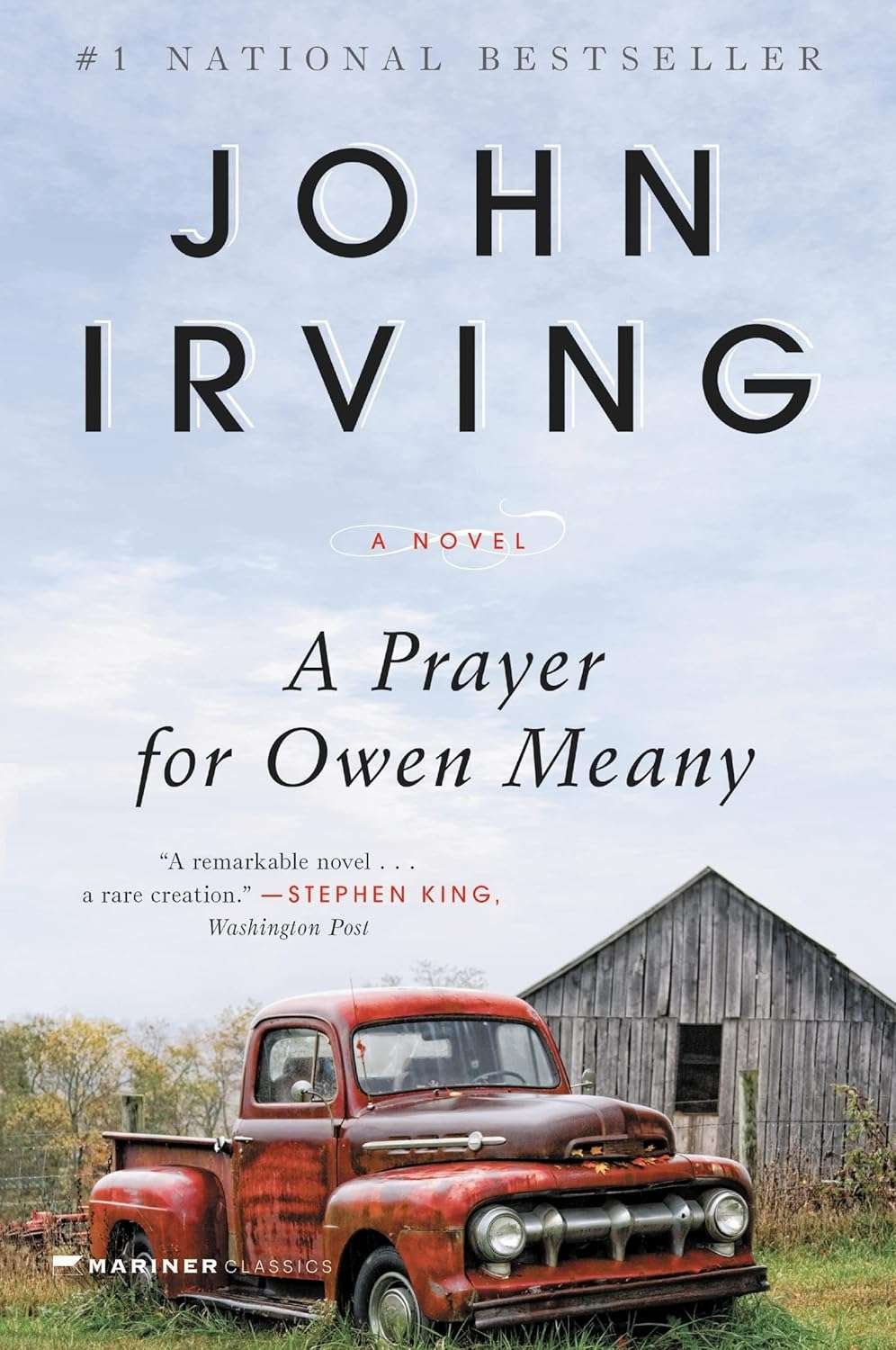
Irving’s exploration of belief is not narrow or prescriptive. It does not require the reader to adopt or even sympathize with Owen’s worldview. Instead, it asks us to consider the possibility that meaning can exist, even in the midst of confusion and suffering. It invites us to see the extraordinary in the ordinary, the sacred in the mundane, the eternal in the fleeting. Few novels manage to speak so deeply to both believers and skeptics alike.
By the time the story concludes, the reader understands why John Wheelwright’s life remains defined by Owen’s presence. Some friendships reshape us permanently. Some losses never fade. Some people come into our lives with a purpose we only understand much later. Irving captures that sense of cosmic inevitability with rare emotional intelligence.
A Prayer for Owen Meany is an unforgettable novel that resonates long after the last page. It is not merely a book about faith or destiny but a book about love, friendship, and the mysterious forces that shape a life. It is a masterfully crafted story that rewards patient reading and reflection. Very few modern novels manage to be both emotionally sweeping and philosophically rich, yet Irving achieves both with remarkable elegance.
This is a story that stays with you, a story that makes you think, a story that makes you feel, and above all, a story that reminds you how deeply one life can affect another.
Rob’s Grade: 9.5/10
Find on Amazon