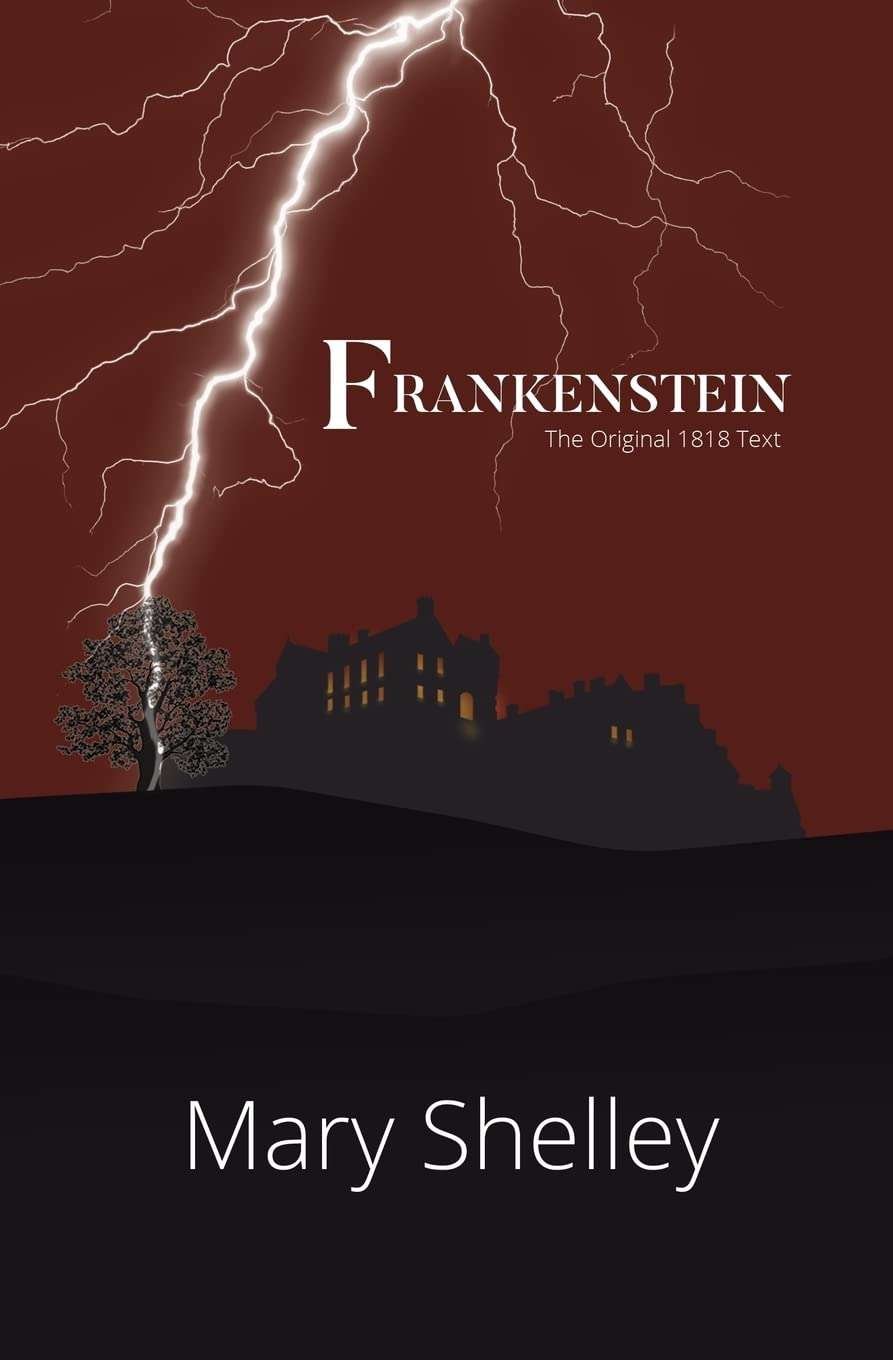
The Burden of Creation: A Review of Frankenstein
Review by Rob Shields
Mary Shelley’s Frankenstein stands as one of the most influential novels in literary history, a cornerstone of both science fiction and Gothic horror. It is a work that has shaped storytelling for two centuries, inspiring countless adaptations, imitations, and cultural echoes. Yet for all its prestige, returning to the original text can be a surprisingly demanding experience. Shelley’s novel is a complex, heavily layered meditation on creation, ambition, and humanity, but it requires patience, attention, and a willingness to wade through dense emotional and philosophical passages. Readers who know the creature from movies or modern retellings may find themselves startled at how challenging and introspective the source material truly is.
From the outset, the novel strikes a tone of brooding introspection. Shelley builds her story carefully, almost methodically, through narratives inside narratives, often slowing the pace to dive into memory, regret, and self-examination. Victor Frankenstein, in particular, spends long stretches recounting his childhood, his education, and the intellectual path that leads him toward his fateful experiment. These sections feel weighty and deliberate, reflecting both early nineteenth century prose style and Shelley’s commitment to exploring the psychological roots of Victor’s obsession. For many readers, this part of the book can feel like trudging through deep snow: atmospheric, meaningful, but undeniably heavy.
Once the creature enters the story, the novel gains more emotional force, though it still maintains a literary density that modern readers may find demanding. Shelley’s creature is nothing like the flat grunting monster that later films would cement in pop culture. Instead, he is articulate, philosophical, and heartbreakingly aware of his own suffering. His long monologue about rejection, abandonment, and his attempt to understand human society remains one of the most haunting sections of nineteenth century literature. It is also one of the most challenging, as the creature’s reflections on morality, loneliness, and resentment swell far beyond simple plot movement. Shelley was writing not only a horror tale but also a meditation on what it means to be human, and she makes the reader work to appreciate the depth of that question.
This is where the novel’s brilliance and its difficulty most collide. Frankenstein is rich with ideas, almost to the point of bursting. Themes of responsibility, guilt, scientific ambition, social rejection, and existential despair spill across its pages. Shelley probes these ideas with relentless seriousness, sometimes at the cost of narrative momentum. There are moments in which the novel feels less like a story and more like a philosophical treatise wrapped in Gothic atmosphere. While this complexity is part of what makes the book enduring, it also makes the experience far from light reading. Compared with Shakespeare, whose rhythm and drama often keep even his densest passages lively, Shelley’s prose can feel slow and suffocating.
And yet, the payoff is real. Beneath the ornate language and introspective passages lies a story that remains timeless for a reason. Victor’s arrogance in trying to control life, the creature’s anguish at being cast aside, and the spiraling tragedy that follows feel as relevant today as they did in 1818. The novel’s warnings about unchecked ambition, the consequences of abandonment, and the longing for connection speak across eras and cultures. Much of the modern world’s understanding of the “mad scientist” archetype can be traced directly back to Shelley’s vision. Her exploration of the relationship between creator and creation also resonates today in debates about technology, artificial intelligence, genetic engineering, and the responsibilities that accompany new forms of power.
It is striking how often readers know the idea of Frankenstein but not the actual story. The familiar stitched-together monster raised on a slab of metal is a Hollywood invention. Shelley’s creature is far more tragic and thoughtful, a blend of innocence and fury shaped entirely by neglect. Likewise, Victor is not a cackling villain but a tormented young man plagued by his own failure to foresee the consequences of his obsession. The dynamic between the two characters becomes a haunting dance of pursuit and avoidance, regret and revenge. Their final confrontation in the frozen North is still captivating in its bleakness.
Despite the novel’s greatness, it is important to acknowledge the slog many readers experience. The pacing is uneven. Certain digressions stretch on. Entire chapters feel devoted to emotional reflection rather than action. Shelley’s language, though beautiful, is often heavy, filled with long descriptive passages and complex emotional reasoning. Even readers who love the story may find themselves repeatedly pausing, adjusting, or rereading to stay fully engaged. While the novel’s philosophical depth is admirable, it makes the reading experience laborious, especially for those expecting a fast or straightforward horror narrative.
Still, once one steps back from the text itself and considers the ambition behind it, the achievement becomes clearer. Shelley wrote this work at a remarkably young age, crafting a story that would outlive generations of shifting literary taste. Her themes remain urgent. Her characters continue to provoke debate. Her creation has become a myth that transcends genre and time.
In the end, Frankenstein is a brilliant but challenging experience. It is a foundational story whose influence is immeasurable, but it demands focus and patience. The book is more philosophical than frightening, more meditative than action driven, and more interested in examining humanity than monsters. It may be a tough read, heavier in parts than many classic works, but its insights linger long after the effort is spent. For readers willing to work through its density, the reward is a story that is not only timeless but deeply, unsettlingly human.
Rob’s Grade: 8/10
Find on Amazon