Predator: Badlands proves the hunt still matters—stripping the franchise down to blood, brains, and brutal survival, and reminding us why the Predator was terrifying in the first place.
NOTE: Having recently watched it again, I reevaluated my score (increased it by .5) and tweaked the review a bit. On a second watch, I like this movie even more!
Predator: Badlands is not just a return to form for the franchise, it’s a full-on reclamation of its soul. Against all odds, and against my own expectations, Badlands manages to do what once seemed impossible: it stands shoulder to shoulder with John McTiernan’s original Predator and, remarkably, surpasses Prey. This is lean, ferocious, beautifully staged genre filmmaking that understands exactly why this series has endured for nearly four decades.

After the elegant reinvention that was Prey, many fans assumed the ceiling had been reached. That film stripped the concept back to its essentials and reminded audiences that Predator works best when it’s primal, intimate, and character-driven. Badlands doesn’t undo that lesson, it deepens it. Where Prey reintroduced the hunt, Badlands refines it, weaponizes it, and pushes it into harsher, more psychologically charged terrain.
When you learn the main characters are essentially a monster and a robot, the task of making a movie feel human, seems overwhelming. But this is where Badlands is at its best, actually.
Set in an unforgiving landscape that feels both ancient and post-apocalyptic, Badlands leans heavily into atmosphere. The environment is not just a backdrop, it’s an active participant in the story. Dust-choked horizons, blistering heat, and vast stretches of silence give the film a mythic quality. You feel the isolation. You feel the vulnerability. And when the Predator finally reveals itself, the impact is devastating.
We are also introduced to an array of otherworld life forms and an indirect tie-in to Alien: Earth with the corporate wrangling of these alien creatures.
What truly elevates Badlands is its understanding of suspense. This film knows how to wait. It trusts the audience. Rather than relying on constant action or nostalgia bait, it builds dread slowly and deliberately.
The performances are another major strength. The cast is uniformly excellent, grounding the film in emotional realism even as the body count rises. This isn’t about bravado or muscle-bound heroics. It’s about survival, adaptation, and intelligence. Watching characters learn, fail, and evolve in real time is one of the film’s greatest pleasures.
Crucially, Badlands understands that Predator stories are at their best when the humans are just as interesting as the monster (not that there are any actual humans in this movie). The film invests time in its characters, their histories, and their internal conflicts. That investment pays off when the hunt begins in earnest. Every loss feels earned. Every victory feels hard-fought. There’s a sense that survival comes at a cost, both physical and psychological, and the film never lets you forget it.
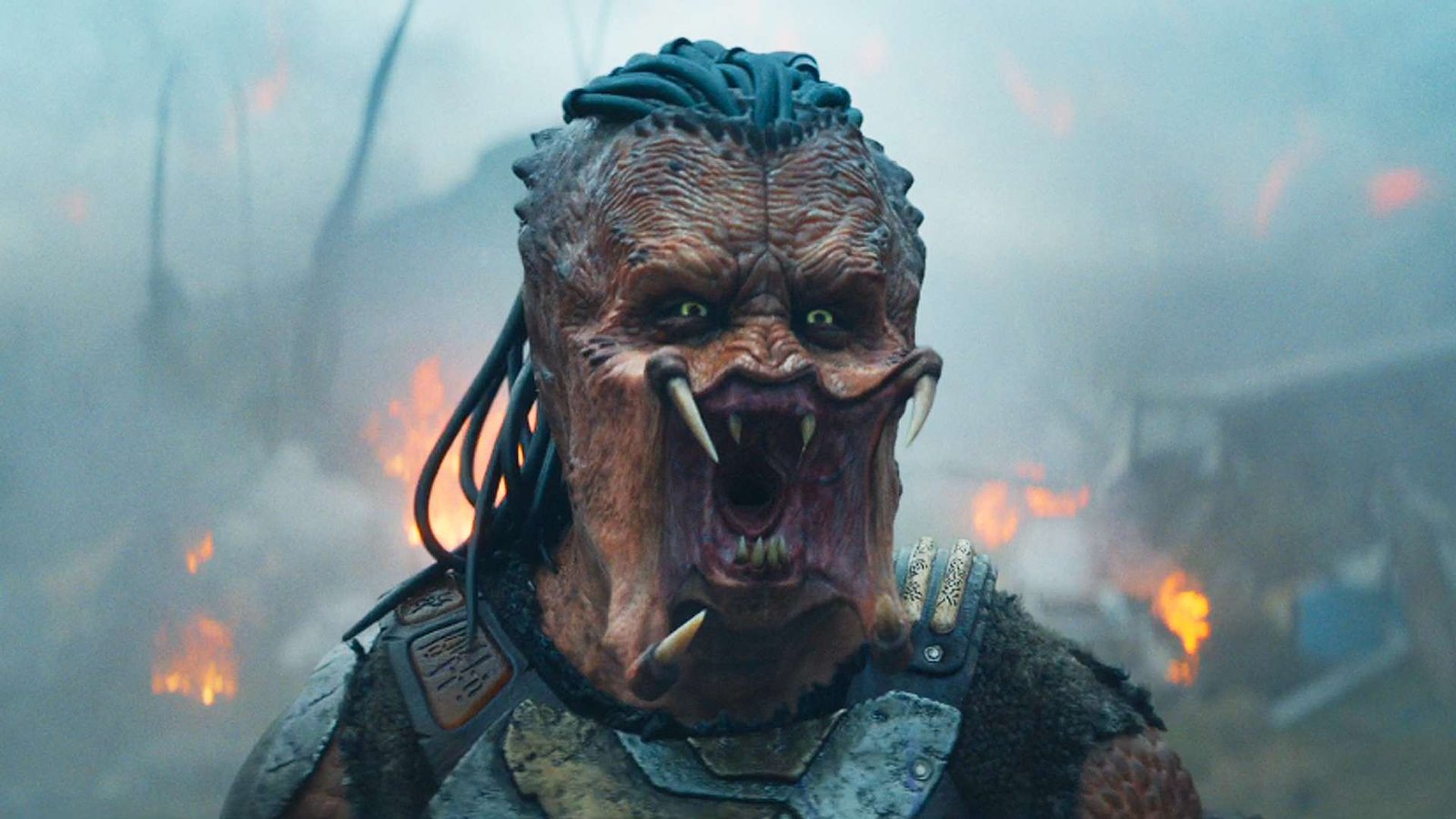
From a technical standpoint, Badlands is stunning. The cinematography is stark and purposeful, favoring wide compositions that emphasize scale and isolation, then snapping into brutal close-quarters chaos when violence erupts. The action is cleanly staged and refreshingly tactile. You always understand where you are and what’s at stake. The Predator’s design is also among the best in the franchise, honoring the iconic look while introducing subtle, unsettling variations that reinforce its alien menace, while at the same time giving him a high degree of emotional range.
Perhaps most impressive is how Badlands expands the mythology without overexplaining it. There are hints, implications, and world-building details that longtime fans will savor, but nothing is spelled out or spoon-fed. The film respects the mystery of the Predator species, treating them less as lore-heavy sci-fi creatures and more as ritualistic hunters bound by their own codes. This restraint is exactly what the franchise has needed.
We get some great world building with the Yautja (those whom we have come to know as the Predators). The protagonist, Dek, is surprisingly vulnerable and likeable, something we have not seen much when the Yautja is typically the antagonist. Dimitrius Schuster-Koloamatangi takes on the role of Dek with expertise and emotion, giving us nuances to the performance.
Elle Fanning plays both Thia and Tessa, Weyland-Yutani synthetics who have come to the planet in search of another creature, when Dek crosses their paths. As Thia, we have a dual protagonist, and a synth who seems more human than most actual people. And as Tessa, she plays the antagonist trying to fulfill the mission.
While Badlands is not a direct sequel to any of the actual movies, with the Weyland-Yutani involvement, it really is a more direct sequel to the Alien vs. Predator movies rather than any of the actual Predator movies!
By the time the final confrontation arrives, Badlands has earned every ounce of tension and release. The climax is brutal, clever, and emotionally resonant in ways the series hasn’t achieved since the original. It’s not just about who survives, but how they survive, and what they’re willing to sacrifice to do so.
In the end, Predator: Badlands doesn’t just revive the franchise, it cements its modern legacy. It proves that these films can still evolve without losing their identity. Bold, disciplined, and relentlessly gripping, this is the rare sequel that redefines what “best since the original” truly means. Against all expectations, Badlands doesn’t merely top Prey, it claims its place as one of the greatest entries in the Predator canon.
Gordo’s Score: 9/10