
The spectacularly bad, and surprisingly redeemable!
The worst of cinema, with a little something worth saving.
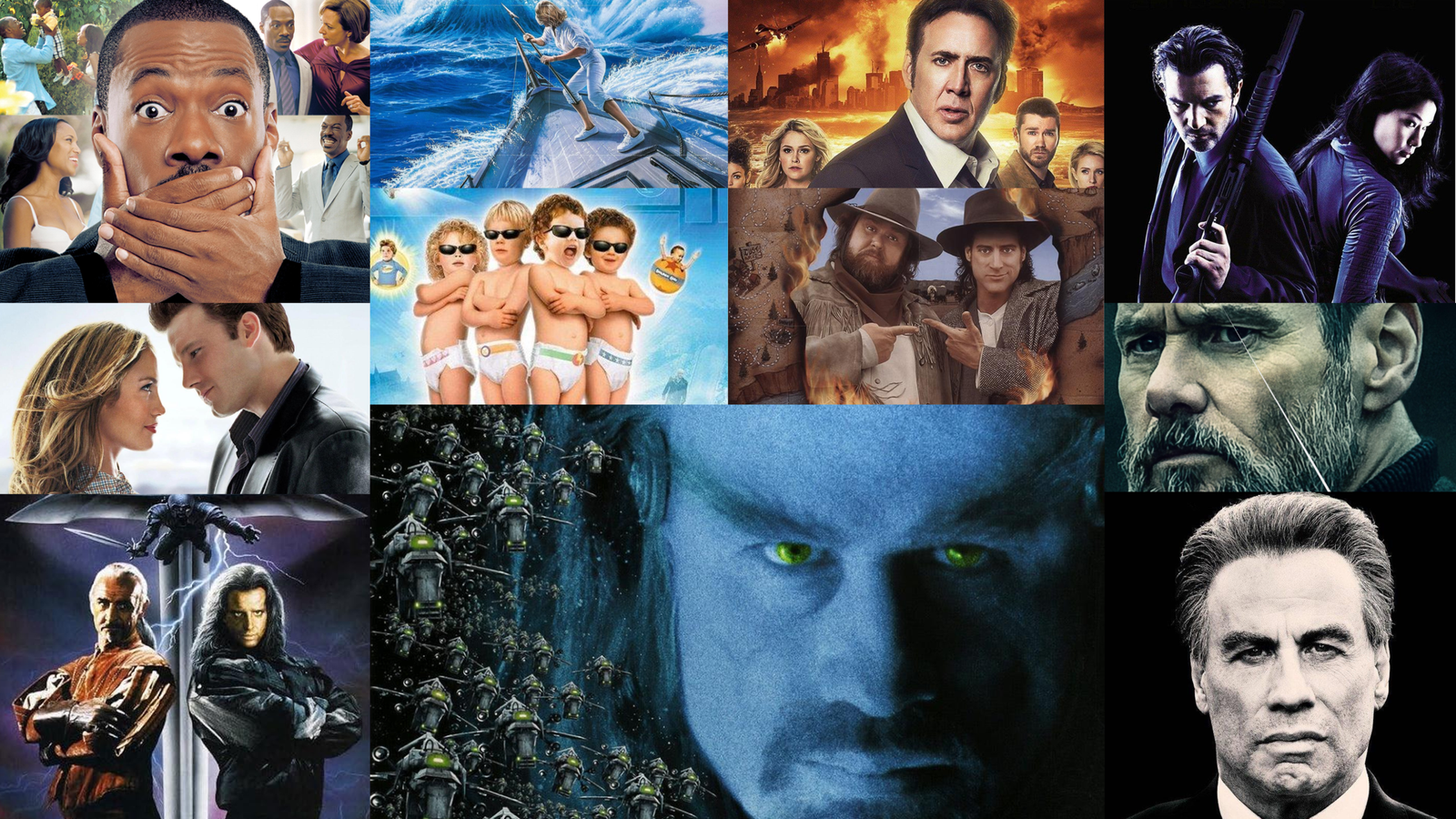
Hollywood has produced some truly terrible movies. Not just disappointing movies or films that failed to live up to expectations, but spectacular disasters that leave audiences wondering how anyone thought they were a good idea in the first place.
But here’s the thing: even a terrible movie can have something worth appreciating.
Sometimes it’s a genuinely impressive performance buried beneath a dreadful screenplay. Sometimes it’s a terrific special effect, an inspired concept, an unexpectedly good soundtrack, or a filmmaker’s sheer audacity. And occasionally, a movie is so gloriously awful that watching it becomes an entertainment experience all its own.
For this INFLUX retrospective, we’re looking at 15 notorious cinematic misfires, drawing on critical reception from Rotten Tomatoes and other major film-review sources. But rather than simply kicking these movies while they’re down, we’re giving each one a chance at redemption.
Because there’s a difference between a bad movie and a movie with absolutely nothing to offer.
It’s also worth noting that John Travolta appears three times on this list!
Research note: Rotten Tomatoes’ September 2026 worst-movies guide uses a minimum of 20 reviews for its ultra-low-rated selections. The percentages below are critics’ positive-review rates, not average scores out of 100. This is a curated list, not a strict ranking, and the redeeming qualities are our own editorial assessments.
1. Battlefield Earth
2000 · Science fiction · 3% RT
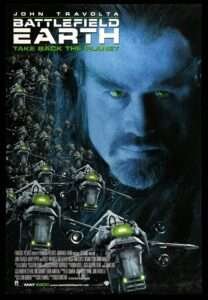 Why it’s terrible: John Travolta’s passion project is a science-fiction catastrophe of monumental proportions. Based on L. Ron Hubbard’s novel, it imagines an Earth conquered by an alien race called the Psychlos. Unfortunately, the movie is buried beneath ridiculous dialogue, bizarre camera angles, excessive Dutch tilts, and alien characters who behave like cartoon villains. Travolta spends much of the film growling through elaborate makeup, while the supposedly epic human rebellion becomes increasingly absurd.
The redeeming quality: There’s something wonderful about the sheer ambition of it all. This is a big, expensive, completely sincere attempt at creating a new science-fiction franchise. The production design is imaginative, the alien makeup is memorable, and Travolta is clearly having the time of his life. For fans of spectacular cinematic misfires, Battlefield Earth is practically essential viewing.
2002 · Action thriller · 0% RT
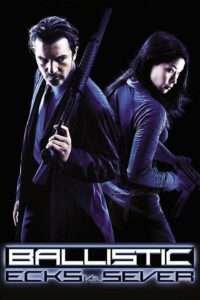 Why it’s terrible: Antonio Banderas and Lucy Liu star in an action thriller that somehow makes two charismatic performers feel almost completely interchangeable. The story involves secret agents, kidnappings, government conspiracies, and a seemingly endless supply of explosions. Unfortunately, the plot is so needlessly complicated that understanding who is fighting whom becomes an endurance test. The action is loud, the characters are lifeless, and the film never develops a compelling reason for audiences to care.
The redeeming quality: The explosions! Whatever the movie lacks in coherent storytelling, it tries to compensate for with spectacular destruction. There are some energetic stunt sequences, and seeing Banderas and Liu share an action movie remains an appealing prospect. Turn off your brain, appreciate the pyrotechnics, and you might find a little entertainment buried in the wreckage.
1987 · Horror thriller · 2% RT
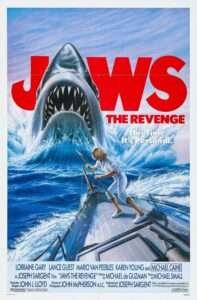 Why it’s terrible: The original Jaws was a masterclass in suspense, characterization, and filmmaking. By the fourth installment, the franchise had apparently decided that sharks could hold personal grudges against specific human families. Ellen Brody becomes convinced that a great white shark is deliberately hunting her relatives, even following the family to the Bahamas. The premise is ludicrous, the mechanical shark frequently looks ridiculous, and the climax features one of the most unintentionally hilarious confrontations in monster-movie history.
The redeeming quality: Michael Caine. The legendary actor brings an effortless charm to his role as Hoagie Newcombe, and his scenes with Lorraine Gary provide a welcome distraction from the increasingly preposterous shark business. The Bahamas locations are attractive, and the film’s brisk running time makes it a relatively painless guilty pleasure. There’s also a certain nostalgic appeal to watching one of cinema’s most famous monsters stumble through another adventure.
2003 · Romantic crime comedy · 7% RT
 Why it’s terrible: Few Hollywood disasters have been as publicly ridiculed as Gigli. Ben Affleck plays a small-time criminal who kidnaps the brother of a federal prosecutor, only to become romantically entangled with a fellow criminal played by Jennifer Lopez. What should have been an offbeat crime comedy becomes a painfully awkward mixture of romantic melodrama, crude humor, and questionable characterization. The dialogue is frequently embarrassing, the pacing is dreadful, and the movie never seems certain whether it wants to be funny, romantic, or dangerous.
The redeeming quality: Christopher Walken and Al Pacino. Their appearances provide brief reminders of what compelling screen presence looks like. Pacino, in particular, injects a much-needed sense of menace into a movie that desperately needs some dramatic credibility. There’s also an undeniable fascination in watching such a heavily publicized Hollywood production unravel so completely.
2004 · Family comedy · 0% RT
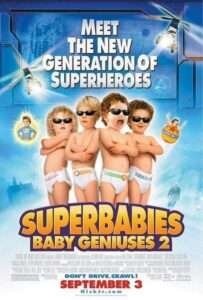 Why it’s terrible: Talking babies are already a questionable cinematic proposition. Giving them superpowers, elaborate action sequences, and a mission to defeat a villainous media mogul somehow makes things considerably worse. The digitally manipulated baby faces are unsettling, the jokes rarely land, and the story feels like a collection of increasingly desperate ideas rather than a functioning screenplay. Jon Voight’s villainous performance is so exaggerated that it belongs in an entirely different movie.
The redeeming quality: The sheer absurdity of watching tiny children perform superhero action sequences has a strange novelty value. Younger viewers may enjoy the colorful slapstick, while adults with an appreciation for bizarre cinema might find themselves laughing at the film’s extraordinary commitment to its ridiculous premise. It’s also a reminder that director Bob Clark, responsible for A Christmas Story and Black Christmas, had one of the more unusual filmographies in Hollywood.
1991 · Fantasy/action · 0% RT
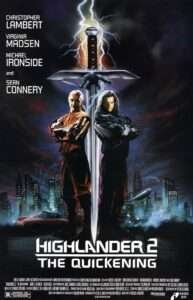 Why it’s terrible: The original Highlander offered a wonderfully simple premise: immortal warriors battle through the centuries until only one remains. The sequel takes that concept and inexplicably introduces alien origins, an artificial atmospheric shield, and a dystopian science-fiction storyline. The mythology becomes hopelessly confused, beloved characters return through questionable narrative gymnastics, and almost everything that made the original appealing is undermined.
The redeeming quality: Sean Connery and Christopher Lambert together again. Their chemistry remains enjoyable even when the screenplay gives them little to work with. Michael Ironside also makes an entertainingly outrageous villain, and director Russell Mulcahy brings flashes of his distinctive visual style to the proceedings. The film is a fascinating example of how a sequel can go spectacularly off the rails while still delivering moments of genuine entertainment.
2014 · Apocalyptic thriller · 0% RT
 Why it’s terrible: Millions of people suddenly disappear, leaving the world in chaos. It’s a premise with enormous potential for suspense, philosophical questions, and spectacular disaster filmmaking. Instead, Left Behind spends much of its running time aboard an airplane, delivering wooden dialogue, awkward exposition, and remarkably little excitement. Nicolas Cage plays an airline pilot trying to land his damaged aircraft, but even his presence cannot rescue the movie from its television-quality production and clumsy storytelling.
The redeeming quality: The initial disappearances offer some genuinely unsettling possibilities. An empty airplane seat, abandoned clothing, or a suddenly driverless vehicle can communicate horror more effectively than expensive visual effects. The movie occasionally touches on that potential, and Cage’s professional commitment provides a modest anchor. Viewers interested in apocalyptic scenarios might find the underlying concept more compelling than its execution.
2018 · Crime biography · 0% RT
 Why it’s terrible: John Gotti’s rise through the Gambino crime family should have provided the foundation for a compelling gangster epic. Instead, Gotti plays like a collection of disconnected scenes from a much better movie. The narrative jumps between periods without establishing a satisfying dramatic progression, and the film seems far more interested in celebrating its central figure than examining the consequences of his criminal activities. Comparisons with Goodfellas and The Godfather are inevitable, and particularly unkind.
The redeeming quality: Travolta’s commitment. Whatever the film’s shortcomings, he clearly throws himself into portraying the notorious mob boss, complete with distinctive mannerisms and an imposing physical presence. The period costumes, automobiles, and New York gangster atmosphere occasionally provide a sense of authenticity. For viewers interested in organized crime history, the film might also inspire some worthwhile research into the real John Gotti.
2002 · Fantasy comedy · 0% RT
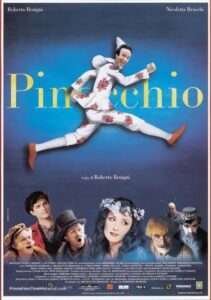 Why it’s terrible: Roberto Benigni followed his internationally acclaimed Life Is Beautiful with a live-action adaptation of Pinocchio in which the then-50-year-old actor played the mischievous wooden boy himself. It’s a casting decision that proves almost impossible to overlook. Benigni’s exaggerated physical comedy becomes exhausting, the whimsical storytelling frequently feels chaotic, and the film struggles to capture the emotional sincerity that makes Carlo Collodi’s story so enduring. The English-language dubbing adds another layer of awkwardness.
The redeeming quality: The elaborate sets, colorful costumes, and old-fashioned fantasy aesthetic offer genuine visual pleasures. Benigni’s enthusiasm is undeniable, even when his performance becomes overwhelming. Watching the original Italian-language version also allows audiences to experience the performances without the distractions of the English dubbing. There is an earnest love for the source material beneath the misjudgments.
2008 · Supernatural horror · 0% RT
 Why it’s terrible: During Hollywood’s obsession with remaking Japanese horror films, One Missed Call arrived with an intriguing premise and very little originality. Characters receive phone calls from their future selves, apparently predicting their deaths. Unfortunately, the movie relies on predictable jump scares, thinly developed characters, and familiar supernatural imagery. The mystery becomes increasingly convoluted, and the tension evaporates long before the final revelations.
The redeeming quality: The central concept is genuinely creepy. Receiving a voicemail containing the sounds of your own impending death is the sort of premise that can linger in your imagination after the movie ends. Some of the supernatural imagery is effectively disturbing, and the film’s atmosphere occasionally captures the unsettling mood of early-2000s Asian horror. It’s a flawed remake with the bones of a much better movie.
2012 · Fantasy comedy · 0% RT
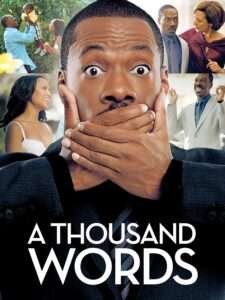 Why it’s terrible: Eddie Murphy plays a fast-talking literary agent who discovers that every word he speaks causes a leaf to fall from a magical tree. When the last leaf falls, he will die. The problem is immediately obvious: the movie takes one of Hollywood’s most gifted verbal comedians and prevents him from talking. What follows is an exhausting collection of exaggerated facial expressions, physical gags, and predictable lessons about appreciating life. The sentimental message becomes increasingly heavy-handed, and the comedy rarely justifies the unusual premise.
The redeeming quality: Murphy remains an extraordinarily expressive performer, and some of his silent physical comedy recalls the talents that helped make him a superstar. More importantly, the central idea has genuine emotional potential. A story about someone forced to recognize the value of words, relationships, and meaningful communication could have been quite moving. Beneath the broad comedy is a surprisingly thoughtful concept about the things we say and the things we leave unsaid.
12. Wagons East!
1994 · Western comedy · 0% RT
 Why it’s terrible: A group of settlers becomes so disillusioned with life on the American frontier that they decide to abandon the West and head back East. It’s a potentially amusing reversal of the traditional Western, but the resulting film is painfully short on clever jokes. The humor is broad, the pacing is uneven, and the characters are mostly one-dimensional caricatures. What could have been an inventive satire of the genre instead becomes a series of predictable comic misadventures.
The redeeming quality: John Candy. This was the beloved comedian’s final film, and his presence alone gives it a certain historical and emotional significance. Candy had an extraordinary ability to make even poorly written characters likable, and his natural warmth occasionally shines through the uninspired material. For fans of the actor, Wagons East! is worth seeing as a farewell to one of comedy’s most endearing performers.
13. The Ridiculous 6
2015 · Western comedy · 0% RT
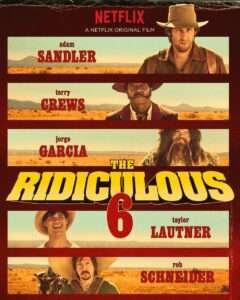 Why it’s terrible: Adam Sandler’s Western parody attempts to combine the irreverent humor of his earlier comedies with an ensemble adventure involving six unlikely half-brothers. Unfortunately, the movie substitutes crude jokes and repetitive gags for actual comedic invention. Many of its cultural stereotypes are uncomfortable, the running time is excessive, and the story seems designed primarily to accommodate an enormous collection of celebrity appearances rather than tell an engaging story.
The redeeming quality: The cast is enormous, and spotting familiar faces becomes part of the entertainment. Terry Crews, Steve Buscemi, Danny Trejo, and numerous other performers contribute to the movie’s anything-goes atmosphere. The Western scenery is attractive, and there are occasional moments of genuinely silly physical comedy. For dedicated Sandler fans, it’s essentially an extended gathering of familiar comedic personalities in cowboy costumes.
14. Dark Crimes
2016 · Crime thriller · 0% RT
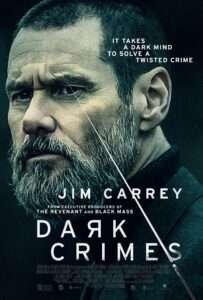 Why it’s terrible: Jim Carrey stars as a Polish detective investigating a murder that appears connected to a novelist’s disturbing work. The premise promises a psychologically complex mystery, but the film becomes a dreary exercise in relentless gloom. Its pacing is painfully slow, the characters are difficult to connect with, and the atmosphere of despair becomes monotonous rather than suspenseful. The story raises interesting questions about fiction and reality without developing them into a particularly satisfying thriller.
The redeeming quality: Carrey’s performance. Audiences familiar primarily with his manic comedic persona may be surprised by his restrained, humorless portrayal of a deeply troubled investigator. The actor demonstrates a willingness to abandon nearly everything associated with his screen image. The bleak cinematography also establishes an appropriately oppressive atmosphere, and the underlying mystery contains enough intriguing ideas to make the film worth examining as an ambitious failure.
15. Look Who’s Talking Now
1993 · Family comedy · 0% RT
Why it’s terrible: The original Look Who’s Talking found considerable success with a simple gimmick: babies whose inner thoughts were voiced by adult actors. By the third installment, the filmmakers had apparently exhausted that idea and decided to give the family dogs celebrity voices instead. Danny DeVito and Diane Keaton provide the canine commentary, but the jokes are painfully predictable, the family storyline is uninspired, and the entire production feels like a franchise desperately searching for another reason to exist.
The redeeming quality: John Travolta and Kirstie Alley remain an appealing screen couple, and their domestic chemistry is more enjoyable than the movie surrounding them. DeVito’s unmistakable voice gives the family dog some personality, and younger audiences may enjoy the animal antics. There’s also a pleasant early-1990s nostalgia to the production, particularly for viewers who grew up watching these lightweight family comedies.
The final verdict: Sometimes bad movies deserve a second chance
There’s a tendency to treat terrible movies as artistic failures with absolutely no value, but filmmaking is rarely that simple. A movie can fail spectacularly as a complete work while still containing impressive performances, inventive visuals, interesting ideas, or moments of genuine entertainment.
In fact, some of cinema’s most memorable viewing experiences come from movies that don’t work.
Consider Battlefield Earth, a film whose extraordinary ambition is almost as entertaining as its failure. Or Highlander II, which demonstrates how thoroughly a sequel can misunderstand the appeal of its predecessor. Then there’s Wagons East!, a forgettable comedy that nevertheless offers one final opportunity to enjoy John Candy’s considerable talents.
Perhaps the most interesting distinction is between movies that are merely boring and movies that are spectacularly bad. The former are easily forgotten. The latter sometimes become cult classics, celebrated for the very qualities that originally made them objects of ridicule.
And that’s worth remembering when discussing cinema. Behind every terrible film are actors, technicians, designers, editors, and countless other creative professionals who may have contributed something genuinely worthwhile, even when the finished product failed.
A terrible movie doesn’t necessarily mean a terrible viewing experience.
Sometimes all it takes is the right audience, the right expectations, and a willingness to appreciate the absurd.
And occasionally, the worst movies make for the best movie nights.