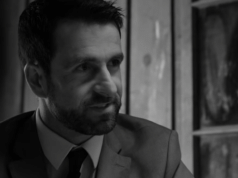
Sir Patrick Stewart was more than an iconic captain, a beloved professor, or a master of Shakespeare. He was an actor who made intelligence heroic, compassion powerful, and humanity worth believing in. The man may be gone, but the extraordinary characters he brought to life will remain with us for generations.
From the medieval battlefields of Excalibur to the bridge of the Enterprise, the halls of Xavier’s School, and the blood-soaked tragedy of Macbeth, Sir Patrick Stewart gave us characters who were unforgettable because of the extraordinary humanity he brought to them.

The legendary British performer, whose remarkable career spanned more than six decades, passed away on October 28, 2026, at the age of 86. His death marks the passing of one of the great Shakespearean actors of his generation, a man who somehow managed to become equally beloved by theater enthusiasts, science-fiction fans, comic-book devotees, and generations of moviegoers.
For millions, he will forever be Captain Jean-Luc Picard, the dignified and intellectually formidable commander of the USS Enterprise. For others, he will always be Professor Charles Xavier, the compassionate mentor who believed that humanity and mutants could coexist peacefully.
For me, however, my memories of Patrick Stewart go back a little further, to a remarkable fantasy film from 1981.
That film was Excalibur.
And while his role was relatively small, it was my introduction to an actor whose unmistakable voice, commanding presence, and extraordinary ability to communicate authority would eventually become legendary.
Excalibur (1981): A kingly presence before he became a legend
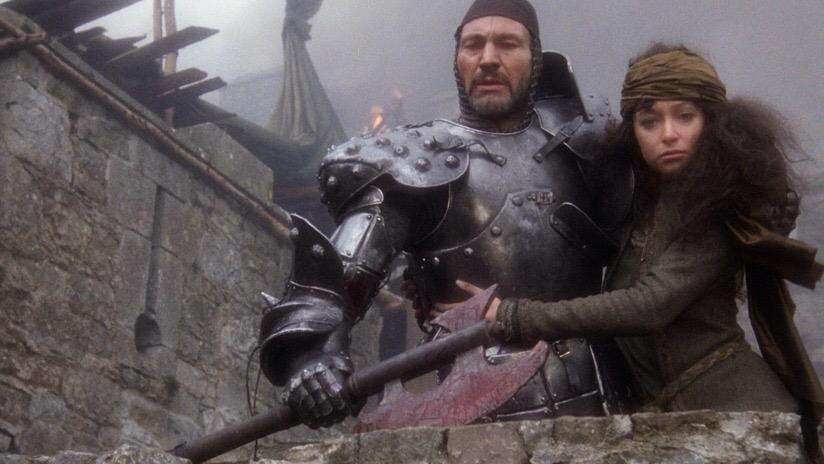
Among its impressive ensemble cast, which included Nigel Terry, Nicol Williamson, Helen Mirren, Gabriel Byrne, and a young Liam Neeson, was Patrick Stewart as Leondegrance, the father of Guinevere.
Stewart was already an accomplished theatrical performer, but he had yet to achieve the international recognition that would eventually define his screen career.
Even so, there was something unmistakable about him.
As Leondegrance, Stewart possessed the natural bearing of a medieval nobleman. He seemed entirely comfortable in the film’s world of knights, kings, allegiances, and honor. His performance was never particularly showy, nor did it need to be. He simply belonged in that world.
There was a strength and seriousness to his presence, an almost effortless dignity that made his character believable.
What I find especially fascinating looking back is how much of the Patrick Stewart we would eventually come to know was already there.
The voice, of course, was unmistakable. That magnificent voice, capable of turning even the simplest dialogue into something profound.
But there was also the posture, the careful delivery, the intelligence behind his eyes, and the impression that this was a man who understood the weight of every word he spoke.
He did not need to dominate a scene to command attention.
That quality would become one of his greatest strengths.
Watching Excalibur today, it is wonderful to see Stewart before the world knew him as Picard or Professor X. He was simply an exceptional character actor doing what exceptional character actors do: making the world around him more believable.
And just six years later, everything would change.
Star Trek: The Next Generation (1987–1994): The captain who made intelligence heroic

It had to follow one of the most beloved science-fiction series in television history.
William Shatner’s Captain James T. Kirk was already a cultural icon. Kirk was charismatic, impulsive, passionate, and adventurous, a captain who frequently led with instinct and occasionally settled his differences with his fists.
Replacing that sort of personality with an older, bald, Shakespearean actor whose captain preferred diplomacy to confrontation was, at the time, a considerable gamble.
It also turned out to be a stroke of genius.
Patrick Stewart’s Jean-Luc Picard was not simply another version of Kirk. He was something fundamentally different.
Picard was thoughtful, disciplined, philosophical, and deeply committed to the principles of Starfleet and the United Federation of Planets. He believed in diplomacy, exploration, education, and the importance of understanding cultures different from his own.
Where Kirk might have responded to a threat by charging forward, Picard was more likely to ask questions, study the situation, and attempt to understand his adversary.
And somehow, Stewart made that approach every bit as exciting as a phaser battle.
What made Picard extraordinary was not simply his intelligence. It was the way Stewart portrayed intelligence as a form of strength.
Picard could command a starship with a quiet word. He could silence a room with a glance. When he delivered a speech about morality, justice, or the responsibilities of leadership, it carried the weight of genuine conviction.
He made us believe that ideas mattered.
That reason mattered.
That compassion and integrity were not weaknesses, but qualities worth defending.
One of the finest examples came in the third-season episode The Measure of a Man, in which Picard defended the android Data’s right to determine his own future.
It was an episode built around philosophical questions of consciousness, personhood, and individual freedom. There were no enormous space battles or spectacular action sequences required to make it compelling.
Instead, there was Patrick Stewart, standing before a tribunal and making an argument about what it means to be alive.
And it was riveting.
Then came The Best of Both Worlds, the devastating two-part story in which Picard was assimilated by the Borg and transformed into Locutus.
For perhaps the first time, audiences saw this seemingly unshakable captain stripped of his individuality, his authority, and his humanity.
Stewart’s performance was chilling precisely because Picard had always represented such complete self-control.
The aftermath, particularly in Family, demonstrated an entirely different side of his abilities.
Here was a man who had endured unimaginable psychological trauma, struggling to reconcile his sense of personal responsibility with the terrible things he had been forced to do.
Stewart allowed Picard to become vulnerable, frightened, and emotionally broken.
It was extraordinary television.
Later episodes such as The Inner Light, in which Picard experiences an entire lifetime within an alien civilization, further demonstrated his remarkable range.
Stewart could communicate decades of love, regret, loss, and wisdom in a single episode, often with nothing more than subtle changes in expression and demeanor.
And when Picard finally returned to television in Star Trek: Picard, Stewart gave the character something even more precious: age.
This was no longer the seemingly invincible captain of the Enterprise. He was an older man confronting his past, his mistakes, his mortality, and the relationships that had shaped his life.
The third and final season, which reunited much of the original Next Generation cast, offered something genuinely moving.
It allowed us to see these beloved characters as older people who had lived full lives, made mistakes, suffered losses, and still found reasons to stand together.
And at the center of it all was Stewart.
Jean-Luc Picard was never simply a starship captain.
He was an ideal.
And Patrick Stewart made us believe in that ideal.
X-Men (2000–2020s): The professor who believed in humanity
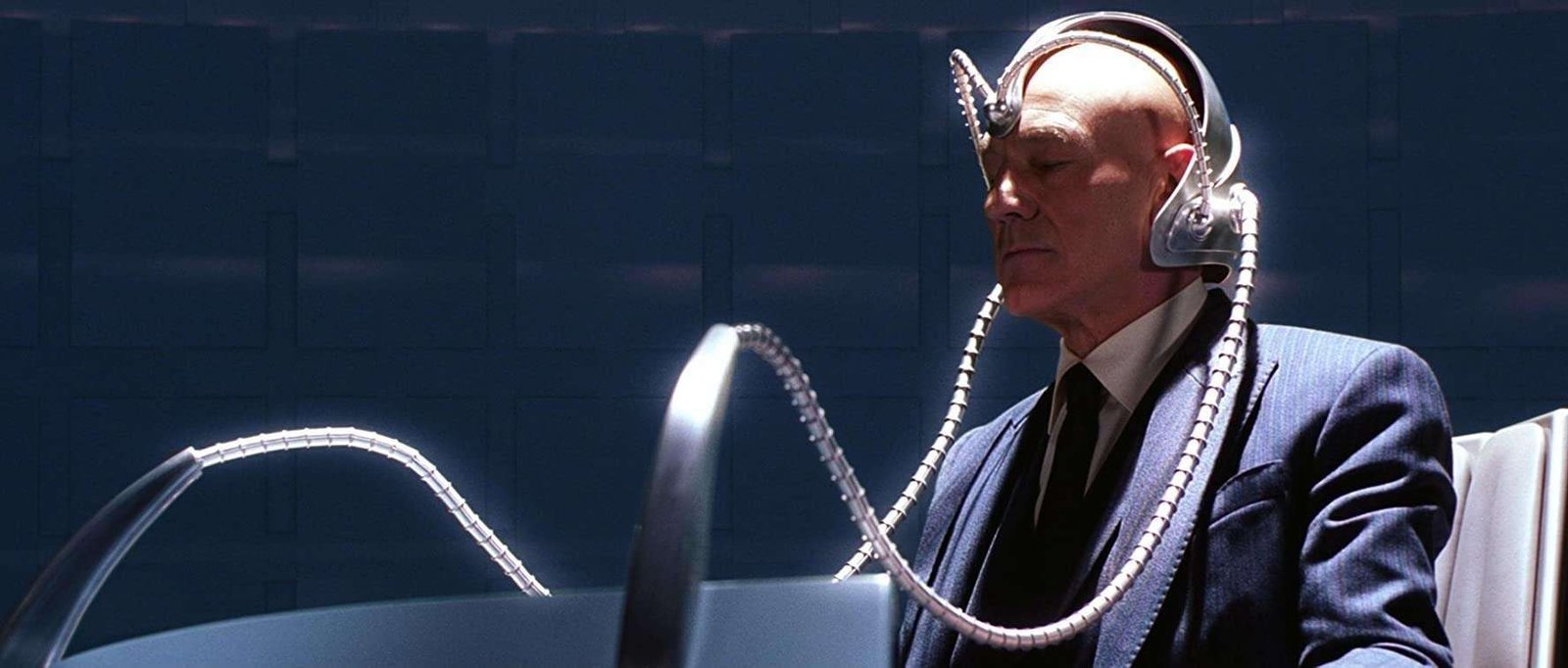
And while the film’s success depended on numerous elements, one of its greatest assets was the casting of Patrick Stewart as Professor Charles Xavier.
It was almost absurdly perfect.
For longtime readers of the comics, Stewart seemed to have stepped directly from the illustrated page. The bald head, the dignified appearance, the calm intelligence, and the unmistakable sense of moral authority were all there.
But as with Picard, the physical resemblance was only the beginning.
Charles Xavier was a man who believed that mutants and ordinary humans could coexist, despite the fear, hatred, and persecution directed toward those who were different.
He was a teacher, a mentor, and an idealist.
And Stewart brought extraordinary sincerity to that idealism.
What made his Xavier so compelling was the way he balanced compassion with authority.
He could be gentle and understanding with a frightened young mutant, yet completely resolute when confronting someone who threatened his students.
He possessed enormous power, but his greatest strength was his restraint.
There is a beautiful parallel between Xavier and Picard.
Both men were intellectuals. Both believed in diplomacy. Both sought peaceful solutions in worlds that frequently rewarded violence. Both were leaders who inspired loyalty not through intimidation, but through the strength of their convictions.
Yet Stewart never made them feel like the same character.
Picard was a disciplined military commander whose emotional reserve was part of his identity.
Xavier was a paternal figure, a teacher whose emotional connections to his students were fundamental to his purpose.
And nowhere was that distinction more apparent than in Xavier’s relationship with Erik Lehnsherr, better known as Magneto.
Played magnificently by Sir Ian McKellen, Magneto represented a fundamentally different response to humanity’s fear of mutants.
Where Xavier believed in coexistence, Magneto believed that mutants would ultimately have to defend themselves through force.
Their ideological conflict became one of the most fascinating relationships in superhero cinema.
And because Stewart and McKellen were such extraordinary actors, those disagreements felt deeply personal.
These were not simply two powerful men arguing about the future.
They were old friends who cared about one another, understood one another, and had arrived at painfully different conclusions.
There was affection beneath their disagreements, sadness beneath their confrontations, and the lingering hope that perhaps one day they might find common ground.
Stewart’s Xavier was often the emotional foundation of the franchise.
But perhaps his most heartbreaking performance came in Logan.
Here, the once-powerful Professor X was elderly, physically frail, and struggling with the deterioration of his mental faculties.
It was a devastating transformation.
The man who had once possessed one of the most formidable minds in the world was now losing control of that very gift.
Stewart portrayed Xavier with extraordinary tenderness, humor, frustration, and vulnerability.
There were moments when he seemed almost childlike, and others when the old professor’s wisdom and compassion emerged through the confusion.
His relationship with Hugh Jackman’s Wolverine was especially moving, combining years of affection, resentment, obligation, and love.
Logan stripped away much of the superhero spectacle and revealed something far more intimate: two damaged men attempting to find meaning and dignity in the final chapters of their lives.
For Stewart, it was another reminder that even the most iconic characters could become profoundly human in the hands of a great actor.
And Xavier’s faith in humanity, even after everything he had endured, remained one of the character’s most enduring qualities.
Macbeth (2007–2010): The terrifying brilliance of a Shakespearean master
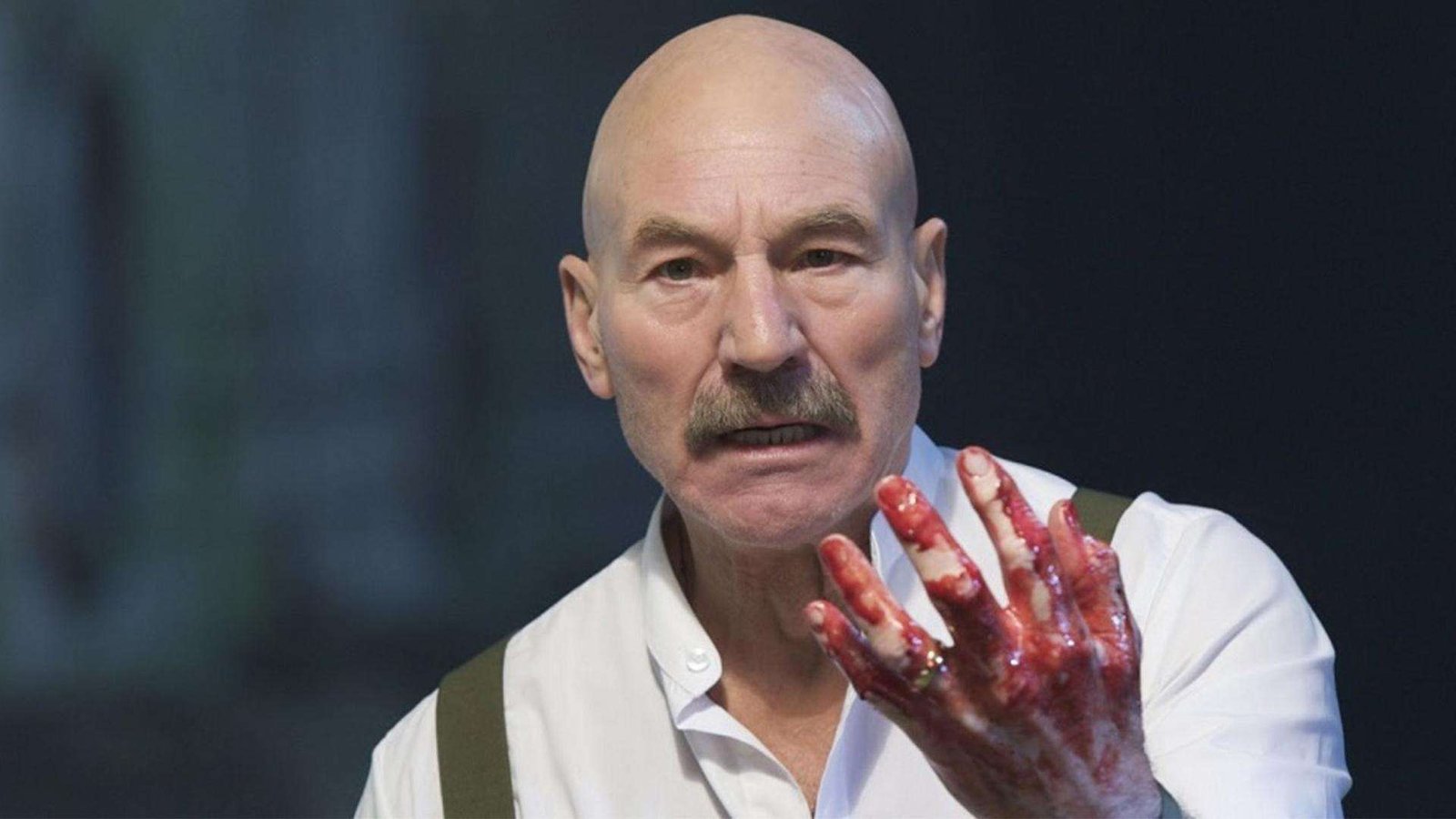
For all his success in science fiction and superhero cinema, it would be a mistake to remember Patrick Stewart exclusively through those genres.
Long before he commanded the Enterprise, Stewart was an accomplished Shakespearean actor, having joined the Royal Shakespeare Company in 1966. His theatrical career included productions of Hamlet, Antony and Cleopatra, The Tempest, Othello, and numerous other classics.
And while there are many performances worthy of recognition, his portrayal of Macbeth remains, for me, one of the most extraordinary interpretations of Shakespeare’s tragic character ever committed to film.
Directed by Rupert Goold, the production originated on stage in 2007 before eventually being adapted for television and broadcast as part of PBS’s Great Performances in 2010.
Rather than setting Shakespeare’s tragedy in medieval Scotland, Goold relocated the action to a grim, militaristic, twentieth-century dictatorship.
The result was a disturbing mixture of Shakespeare, psychological horror, and political nightmare.
And Stewart was magnificent.
His Macbeth was not simply an ambitious soldier seduced by the possibility of becoming king.
He was a deeply troubled man whose hunger for power gradually consumed whatever humanity he possessed.
Stewart approached the character with a terrifying intensity.
Where Picard was measured and controlled, Macbeth became increasingly volatile and unstable. Where Xavier represented compassion and restraint, Macbeth surrendered to paranoia, violence, and moral corruption.
And where both Picard and Xavier sought to protect others, Macbeth ultimately became willing to destroy almost anyone who threatened his authority.
The transformation was extraordinary.
Stewart’s command of Shakespeare’s language was, naturally, impeccable. But what made his performance so memorable was his ability to communicate the meaning beneath the poetry.
Shakespeare can sometimes feel inaccessible to modern audiences, particularly when actors concentrate more on delivering the language beautifully than on making the emotions understandable.
Stewart never had that problem.
He understood that Shakespeare’s characters were people first, and that the language was simply the means through which their fears, ambitions, insecurities, and desires were expressed.
His Macbeth was frightening because we could see him thinking.
We could watch the calculations taking place behind his eyes, the growing realization that one terrible act required another, and another, until there was no possibility of returning to the man he had once been.
Opposite Kate Fleetwood’s equally formidable Lady Macbeth, Stewart created a relationship that was both intimate and deeply disturbing.
Their shared ambition became a kind of poison, gradually destroying their marriage, their sanity, and ultimately their lives.
And when Macbeth finally confronts the emptiness of everything he has achieved, Stewart delivers Shakespeare’s famous meditation on life’s fleeting nature with devastating emotional weight.
It is the performance of an actor who understands that tragedy is not simply about death.
It is about the terrible realization that a life has been wasted.
I have watched numerous interpretations of Macbeth, and Stewart’s remains among the most memorable.
It is a performance that should be studied by actors, appreciated by Shakespeare enthusiasts, and discovered by anyone who knows Patrick Stewart only as Picard or Professor X.
Because here, stripped of the familiar uniforms and the reassuring morality of his most famous characters, we see the full power of his extraordinary talent.
He could make us believe in the nobility of humanity.
And he could make us confront its darkest possibilities.
Beyond the icons: The actor who never stopped surprising us

He was never afraid to make fun of himself.
Whether appearing in comedies, lending his unmistakable voice to animated productions, or sharing wonderfully silly moments with his longtime friend Ian McKellen, Stewart seemed to take genuine pleasure in surprising audiences.
His appearances in Extras and Frasier demonstrated that an actor known for extraordinary gravitas could also possess impeccable comic timing.
His voice work as Avery Bullock in American Dad! revealed an even more outrageous side of his personality.
And his friendship with McKellen, which extended from the X-Men films to acclaimed theatrical productions of Waiting for Godot and No Man’s Land, became something of a cultural treasure in its own right.
Watching these two enormously respected Shakespearean actors behaving like mischievous schoolboys was a joy.
There was something reassuring about seeing performers of their stature embrace the absurd.
Stewart never seemed particularly concerned with protecting the seriousness of his public image.
He could deliver Shakespeare with breathtaking authority one moment and enthusiastically participate in something ridiculous the next.
That willingness to embrace both the profound and the playful made him all the more endearing.
His career also included memorable appearances in David Lynch’s Dune, L.A. Story, Robin Hood: Men in Tights, A Christmas Carol, and countless other productions.
His one-man adaptation of Dickens’s A Christmas Carol, in which he performed the story’s many characters himself, was another remarkable demonstration of his theatrical abilities.
In 2010, he was knighted for his services to drama, a recognition that seemed particularly appropriate for an actor who had devoted so much of his life to the craft.
But perhaps his greatest accomplishment was his ability to make classical acting accessible to audiences who might otherwise never have encountered it.
There are undoubtedly people who first discovered Shakespeare because they loved Captain Picard.
And there are certainly people who sought out his theatrical performances because they admired Professor Xavier.
Stewart helped bridge the distance between classical theater and popular entertainment, demonstrating that great acting transcends genre, medium, and audience.
He was as comfortable commanding a starship as he was commanding a Shakespearean stage.
And he treated both with the same commitment.
The humanity behind the authority
When I think about Patrick Stewart’s greatest performances, I find myself returning to a quality that connects so many of his characters.
Humanity.
It seems almost ironic that an actor who became famous portraying a futuristic starship captain and a mutant telepath would leave such a profound impression through his understanding of ordinary human emotions.
But that was Stewart’s gift.
He understood that authority without compassion was hollow.
That intelligence without empathy was incomplete.
That strength without vulnerability was uninteresting.
And that even the most extraordinary characters needed recognizable human qualities if audiences were going to care about them.
Jean-Luc Picard was not memorable simply because he commanded the Enterprise.
He was memorable because he cared about the people aboard it, because he wrestled with difficult moral decisions, and because he occasionally struggled to reconcile his principles with the realities of the universe.
Charles Xavier was not memorable simply because he possessed extraordinary psychic abilities.
He was memorable because he believed in his students, because he saw potential where others saw danger, and because he continued to hope for a better world even when that hope seemed hopelessly naive.
Macbeth, conversely, was not terrifying simply because he became a murderer.
He was terrifying because Stewart allowed us to recognize the man beneath the monster, and to understand how ambition, fear, and moral weakness could destroy him.
Even Leondegrance, that relatively minor character in Excalibur, benefited from Stewart’s ability to make a fictional world feel authentic.
These performances were separated by decades, genres, and radically different circumstances.
Yet each reflected the same extraordinary understanding of character.
Patrick Stewart never simply played a role.
He gave it a soul.
A final farewell to Sir Patrick Stewart
For me, it began with Excalibur, watching a distinguished actor portray Guinevere’s father in a film that remains one of my favorite cinematic fantasies.
Then came Star Trek: The Next Generation, where that familiar face and voice became inseparable from one of television’s greatest characters.
Years later, he brought Professor Xavier to life with such extraordinary conviction that it became almost impossible to imagine anyone else in the role.
And throughout those decades, his Shakespearean performances reminded us that behind the familiar science-fiction icons was one of the finest classical actors of his generation.
There is a particular sadness in losing performers whose work has become part of our personal histories.
Their films and television shows are not simply entertainment. They become markers in our lives, reminders of where we were, who we were, and the people with whom we shared those experiences.
Fortunately, the wonderful thing about cinema and television is that those performances remain.
We can return to the Enterprise whenever we wish.
We can revisit Xavier’s school and remember a professor who believed that understanding was more powerful than hatred.
We can watch Macbeth descend into darkness and marvel at the skill of an actor capable of making a centuries-old tragedy feel immediate and frightening.
And I can return to Excalibur, where a younger Patrick Stewart stands among the knights of Camelot, long before the world would come to know him as one of the most beloved actors of his generation.
Sir Patrick Stewart leaves behind an extraordinary body of work, but perhaps his most important legacy is something far simpler.
He made us admire intelligence.
He made us respect compassion.
He made us believe that dignity, decency, and moral courage were qualities worth aspiring to.
And he reminded us that even the most powerful leaders are ultimately defined by their humanity.
For generations of audiences, Jean-Luc Picard represented the very best of what humanity might someday become.
That was not simply because of the words written for him.
It was because Patrick Stewart made us believe every one of them.
Rest in peace, Sir Patrick Stewart.
Thank you for the adventures, the wisdom, the laughter, and the extraordinary performances.
Your final mission is complete, Captain. Your legacy will continue to explore strange new worlds, seek out new life and new civilizations, and boldly go where no one has gone before.
Make it so.