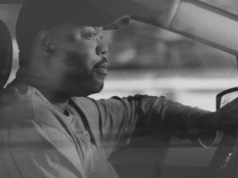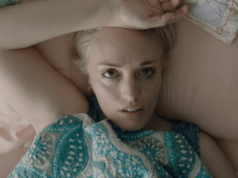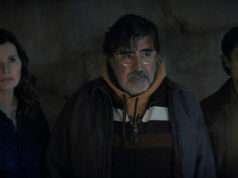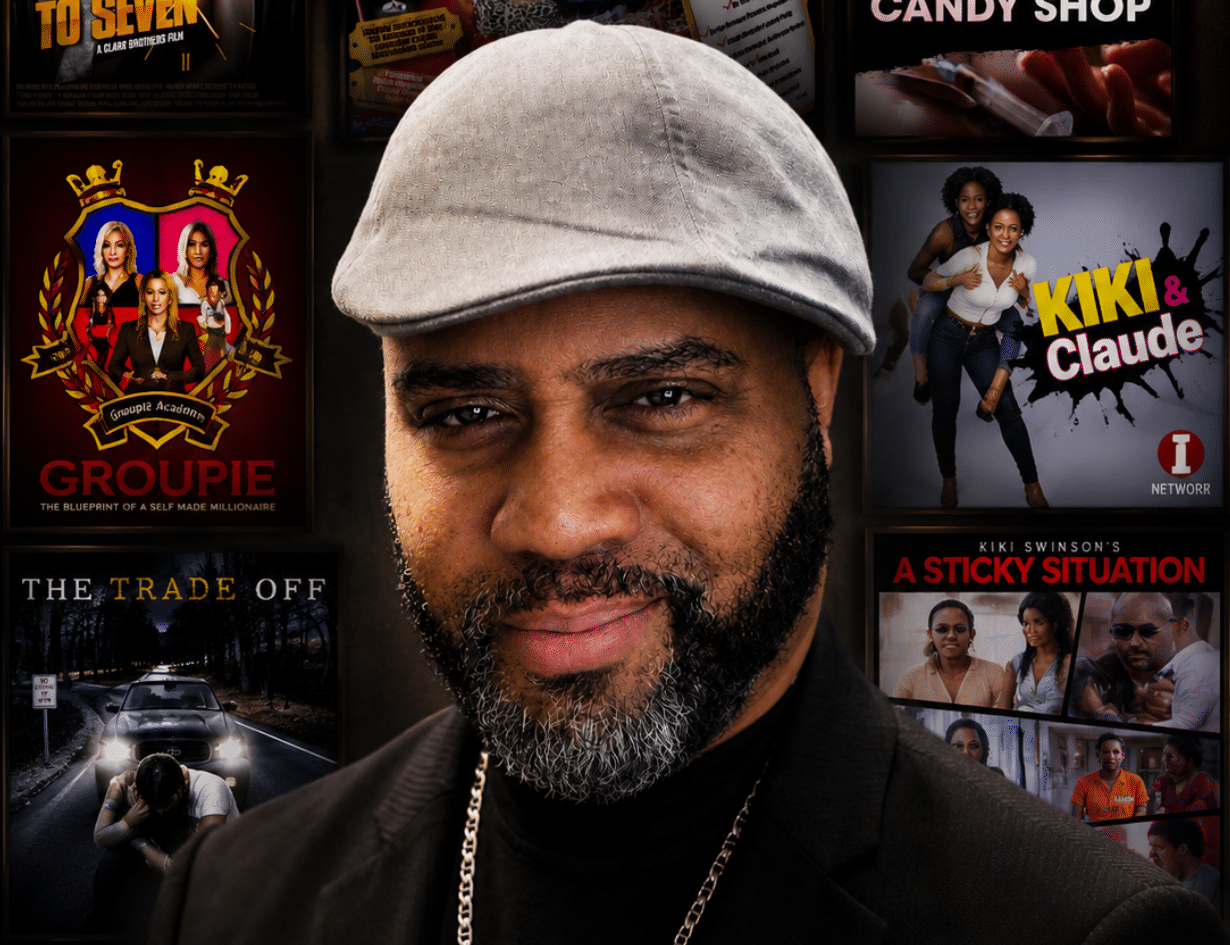
For Clark, MIRROR represents both the culmination of more than two decades of independent filmmaking and another step forward. It’s a reminder that indie filmmakers don’t need to wait for permission to tell meaningful stories—they need a strong idea, the right collaborators, and the determination to keep creating.
Independent filmmaker Wes B. Clark has spent more than 20 years working in film and media as a director, writer, producer, and editor, with storytelling always at the center of what he does.
Clark has worked on a number of independent projects over the years, including Groupie: The Blueprint of a Self-Made Millionaire, The Candy Shop, Playing Dirty, 7 to Seven, Rebel, and The Trade-Off. Some of that work has gone on to platforms like Tubi and Amazon Prime, while other projects have found audiences through festivals and independent releases.
His background is also heavily rooted in writing and production. Clark has a bachelor’s degree in Media Communications and an MFA in Creative Writing, allowing him to approach filmmaking from both sides. He loves writing and character development but is equally comfortable behind the camera and in the editing room putting everything together.
His latest feature, MIRROR, is a psychological drama/thriller that explores trauma, grief, guilt, betrayal, and the lasting impact of family relationships. We spoke with Clark about MIRROR, the challenges of independent filmmaking, his past work, and what comes next.
What are you currently working on?
Today, in addition to my independent film work, I work professionally as a producer and editor, creating everything from short-form content to documentary and broadcast programming. MIRROR is my latest feature. It’s a psychological drama/thriller and represents a lot of what I love about independent filmmaking: taking a strong idea, surrounding yourself with talented people, and finding creative ways to bring that story to the screen without waiting for Hollywood to permit you.
What are your hopes, expectations, and goals for your current project?
My biggest goal for MIRROR is for the film to find its audience. Of course, as an independent filmmaker, I want the movie to have a successful festival run, secure strong distribution, and eventually reach as many viewers as possible, but I also want it to have a life beyond simply being another title on a streaming platform.
Underneath the twists and psychological-thriller elements, MIRROR deals with some very real issues—childhood trauma, alcoholism, grief, guilt, betrayal, emotional neglect, and how things that happen within a family can follow us well into adulthood. I want people to enjoy the movie as a thriller, but I also hope they walk away talking about what they just watched and maybe even recognizing something deeper in these characters.
Read our review of Mirror
We’re currently taking the film through the festival circuit, and I want to use that opportunity to build genuine word of mouth and connect directly with audiences. We’re also exploring partnerships with mental health professionals and organizations connected to some of the issues addressed in the film. I think MIRROR can create conversations in those spaces while still being an entertaining movie.
Ultimately, success for me would be seeing MIRROR grow organically—from festivals to theatrical screenings to distribution—and prove that an independently produced film with a strong story and talented cast can find an audience without having a massive studio machine behind it.
Why did you want to tell the story of MIRROR?
What attracted me to MIRROR was the opportunity to make a psychological thriller that had something underneath the twists and suspense. At the center of the movie is a family dealing with things they never really dealt with—trauma, alcoholism, grief, betrayal, guilt, and emotional neglect. I wanted to explore what happens when those things are buried instead of confronted. The thriller gives us a way to entertain the audience while slowly pulling back those layers.
What was the biggest creative challenge in making MIRROR?
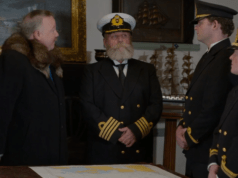
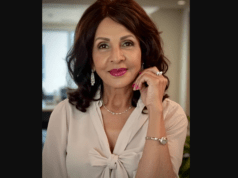
Definitely creating Kara and Zara. Alice Reys plays both adult twins, so we couldn’t rely on simply changing clothes or hairstyles and saying, “This is the other sister.” They needed to feel like two different people. Their personalities, mannerisms, emotional energy, and the way they respond to situations all had to be different. We had that same challenge with Atalia Lyrical portraying Young Kara and Young Zara. When it works, you stop thinking about the technical side and start believing you’re watching two sisters. That was always the goal.
What do you want audiences to talk about after watching MIRROR?
First, I want them talking about the twists. I want people walking out debating what they saw and going back through the movie in their heads. But once that conversation settles down, I hope they start talking about the family. Trauma doesn’t always stay with the person it happened to. It can affect relationships, children, siblings, and sometimes an entire family. If someone watches MIRROR as a thriller and then realizes later that we were also having a conversation about generational trauma, then we’ve accomplished something.
What have been your greatest challenges as an indie filmmaker?
There are always day-to-day challenges in independent filmmaking. It could be anything from finding the right talent, deciding which piece of equipment is worth investing in, securing the right locations, or simply figuring out how to make everything work with the resources you have.
But I think the biggest challenge for most independent filmmakers is financing. Finding that executive producer, investor, or even a sponsor who believes in your vision enough to help fund the project can be difficult. You can have a great script, talented people, and a solid plan, but at some point you still need the resources to bring that vision to life. A big part of being an indie filmmaker is learning how to be creative not only with your storytelling, but also with how you put the financing together.
What has independent filmmaking taught you about yourself?
It has taught me that I’m a problem solver. Indie filmmaking almost never goes exactly according to plan. You lose a location, something breaks, the budget changes, somebody becomes unavailable—you figure it out. I’ve learned not to become so attached to how something was supposed to happen that I miss another way of making it work. Sometimes those limitations actually force you to become more creative, and you end up with something better than what you originally planned.
What has been your most significant accomplishment as a filmmaker, screenwriter, or actor?
My most significant accomplishment as a filmmaker is simply being able to continue creating with my friends and colleagues. Awards, screenings, distribution, and recognition are all great, but some of my proudest moments have come from looking around a set and realizing that I’m making something with people I’ve built relationships with over the years.
Filmmaking is such a collaborative art form. You can have an idea or write a script by yourself, but eventually you need other people to believe in that vision and bring their own talents to it. I’ve been fortunate enough to build a circle of talented actors, filmmakers, and creatives who I genuinely enjoy working with.
To me, being able to call up people I respect and say, “I have an idea—let’s make something,” and then actually watch that idea become a film is an accomplishment in itself. If we can continue creating together, growing together, and opening doors for one another along the way, that means more to me than any individual credit.
Tell us about some of your past projects and where we can watch them if they’re available.
I currently have 4 titles on Tubi.
One of my past projects that people can still check out is Groupie: The Blueprint of a Self-Made Millionaire. That project is special to me because it represents a lot of what independent filmmaking is about—getting a group of creative people together, working with the resources you have, and finding a way to get the movie made and in front of an audience. Groupie is currently available on Tubi.
I’ve also worked on projects including The Candy Shop, Playing Dirty, and 7 to Seven, along with films such as Rebel and The Trade-Off. Over the years, some of these projects have been released through streaming platforms such as Tubi and Amazon Prime, while others have gone through festivals and independent distribution.
Each project represents a different stage of my journey as a filmmaker. When I look back at them, I can see the growth—not just technically, but in my writing, directing, editing, and understanding of how to tell a story with limited resources. Now with MIRROR, I feel like I’m taking everything I’ve learned from those experiences and applying it on a much bigger level.
What goals do you have for yourself moving forward?
My major goal right now is to get Mirror into theaters. That is my focus. This film belongs on the big screen where people can experience its full meaning. Beyond that, it is to continue to write and direct.
What’s next for Wes B. Clark after MIRROR?
I want to keep building. MIRROR isn’t the finish line for me; it’s another step. Right now, a major focus is giving this film the strongest festival and theatrical life we can and eventually finding the right distribution home for it. At the same time, I’m continuing to develop other film and series ideas. My goal is to keep creating projects, keep working with talented people, and continue building opportunities where independent filmmakers don’t necessarily have to wait for somebody else to give us permission to tell our stories.
What advice would you give to your younger self just starting out?
Stay patient.
Stay humble.
Stay hungry.
Stay loyal.
Be reliable.
Be creative.
Be early.
Be observant