
What Happened This Week in Entertainment: Farewell to Legends, New Discoveries, and Hollywood’s Changing Landscape
October 30, 2026 | INFLUX Magazine
From the heartbreaking loss of Sir Patrick Stewart and other beloved performers to new independent films, returning television favorites, and the stories we’ve been covering at INFLUX, it’s been an emotional and eventful week in entertainment.
Hollywood has always been a strange mixture of celebration and heartbreak. One moment we’re excited about a new film, a returning television series, or the discovery of an exciting filmmaker, and the next we’re saying goodbye to someone whose work has been part of our lives for decades.
This week has been particularly difficult in that regard.
We’ve lost familiar faces and voices from Star Trek, Alien, classic television, and animation. At the same time, there are new films to discover, television series to debate, and independent filmmakers continuing to prove that compelling entertainment doesn’t require a hundred-million-dollar budget.
So, let’s look at what happened this week in entertainment, including a few stories we’ve been exploring right here at INFLUX Magazine.
Farewell to Sir Patrick Stewart: A Captain, a Professor, and a Legend

Perhaps the most heartbreaking entertainment news this week was the death of Sir Patrick Stewart, who passed away on October 28 at the age of 86.
For millions of viewers, Stewart will forever be Captain Jean-Luc Picard of Star Trek: The Next Generation, a character who made intelligence, diplomacy, compassion, and moral courage seem every bit as heroic as physical strength.
For another generation, he was Professor Charles Xavier in the X-Men films, the compassionate mentor who believed that humanity could overcome its differences.
But Stewart’s career was considerably more expansive than those two iconic roles.
Long before commanding the Enterprise, he was an accomplished Shakespearean actor whose extraordinary performances included a particularly memorable interpretation of Macbeth.
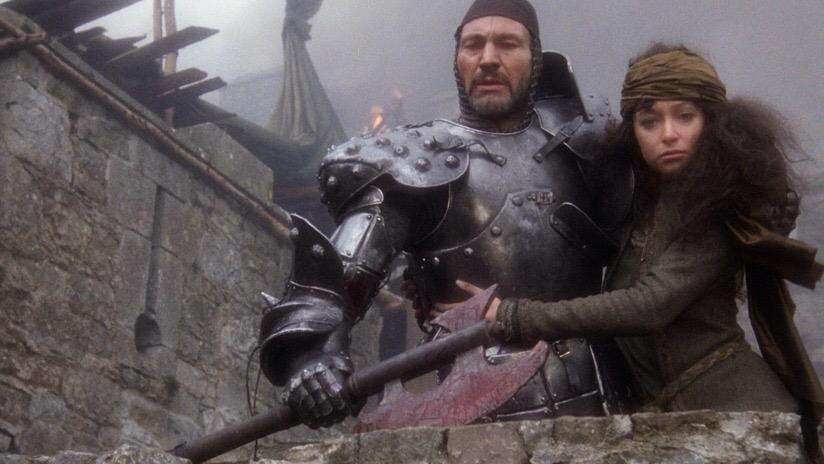
And for me, my first memory of Stewart goes back to John Boorman’s magnificent 1981 fantasy Excalibur, where he portrayed Leondegrance, Guinevere’s father.
Even then, the unmistakable voice, commanding presence, and natural authority were impossible to miss.
What made Stewart special wasn’t simply his ability to portray powerful men. It was his understanding of the humanity beneath that power.
Picard could be vulnerable. Xavier could be frightened. Macbeth could be terrifying precisely because Stewart allowed us to recognize the human weaknesses beneath his monstrous actions.
Stewart’s death followed an illness involving Alzheimer’s disease and Lewy body dementia, according to his family.
His passing represents the loss of one of the finest actors of his generation, a performer who bridged classical theater, science fiction, superhero cinema, and comedy with extraordinary skill.
And while the man is gone, the characters remain.
We can always return to the Enterprise, revisit Xavier’s school, or watch Stewart bring Shakespeare’s words to life.
For that, we should be grateful.
As Picard would say, make it so.
A Difficult Week for Star Trek Fans: Remembering Walter Koenig
Stewart’s passing came just three days after another loss for the Star Trek family.
Walter Koenig, best known as Ensign Pavel Chekov in the original Star Trek series, died October 25 at the age of 90.
Koenig joined the series during its second season in 1967, bringing a youthful energy and often amusing Russian pride to the Enterprise bridge.
What made Chekov particularly interesting was the cultural context in which he appeared.
At a time when the United States and Soviet Union were locked in the Cold War, Star Trek imagined a future in which a Russian officer could serve alongside Americans, Japanese officers, and people from across the planet.
It was a small but meaningful expression of Gene Roddenberry’s optimistic vision of humanity’s future.
Koenig would reprise the role in the feature films and later earn additional science-fiction recognition as Alfred Bester in Babylon 5, a considerably darker and more morally complicated character.
Losing Koenig and Stewart within days of one another is a particularly painful moment for longtime Star Trek fans. Two different generations of the Enterprise, two very different performers, and two men who helped make the franchise something much more meaningful than simple science-fiction adventure.
Tom Skerritt, Susan Saint James, and Eric Bauza: More Familiar Faces and Voices Lost
The entertainment industry also continues to mourn several other notable performers.
Tom Skerritt, who died October 21 at 93, had one of those wonderfully recognizable faces that seemed to appear everywhere.
For horror fans, he will forever be Captain Dallas in Ridley Scott’s Alien, the ill-fated commander of the Nostromo whose expedition into the ship’s ventilation system remains one of the film’s most suspenseful sequences.
For others, he was Viper in Top Gun, or Sheriff Jimmy Brock in the acclaimed television drama Picket Fences.
Skerritt had the kind of understated authority that made him a natural supporting actor. He could make a scene better without demanding that it revolve around him.
Susan Saint James, who died October 26 at 80, was another familiar presence in American television. From McMillan & Wife opposite Rock Hudson to Kate & Allie with Jane Curtin, she helped define an era of television that valued personality, chemistry, and characters audiences genuinely enjoyed spending time with.
And then there was Eric Bauza, who died October 25 at just 46.
Bauza was one of the talented voice performers responsible for keeping classic animated characters alive for new generations, including Bugs Bunny and Daffy Duck.
Voice actors rarely receive the recognition afforded to their on-screen counterparts, yet their work is fundamental to the continued success of animation.
It’s easy to underestimate the skill involved in bringing a familiar cartoon character to life. Audiences expect the voice to sound right, the timing to feel natural, and the personality to remain intact.
Bauza understood those expectations and delivered performances that honored the characters while introducing them to younger audiences.
Taken together, these losses are a sobering reminder of how much entertainment history is carried by the performers we grow up watching and listening to.
Fortunately, their work remains available to rediscover, appreciate, and share.
Bigfoot, I Love You: Independent Comedy Gets Delightfully Weird

After a week of difficult news, a little cinematic absurdity might be exactly what we need.
One of our recent INFLUX reviews looks at Bigfoot, I Love You, the wonderfully strange comedy from actor and filmmaker Marcus Nash.
Nash, whom science-fiction fans may remember for portraying a young Jean-Luc Picard in Star Trek: The Next Generation, delivers a film that seems determined to embrace its own peculiar personality.
And that’s part of its charm.
The story moves from a mysterious murder in a French forest to the life of a young Los Angeles woman named Zadie, played by Nikko Austen Smith, whose eccentric family and increasingly bizarre circumstances lead to a wonderfully unpredictable adventure.
With its unusual characters, offbeat humor, and refusal to behave like a conventional comedy, Bigfoot, I Love You has the potential to become one of those cult favorites that audiences discover through word of mouth.
It’s also a reminder of something we’ve always appreciated about independent filmmaking.
Originality doesn’t necessarily require an enormous budget. Sometimes it simply requires a filmmaker willing to embrace an unusual idea and follow it wherever it leads.
And this one certainly goes to some unusual places.
The Man With the Silver Case: Neo-Noir in Black and White

Another recent INFLUX discovery is writer-director Colin Best’s The Man With the Silver Case, a stylish neo-noir thriller filmed entirely in black and white.
Shot in Switzerland over just nineteen days, the film uses its stark winter landscapes and monochromatic photography to create an atmosphere that feels simultaneously modern and reminiscent of classic crime cinema.
The story follows a mysterious protagonist tasked with transporting a silver case while attempting to survive the dangerous people who want to prevent him from completing his mission.
It’s an intriguing premise, elevated by strong visual choices and an obvious appreciation for the genre.
What makes the film particularly interesting is how effectively it uses its limitations.
The snowy environments become part of the film’s visual identity, while the black-and-white photography lends an almost timeless quality to the proceedings.
We also recently spoke with Best about the production, offering a closer look at the creative decisions behind the film.
For anyone interested in independent filmmaking, the movie and accompanying interview provide an excellent example of how visual storytelling, atmosphere, and creative resourcefulness can work together.
Sometimes a filmmaker doesn’t need more resources.
Sometimes they simply need to make better use of the resources they already have.
Below: Mystery, Horror, and the Problem With Endings
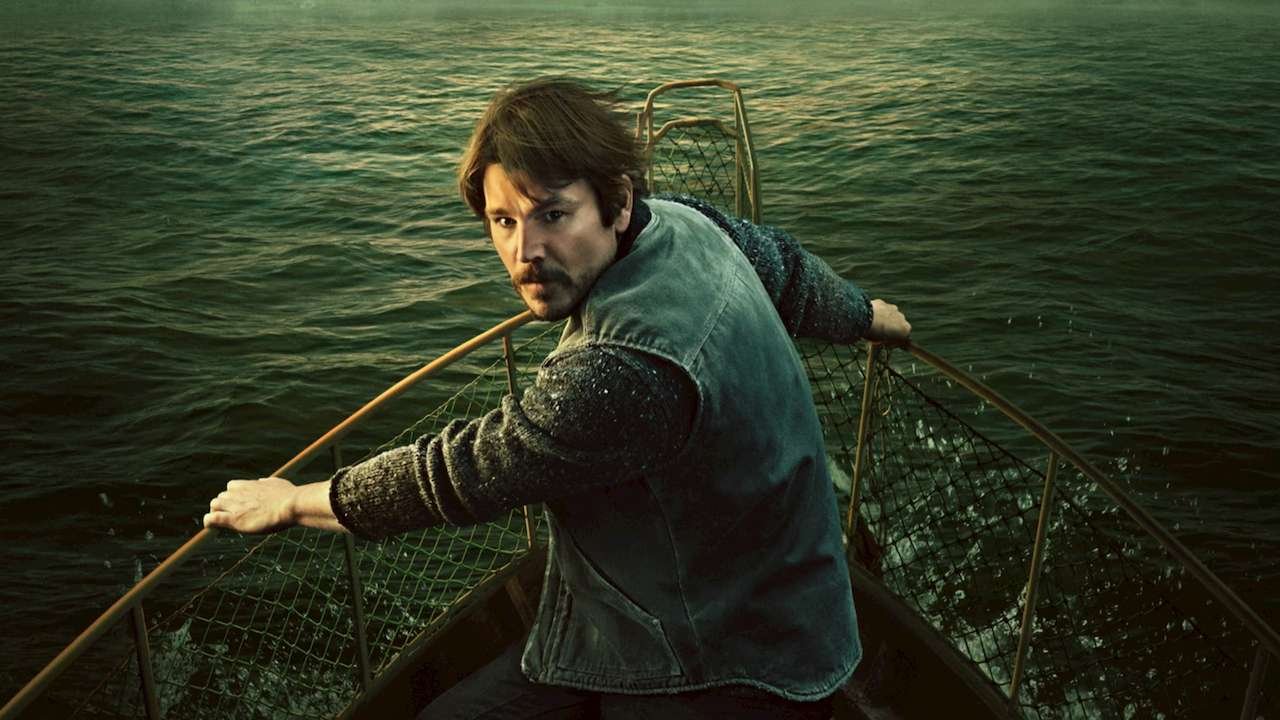
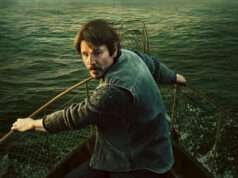
On the television side, we’ve also been exploring Below, a series that initially offers a compelling mixture of mystery, family drama, and supernatural horror.
The opening episodes do an excellent job of establishing the characters and their relationships while creating an atmosphere of unease around an isolated ice-fishing community.
There are intriguing mysteries, unsettling developments, and some surprisingly graphic moments of horror.
But as the series progresses, the story becomes increasingly dependent on supernatural ambiguity, and the finale takes a direction that feels considerably more adventurous and conventional than the atmospheric opening episodes might suggest.
It’s an interesting example of a recurring problem in modern television.
Creating a compelling mystery is one thing.
Delivering a satisfying resolution is something else entirely.
Audiences will happily follow a strange, unsettling story for hours, provided they believe the eventual payoff will justify the journey.
When that payoff doesn’t quite arrive, even an otherwise entertaining series can leave viewers feeling somewhat unsatisfied.
Below certainly offers enough intriguing material to warrant a look, but whether its conclusion works will depend largely on what viewers expect from the mysteries established early in the season.
Ted Lasso: Why We’re Still Rooting for Richmond
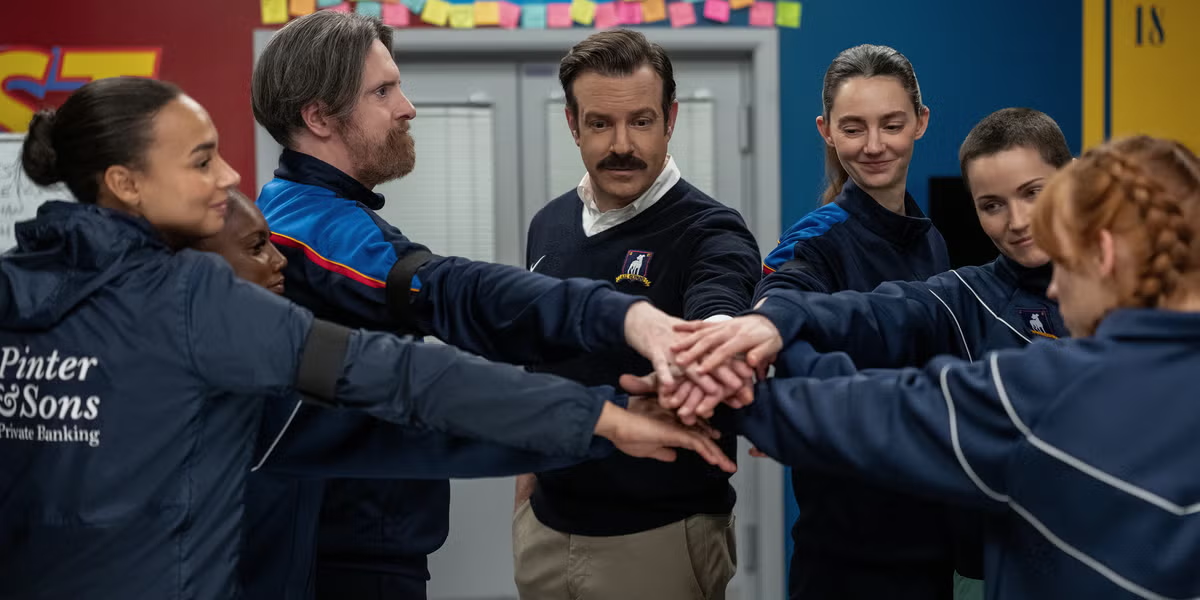
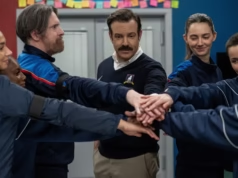
One of the more encouraging television developments we’ve been discussing is the fourth season of Ted Lasso.
The beloved Apple TV+ comedy-drama has always been about considerably more than football.
At its best, the series uses sports as a framework for exploring friendship, insecurity, forgiveness, ambition, and the importance of treating people with kindness.
Its fourth season takes the story in a new direction, shifting attention toward a women’s football team and creating opportunities to explore new characters while retaining the emotional foundation that made the original series so successful.
And that’s an important distinction.
The appeal of Ted Lasso was never simply watching an American football coach struggle to understand English football.
It was watching a collection of flawed, frequently unhappy people discover that empathy and genuine human connection could change their lives.
The challenge for any returning series is finding a reason to continue beyond the obvious commercial appeal of an established title.
The best approach is to preserve what audiences loved while giving the characters new challenges and opportunities to grow.
For Ted Lasso, that means remembering that optimism is most meaningful when it exists alongside genuine hardship.
After a week filled with difficult entertainment news, there’s something particularly welcome about a series that continues to argue that people can be better than their worst instincts.
Hollywood’s Next Big Challenge: Budgets, Box Office, and the Value of Smaller Films
Beyond individual films and television series, the business of entertainment continues to face some difficult questions.
Recent reporting has raised concerns about the financial performance of expensive studio productions, including claims that Warner Bros.’ 2026 film slate could generate substantial losses.
The precise financial picture is complicated, and studio accounting is rarely straightforward, but the broader issue is familiar.
Hollywood continues to spend extraordinary amounts of money producing and marketing films, often relying on recognizable intellectual property, established stars, and massive promotional campaigns to justify those investments.
Yet enormous budgets don’t guarantee enormous audiences.
And expensive productions aren’t necessarily better productions.
This is particularly relevant to the independent films we’ve been covering at INFLUX.
Consider The Man With the Silver Case, which creates an impressive visual identity through black-and-white cinematography, atmospheric locations, and a focused production.
Or Bigfoot, I Love You, which attempts to distinguish itself through unusual characters, originality, and a willingness to embrace absurdity.
These films operate in an entirely different financial universe from major studio productions.
But they also demonstrate that filmmaking remains, at its heart, an exercise in creative storytelling.
The challenge for independent filmmakers isn’t necessarily making a film that looks like a Hollywood blockbuster.
It’s making something that audiences remember.
And in an entertainment marketplace increasingly crowded with expensive franchise productions, originality may be one of independent cinema’s greatest advantages.
Halloween Weekend: The Perfect Time to Rediscover Something Great
With Halloween arriving tomorrow, it’s also the perfect time to revisit some of the horror films we’ve been discussing recently.
Our Halloween conversations have covered everything from established classics like The Shining, Dawn of the Dead, and 28 Days Later to more unusual favorites like Bubba Ho-Tep, Ghost Ship, and Late Night with the Devil.
And that variety is precisely what makes horror such a fascinating genre.
Some films terrify us through atmosphere and suspense.
Others rely on gore, psychological manipulation, supernatural mystery, or simply the uncomfortable feeling that something is terribly wrong.
Then there are films that mix horror with humor, social commentary, or genuine tragedy.
The best horror movies often work because they’re about something more than the immediate threat.
The Shining is about isolation, madness, and a family falling apart.
28 Days Later explores the fragility of civilization and the frightening speed with which humanity can abandon its principles.
And Dawn of the Dead manages to combine gruesome zombie horror with an unexpectedly sharp commentary on consumer culture.
Whether you’re revisiting an old favorite or discovering something new, Halloween is a wonderful excuse to explore the genre’s extraordinary range.
And if your idea of a good time involves watching a group of people make terrible decisions while being pursued by something unspeakably horrible, well, there’s certainly no shortage of options.
Looking Ahead: Why the Stories Still Matter
It’s difficult to look back on this week without feeling the weight of the performers we’ve lost.
Patrick Stewart, Walter Koenig, Tom Skerritt, Susan Saint James, and Eric Bauza all contributed to entertainment in very different ways.
Some commanded starships.
Some confronted monsters.
Some made us laugh.
And some gave life to animated characters that have entertained generations.
But they shared something important.
They created work that mattered to audiences.
And that’s ultimately what entertainment is about.
It’s easy to become distracted by box-office numbers, streaming statistics, budgets, and the endless cycle of industry announcements.
Those things matter, of course, particularly to the people trying to make a living in the business.
But what audiences remember is something considerably more personal.
We remember the characters who inspired us.
The performances that frightened us.
The stories that made us laugh, cry, or think about the world a little differently.
And occasionally, we remember a relatively unknown actor playing Guinevere’s father in a fantasy film, never imagining that a few years later he would become one of the most beloved captains in television history.
That’s the wonderful thing about entertainment.
You never really know which stories will stay with you.
Or which performers will become part of your life.
So this week, perhaps we should spend a little less time worrying about Hollywood’s latest financial projections and a little more time appreciating the films, television shows, and performers that made us fall in love with entertainment in the first place.
There are still extraordinary stories being told.
There are still talented filmmakers waiting to be discovered.
And there are still plenty of reasons to sit down, turn off the lights, and enjoy a great movie.
Until next week, keep watching, keep discovering, and remember that sometimes the best entertainment is the story you never expected to find.