
Netflix’s six-part thriller delivers an intriguing mystery, gruesome encounters, and compelling small-town drama, but an uneven final act threatens to sink an otherwise promising series.
There is something inherently fascinating about a small, isolated community struggling to survive against forces beyond its control. Add a mysterious creature lurking beneath the icy waters, a fractured family with plenty of emotional baggage, and a community where desperation has become a way of life, and you have the ingredients for a pretty compelling thriller. Netflix’s six-part miniseries Below has all of these things, and for much of its running time, it manages to turn them into a genuinely entertaining experience. Unfortunately, just when the series should be bringing everything together for a satisfying conclusion, it takes a rather peculiar turn that undermines much of what made the earlier episodes so effective.
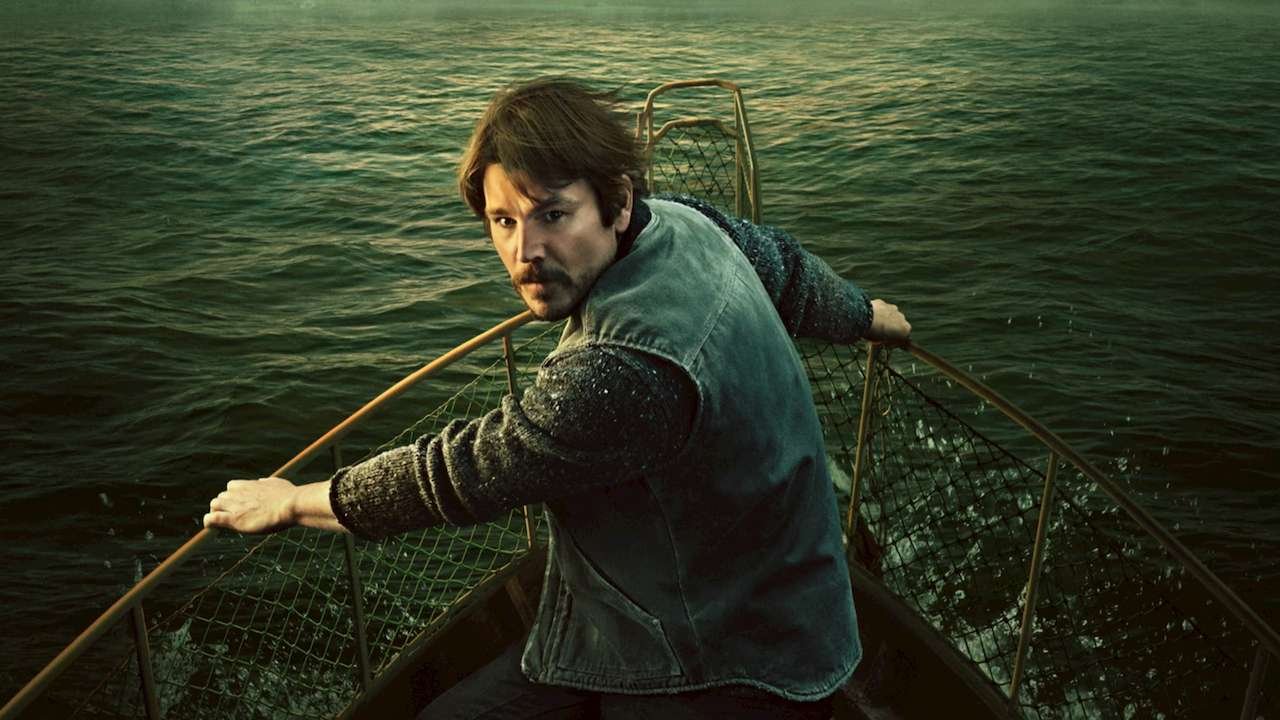
Starring Josh Hartnett as Calvin Penney, Mackenzie Davis as Dr. Fonda Howander, Charlie Heaton as Wade Penney, Natasha Henstridge as Jan Hicks, Ruby Stokes as Mary Penney, and a particularly memorable Willow Kean as Calvin’s sister Ruth, Below is an ambitious blend of family drama, small-town mystery, survival thriller, and old-fashioned creature feature. At its best, the series finds an appealing balance between these elements. At its worst, it seems unsure which kind of story it wants to tell.
And while there is certainly plenty to enjoy along the way, the final episode feels almost as though it belongs to a different production.
One of the strongest aspects of Below is its setting, particularly the unusual economic circumstances surrounding the community at the center of the story.
This is a town built around the water, but the traditional fishing industry has effectively collapsed. Rather than simply abandoning their homes and livelihoods, the residents have found an unusual alternative: harvesting chunks of icebergs for their exceptionally pure water, which can be sold for use in alcoholic beverages.
It’s a fascinating concept, and one that immediately gives the community an identity beyond the typical isolated fishing village we have seen countless times in movies and television.
These people aren’t simply struggling against harsh weather and economic uncertainty. They are attempting to reinvent an industry while holding on to a way of life that may no longer be sustainable. There is a certain stubborn pride in that determination, but also a growing sense of desperation.
The iceberg-harvesting operation is dangerous, the financial stakes are considerable, and the town’s future appears increasingly uncertain. The community’s dependence on this unconventional industry creates an atmosphere where every decision carries consequences, and where financial survival can easily become more important than personal safety.
Frankly, this premise alone could have supported an entire miniseries.
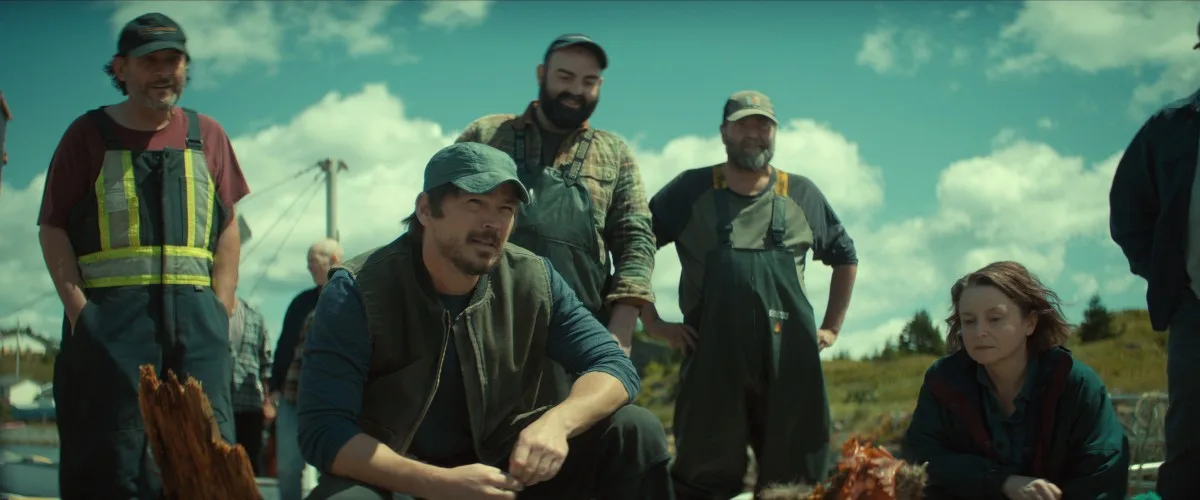
There is enough potential conflict in the relationships between the workers, their families, the local power structure, and the economic forces threatening the town to create a compelling drama without ever introducing a monster.
That is not to suggest the creature is unnecessary. Rather, it demonstrates just how effective the world-building is during the opening episodes.
The first three installments are particularly successful at establishing this environment. The community feels interconnected, the family dynamics have genuine weight, and the mystery gradually develops without immediately overwhelming the characters.
We get the sense that these people have known one another for generations, that old grievances are never entirely forgotten, and that personal relationships can be just as dangerous as anything waiting beneath the surface.
It is a terrific foundation for a suspenseful story.
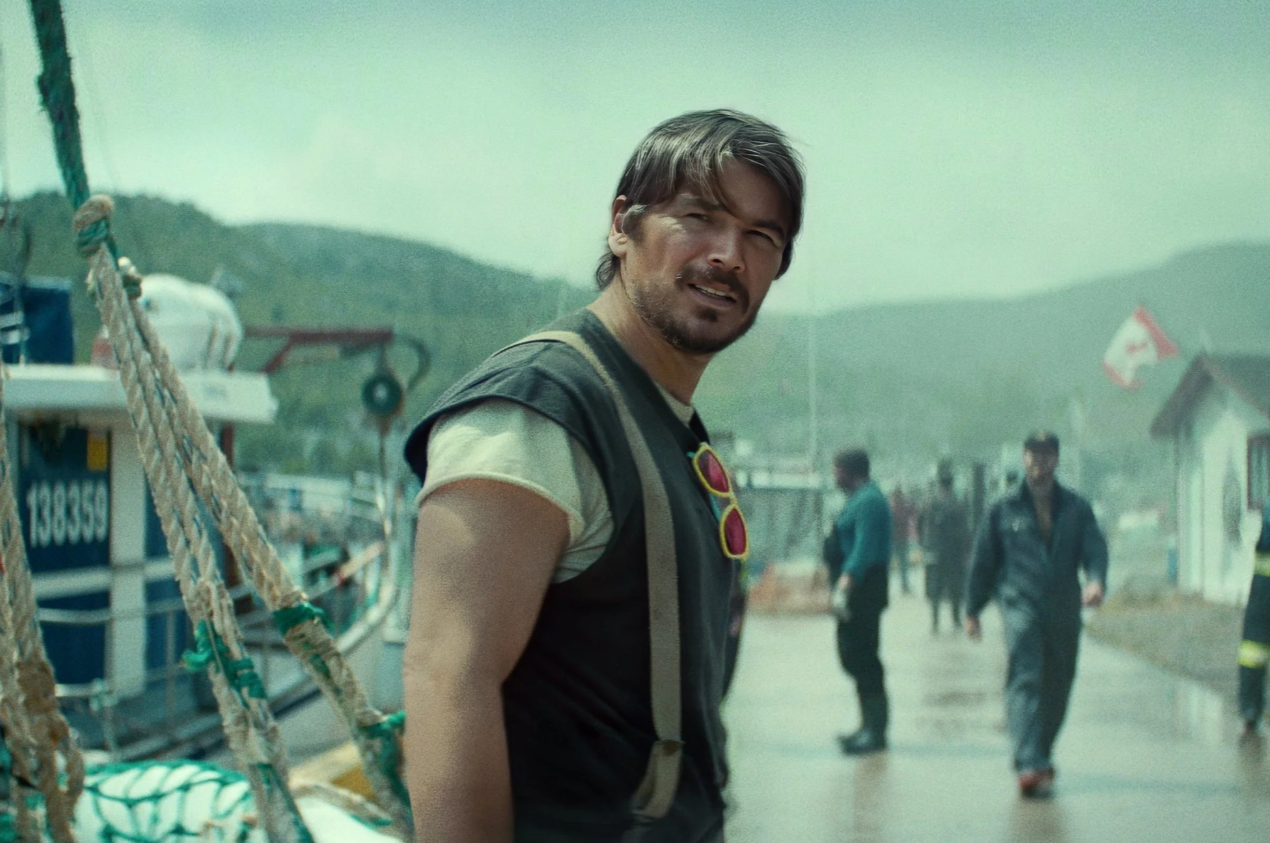
Josh Hartnett brings a grounded intensity to Calvin Penney, a character whose personal struggles are inseparable from the larger crisis surrounding the community. Hartnett has an ability to communicate frustration, exhaustion, and emotional conflict without constantly announcing what his character is feeling, and that restraint works particularly well in a story where nearly everyone seems to be carrying some kind of burden.
Charlie Heaton, playing Wade Penney, contributes to the complicated family dynamic, while Ruby Stokes as Mary Penney adds another dimension to the generational tensions.
These relationships are important because they give the audience something to care about beyond the immediate danger.
A giant creature attacking people is certainly entertaining, but it becomes considerably more interesting when the people being threatened have established relationships, conflicting loyalties, and recognizable emotional stakes.
Mackenzie Davis, as Dr. Fonda Howander, brings a more analytical presence to the unfolding mystery. Her character provides a useful counterbalance to the emotional reactions and increasingly desperate decisions of those around her.
Natasha Henstridge’s Jan Hicks is another piece of the community puzzle, contributing to the sense that the town’s residents are bound together by circumstances that are becoming increasingly difficult to control.
However, one of the more memorable performances comes from Willow Kean as Ruth, Calvin’s sister.
Kean stands out in a cast filled with recognizable performers, giving Ruth a distinctive presence that makes her more than another supporting character caught up in the chaos. In a series with numerous competing personalities and storylines, she manages to command attention and contribute meaningfully to the family dynamics.
The ensemble is generally quite effective, although there is one occasionally distracting element that deserves mentioning.
The accents.
Now, regional Canadian accents can certainly be distinctive, but some of the vocal performances here occasionally sound as though the actors were given copies of Strange Brew and Fargo and told to meet somewhere in the middle.
At times, the results border on caricature.
It’s not enough to derail the production, but there are moments when the dialogue becomes unintentionally amusing, particularly when the series is attempting to establish a serious or threatening atmosphere.
Fortunately, the performances are strong enough that the accents generally become a secondary concern once the story gets moving.
Although Below initially presents itself as a mystery with potentially supernatural implications, it becomes apparent fairly quickly that the community is dealing with something considerably more tangible.
A giant prehistoric squid.
This revelation is not particularly surprising, nor does the series treat the creature’s existence as a mystery that needs to be protected until the final episode. Instead, the suspense comes from understanding what the creature is, what it is capable of, and how the community will respond to its presence.
And in the earlier episodes, that approach works remarkably well.
The creature is intimidating, the attacks can be vicious, and the violence occasionally becomes surprisingly graphic. There is a willingness to embrace the gruesome consequences of these encounters that gives the series a welcome edge.
The danger feels legitimate.
People can be injured, people can die, and the environment itself becomes increasingly threatening.
The cold, unforgiving setting adds another layer of vulnerability. These aren’t characters who can simply run down the street to safety. They are operating in an isolated region where the water, the weather, and the collapsing local economy already present considerable obstacles.
Introducing a massive prehistoric predator into that environment creates a particularly effective combination of natural and unnatural threats.
There is also something appealingly old-fashioned about the premise.
A giant monster lurking in the water, a community unwilling or unable to abandon its livelihood, and people making increasingly questionable decisions in the face of obvious danger. These are familiar ingredients, but familiarity isn’t necessarily a problem when the execution is entertaining.
And for a while, Below is very entertaining indeed.
One of the more frustrating elements of the series is its flirtation with the supernatural.
Throughout the story, there are moments suggesting that something more mysterious may be occurring beneath the surface. Strange experiences, unsettling imagery, and apparently inexplicable behavior create the possibility that the creature is only one part of a much larger phenomenon.
The series also introduces ammonia-related hallucinations, providing a plausible explanation for some of the more unusual experiences.
On paper, this is an intriguing narrative device.
Hallucinations can blur the distinction between reality and perception, making characters question what they have witnessed and forcing audiences to reconsider the reliability of what they are seeing.
Used effectively, this kind of uncertainty can elevate a straightforward creature feature into something psychologically disturbing.
Unfortunately, Below doesn’t always seem interested in following through on the possibilities it introduces.
Some of these sequences are visually interesting and occasionally unsettling, but they don’t consistently develop into meaningful revelations or satisfying dramatic payoffs.
Instead, they sometimes feel like narrative detours, moments designed to suggest a deeper mystery without fully committing to one.
This becomes particularly frustrating because the series has already established such a compelling central conflict.
The creature, the community, and the competing personal interests are more than enough to sustain the story. Introducing supernatural possibilities without meaningfully exploring them risks making the narrative feel unnecessarily complicated.
Ambiguity can be a powerful storytelling tool, but there is a difference between deliberately leaving something open to interpretation and introducing ideas that ultimately don’t contribute much to the larger narrative.
Below occasionally struggles to distinguish between the two.
As with many creature features, the giant prehistoric squid is not necessarily the most dangerous force in the story.
That distinction belongs to human ambition.
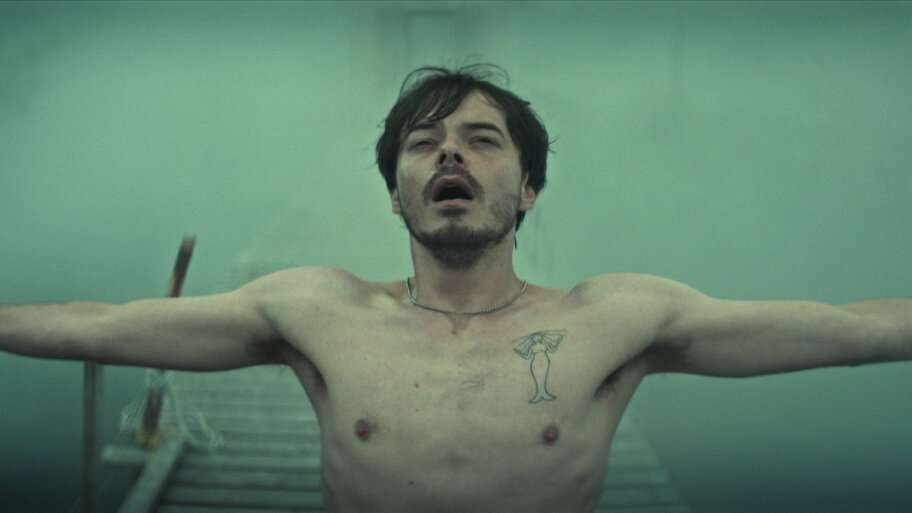
As the situation becomes increasingly dangerous, the motivations of those seeking financial security, influence, and control begin to take precedence over the welfare of the community.
Greed and the pursuit of power become central to the conflict, reinforcing the idea that people are often their own worst enemies.
It is a familiar theme, but one that fits particularly well within the economic circumstances established during the opening episodes.
These are people whose livelihoods have already been devastated. Their future depends on a precarious industry, and the possibility of losing everything creates an environment where otherwise reasonable individuals may begin making extraordinarily reckless decisions.
The creature becomes both a literal threat and a catalyst for exposing the community’s underlying tensions.
This is where the series has some of its most interesting material.
The monster is dangerous because of what it can do physically. Human greed is dangerous because of the choices it encourages people to make.
Unfortunately, the series doesn’t always maintain the same level of nuance as these conflicts escalate. What begins as an examination of desperation and economic survival increasingly becomes a more conventional struggle over power.
There is nothing inherently wrong with that direction, but the transition occasionally sacrifices the complexity that made the earlier episodes so compelling.
The best creature features understand that the monster should expose the weaknesses of the human characters rather than simply provide something for them to fight.
Below clearly recognizes this idea, even if it doesn’t always execute it as effectively as it could.
And then we arrive at the finale.
For five episodes, Below builds an atmosphere of suspense, danger, family conflict, and increasingly gruesome encounters. The story may occasionally wander, but the overall tone remains relatively consistent.
Then the sixth episode arrives, and the production seems to undergo a rather dramatic personality change.
What had previously been an intense, sometimes disturbing creature thriller suddenly begins resembling a family adventure.
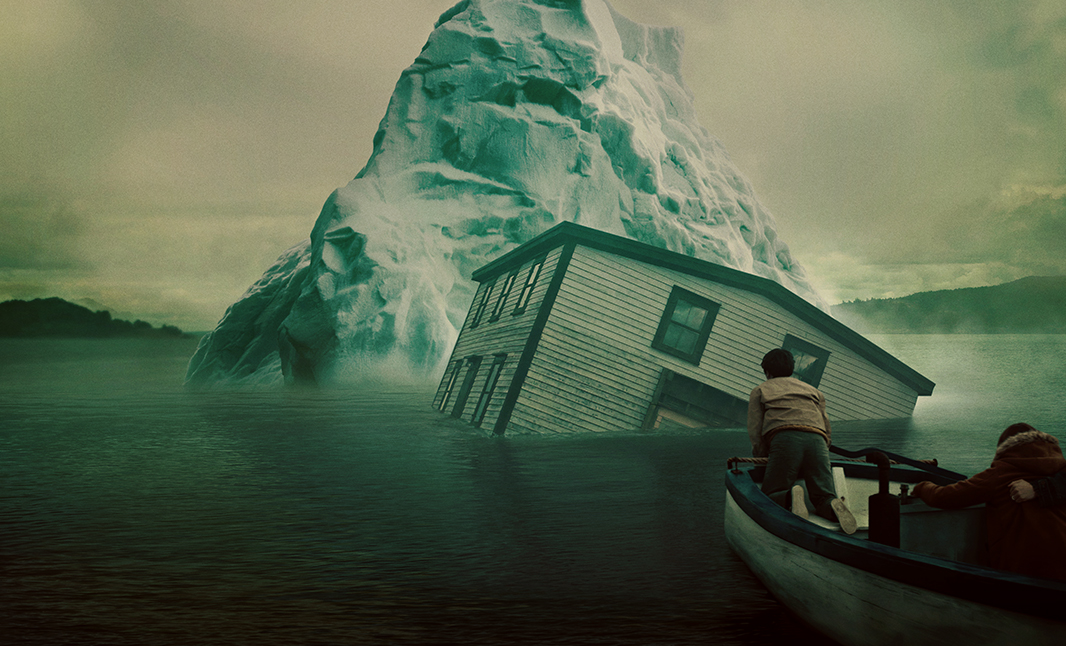
At times, I half expected the characters to discover a pirate ship, find a treasure map, or announce that the real reward was the friendships they had made along the way.
The shift is so pronounced that comparisons to The Goonies don’t feel entirely unreasonable.
And with Charlie Heaton involved, there were moments when I was half expecting him to deliver some kind of Stranger Things callback and start asking about Will or Nancy.
Of course, there is nothing wrong with a family adventure, and The Goonies is a beloved classic for good reason. But that isn’t the story Below spent its first five episodes telling.
The problem isn’t that the finale attempts to bring the family together or introduce a more adventurous spirit. Those elements could have worked beautifully if they had been developed organically throughout the series.
Instead, the tonal transition feels abrupt.
The danger that previously carried considerable weight becomes less convincing, the emotional stakes are approached differently, and the sense of genuine horror that helped distinguish the earlier episodes begins to dissipate.
It’s almost as though the series loses confidence in the darker story it has been telling and decides that a more conventional, broadly appealing adventure would provide a better conclusion.
Unfortunately, the result is neither as suspenseful as the earlier episodes nor as emotionally satisfying as the filmmakers presumably intended.
A finale should ideally bring the central themes, character arcs, and narrative conflicts together in a way that feels like a natural culmination of everything that came before.
Here, the conclusion feels more like a change of direction than a resolution.
And that is a shame, because there is so much good material leading up to it.
What makes Below frustrating is not that it is a bad series. It isn’t.
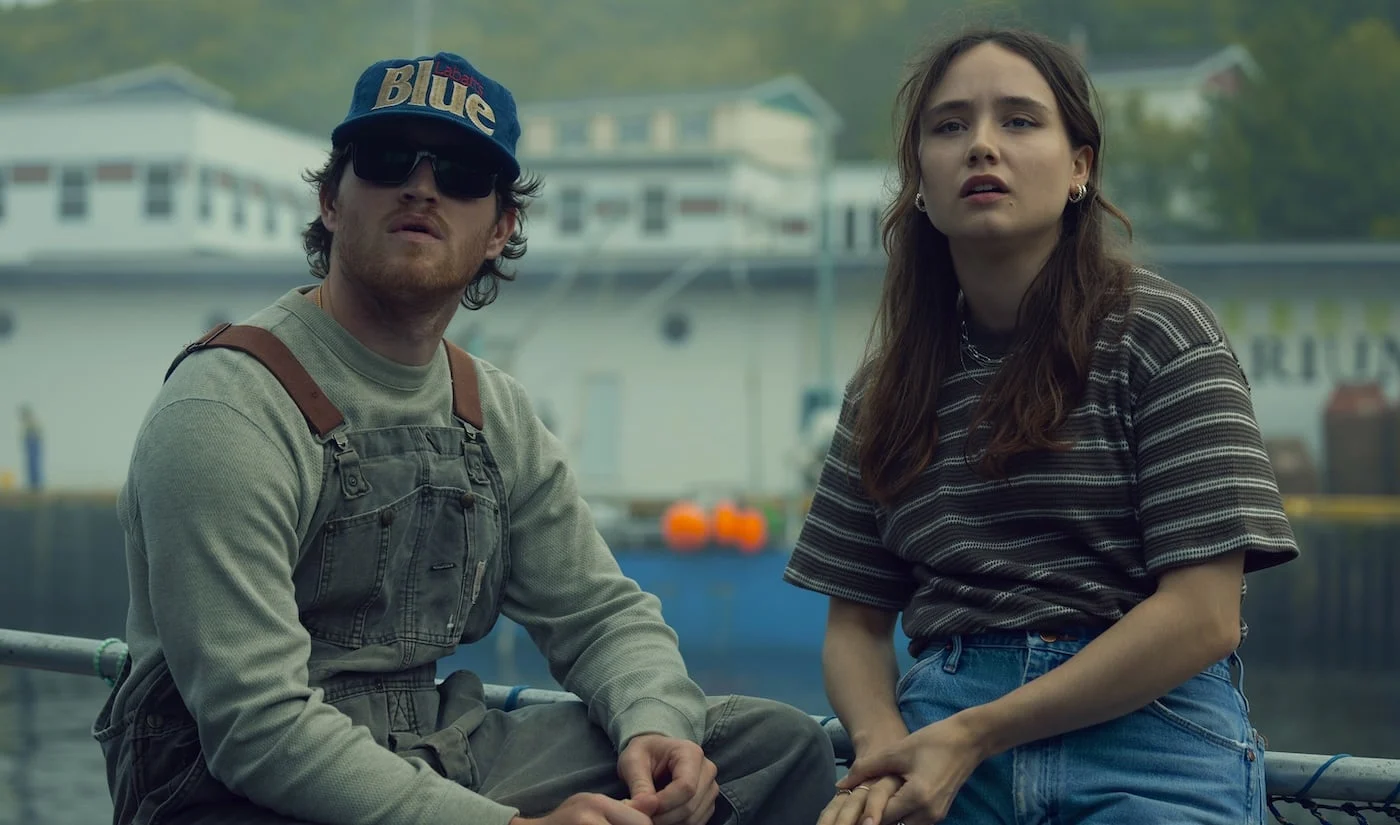
In fact, there is a great deal to appreciate.
The setting is distinctive, the central premise is engaging, and the cast delivers several strong performances. The opening episodes establish a community that feels worth exploring, while the creature encounters provide the kind of visceral excitement that fans of the genre are likely to enjoy.
There is also an admirable willingness to combine different storytelling traditions.
Part family drama, part economic survival story, part psychological mystery, and part monster movie, Below attempts to offer something more substantial than a simple tale of people being attacked by an oversized sea creature.
The ambition is commendable.
But ambition also requires discipline.
Not every intriguing idea needs to become a subplot, and not every tonal possibility needs to be explored within the same six episodes.
The supernatural suggestions never become as meaningful as they initially appear. The hallucinations create some memorable moments without consistently delivering satisfying consequences. The human conflicts occasionally drift toward familiar territory, and the finale seems determined to deliver an entirely different kind of entertainment from what the series initially promised.
Perhaps the most disappointing aspect is that the small-town community and its unusual iceberg economy are compelling enough to carry the story on their own.
There is an excellent drama buried somewhere inside Below, one about a dying industry, a desperate community, and the lengths people will go to preserve their livelihoods.
There is also a potentially excellent creature feature about a prehistoric predator threatening an isolated population.
Either story could have worked exceptionally well.
Combining them should have made both stronger.
For much of the series, it does.
But by the time the final credits roll, the production feels as though it has struggled to reconcile its competing ambitions.
Still, there is something to be said for a series that manages to be genuinely interesting even when it doesn’t entirely succeed.
The first three episodes are particularly effective, and the middle stretch offers enough tension, violence, and character conflict to maintain interest. Even when the narrative begins to wobble, the premise remains appealing and the performances help carry the material.
Ultimately, Below is a worthwhile watch for fans of creature features and atmospheric thrillers, provided they are willing to accept a finale that doesn’t quite deliver on the promise of what came before.
It has a compelling mystery, an intriguing community, a prehistoric monster, and plenty of bloody encounters.
What it doesn’t have is a particularly consistent sense of what kind of story it wants to be.
And in the end, that may be the biggest monster lurking beneath the surface.
Brian’s Score: 7.5 / 10
More from Brian’s Brain