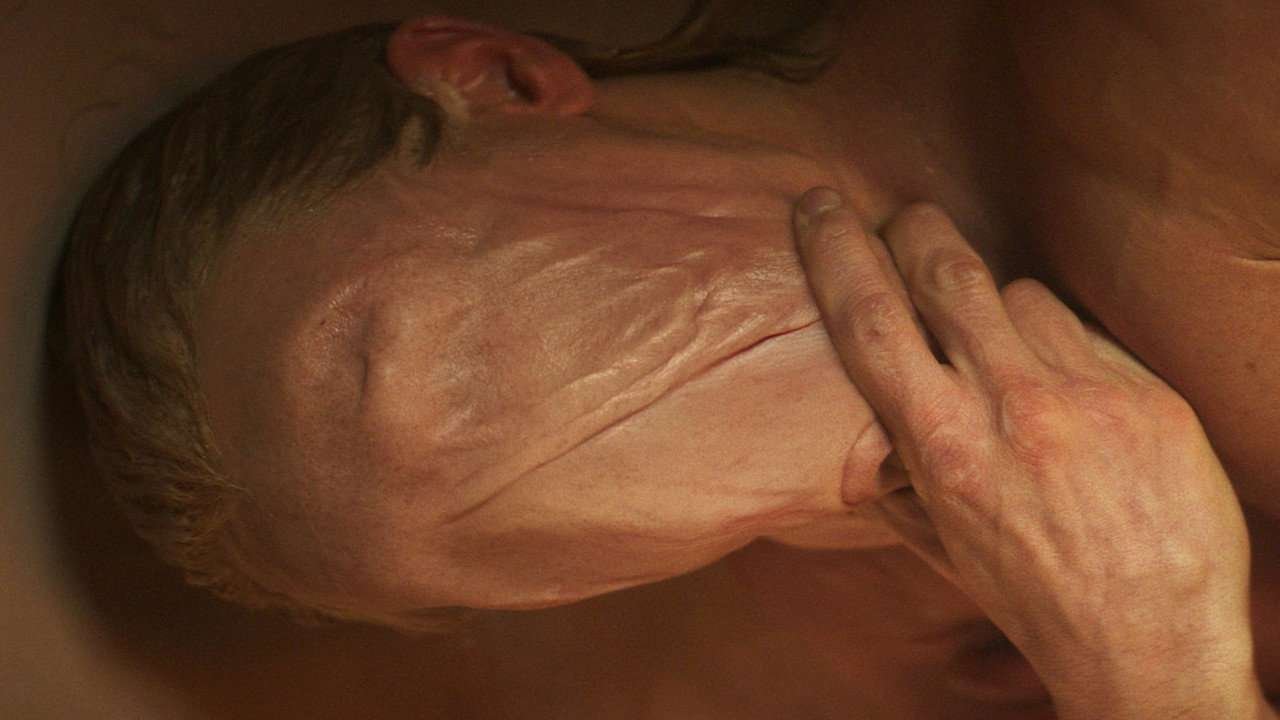
A Gotham monster with a leading man’s problem
James Watkins’ Clayface finds a nasty little irony in a familiar comic-book power: the man who can look like anybody is a movie star who’d give almost anything to look like himself.
Tom Rhys Harries plays Matt Hagen, a kid from the streets of Gotham who makes it to Hollywood as a leading man. When an attack leaves him disfigured, the people who helped make him a star leave him behind. An experimental medical treatment offers a way back. The cruel part is that it works, at least at first. Forget the prospect of a shape-shifting monster for a moment. Imagine Matt getting back the face that made him famous and knowing, in a way few actors ever have to know, exactly what that face is worth.
That stretch between the attack and the treatment is what gives the origin story its bite. Matt hasn’t forgotten how to act. Whatever talent got him from Gotham to a movie set is presumably still his. Yet the people best placed to find work for him have apparently decided there’s no point trying. It’s tempting to put his willingness to undergo treatment down to vanity, but that lets an awful lot of other people off the hook. Wanting to be handsome is one thing. Wanting to keep the life you spent years building is quite another. Matt has good reason not to know where one desire ends and the other begins.
It’s also an unusually good role for an actor in a monster movie. Harries has to represent two versions of Matt before the shape-shifting even enters into it: the young man who remembers where he came from and the Hollywood success whose appeal depends partly on making success look natural. The interesting part of the assignment isn’t showing how different those two people are. It’s finding what they have in common with the creature. Matt’s ambition is an especially useful thread. Early on, it’s easy to admire a Gotham kid for refusing to accept the life he’s been handed. That same determination looks rather different once it has a medical experiment behind it.
There’s a little of The Fly in the way a scientific breakthrough makes it dangerous to feel good about an early result. But the laboratory is only half the equation here. For Matt, the measure of success is whether somebody else can look at him and see the man they remember. That gives the body horror a particularly uncomfortable audience in moviegoers. We recognize a leading man by his face, too. There’s pleasure in the idea of a performer who can change his appearance at will, right up until you consider how little say Matt has had in which appearance everybody wants.
Revenge is the more conventional side of Clayface. A crime boss is responsible for the attack, and giving Matt someone to blame lends the story a welcome bluntness. Sometimes it’s satisfying for a monster to have somewhere to go and a grudge to carry there. But settling a score is a less interesting use of this particular monster than putting him back among people who liked him perfectly well when he was beautiful. A criminal can answer for an attack. Who, exactly, answers for a career evaporating afterward? Matt’s anger makes sense in both cases, but only one offers a convenient target.
Watkins, whose horror credits include The Woman in Black and Speak No Evil, has a sound reason to treat this as a horror story rather than a supervillain résumé. In an adventure, the fun of shape-shifting tends to lie in figuring out what the character can do next. Here, what matters is whether Matt can stop. It’s a small distinction with a big emotional payoff: even the most spectacular ability would be a pretty lousy bargain if you couldn’t count on recognizing yourself afterward. And there’s a welcome streak of dark humor in the predicament. Hollywood prizes versatility, but preferably in someone who still looks like the person on the poster.
You don’t need to know the various Clayfaces of DC comics to appreciate this one. Fans have the pleasure of looking at a familiar Gotham threat from the other side, but the better recommendation is to moviegoers who like their creature features to leave them with some sympathy for the creature. The most unsettling thing about Matt isn’t how far his body can depart from the Hollywood ideal. It’s how reasonable getting it back sounds, even when you know what kind of movie you’re in.