Ryan Gosling’s space adventure finds good company light-years from home.
Project Hail Mary makes an unlikely friendship the best part of a save-the-sun adventure, largely because meeting an alien puts a middle school science teacher’s particular talents to such good use.
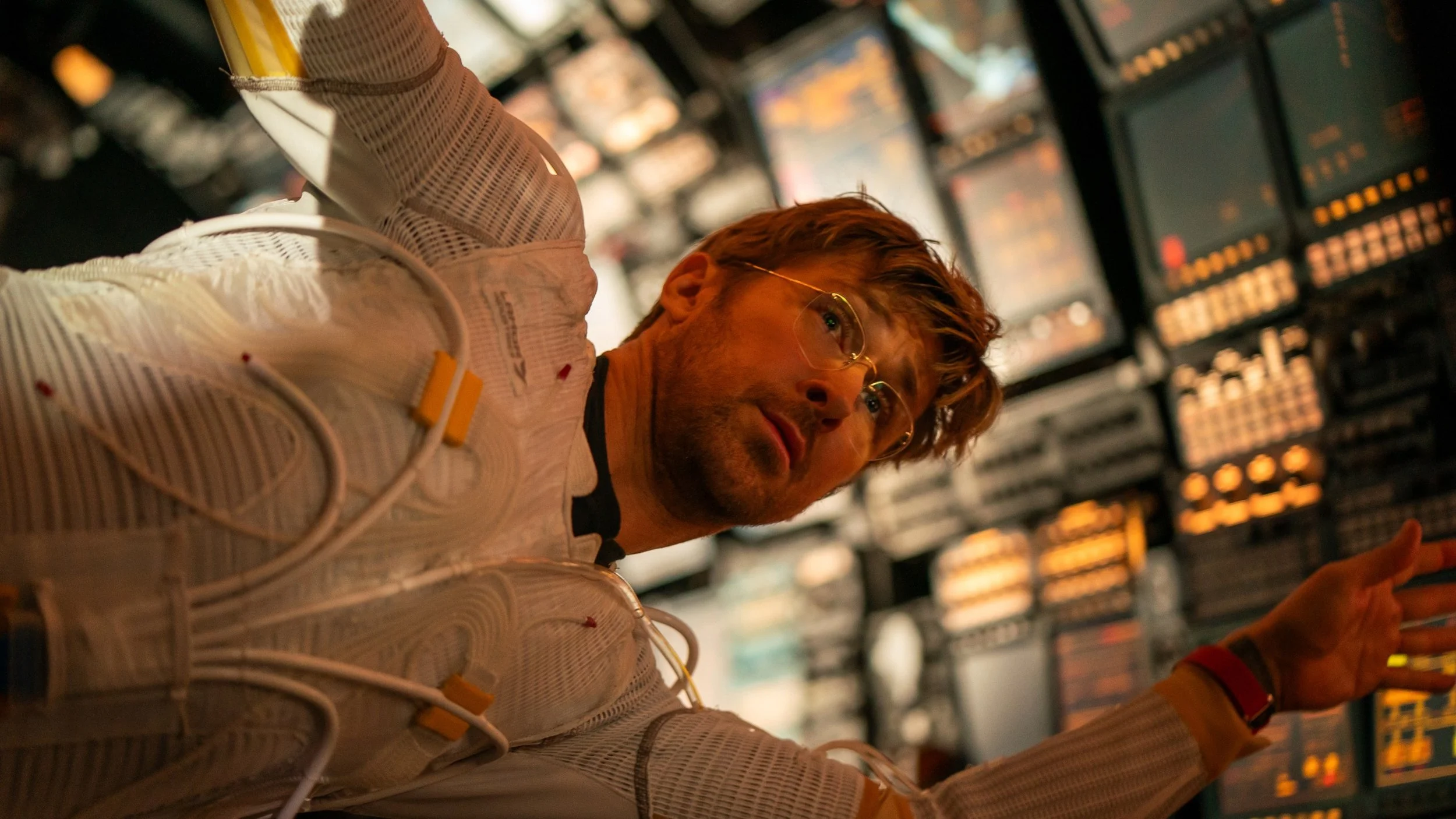
Teaching may not be the qualification you’d put first on an astronaut application. For Ryland Grace (Ryan Gosling), waking up alone aboard a spaceship light-years from Earth, it’s quite a bit more useful than remembering where he parked. He doesn’t know who he is or how he got there. What he can do is look around, ask a question and work out how to answer it. Directors Phil Lord and Christopher Miller have a good hook in that distinction: we get to know something important about this man before he can tell us much of anything about himself.
The March 2026 film, with a screenplay by Drew Goddard, brings another Andy Weir novel to the screen after The Martian. The family resemblance is there. Both stories find suspense in letting a capable person think through a problem whose answer nobody on Earth can supply in time. But in The Martian, the space adventure starring Matt Damon, the stranded astronaut knew exactly why he was on Mars; the trouble was getting off it. For Grace, figuring out what he’s doing in space is itself a substantial piece of the job. As his memory returns, a remarkably local concern, one man’s disorientation, opens onto the mystery of a substance causing the sun to dim.
There’s a drawback to that setup. Amnesia gives the story a handy reason to explain things, but it also means that sometimes the only thing standing between us and an answer is the question of when Grace will remember it. The scientific mystery is more satisfying on that score. A recollection belongs to Grace alone; a puzzle belongs to anybody willing to take a crack at it. That’s a good reason to make the lead a teacher rather than just a very smart man. Part of his job back home was giving somebody else a way into a subject he already understood.
Enter Rocky, the alien Grace encounters on his journey. For once, the teacher has a potential lab partner whose background he can’t even begin to guess. How do you tell whether somebody agrees with you if you haven’t established what agreement looks like? It’s an appealing first-contact problem precisely because a wrong guess needn’t mean the end of civilization. It might just mean two individuals have got their wires crossed. In a story with the fate of the sun hanging over it, there’s a surprising amount of pleasure in having something that small to care about.
Rocky also gives the film its most interesting piece of casting. James Ortiz led a five-person puppetry team to bring the alien to life and supplied Rocky’s artificial voice. Those are two distinct parts of the performance: the voice can convey what Rocky means, while the puppet gives Gosling a partner occupying actual space. Even the simple business of where Grace should look while he waits for a response has a concrete answer. And waiting suits Gosling. His knack for letting a beat go by before reacting is a particularly nice match for a character who has good reason to wonder whether he understood his companion correctly.
Gosling’s gift for playing competence and mild alarm at the same time gets at what’s funny about that wish: for all practical purposes, he is the qualified grown-up. He doesn’t have to feel like one to be of some help.
Viewers looking for a lean space thriller may find the double business of recovering a past and investigating a failing sun a little cumbersome. The friendship is the better reason to make the trip, and it doesn’t require prior affection for Weir’s book or for Gosling. If the part of The Martian you liked best was getting a fair shot at understanding the problem before the astronaut solved it, Project Hail Mary is an easy recommendation. This time there’s the added fun of imagining how you’d explain your bright idea to a friend who has never heard of Earth.