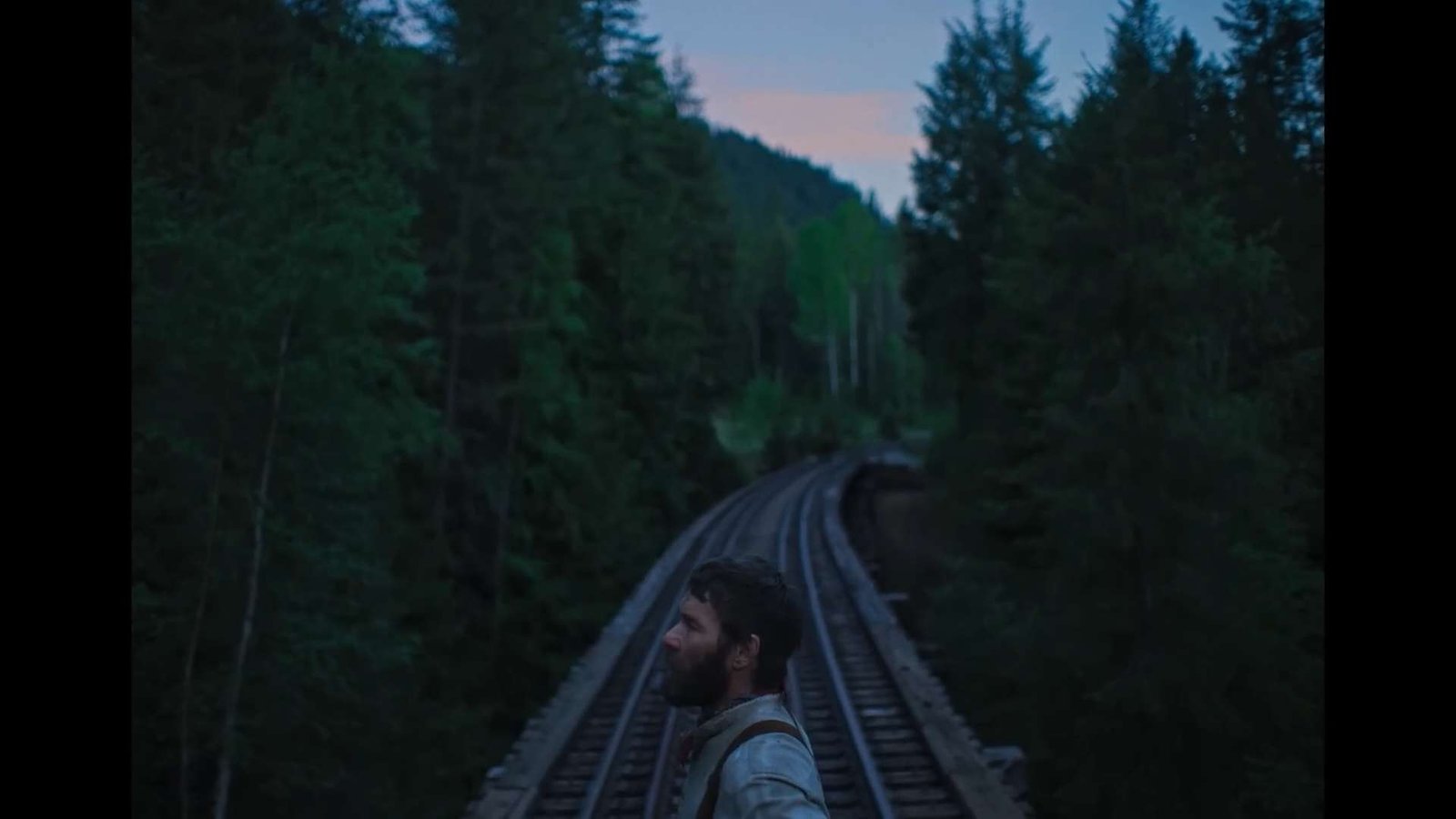
Joel Edgerton gives a railroad worker’s quiet happiness its due.
Clint Bentley’s Train Dreams makes a century of American change feel personal by measuring the growth of the railroads in time one worker spends away from home.
That worker is Robert Grainier, played by Joel Edgerton, and he has a pretty good idea of what he wants from life. He has a wife, Gladys (Felicity Jones), a young daughter and a home in the Pacific Northwest where he’d gladly spend more of his days. Logging and railroad work pay him to be somewhere else. Adapted from Denis Johnson’s novella by Bentley and Greg Kwedar, this 2025 drama has little use for the usual suspense about whether a man of modest means will make something of himself. As far as Robert is concerned, he already has. It’s making a living that’s the tricky part.
Edgerton makes Robert easy company without making him particularly easy to know. Around the other laborers, he has the useful social skill of letting a more talkative fellow have the floor. Watch what happens to that reserve around Jones. There’s an ease between them that makes it possible to picture a whole afternoon in their company, even though the movie can spare only a few minutes. Edgerton doesn’t give the impression that a different, more articulate man is waiting to come out. Robert is simply happy, a surprisingly difficult state for an actor to convey without putting on a show of it.
The jobs themselves have a life beyond their function of keeping the couple apart. A logging camp brings together men who might never choose one another’s company and gives them good reason to pay close attention to one another. William H. Macy, as a seasoned logger with a particular regard for the trees he cuts, is an especially good fit here. He gets across the pleasure of having an audience as well as the conviction behind what he says. It’s a small distinction, but it keeps a memorable coworker from becoming a visiting lecturer on the meaning of the forest.
Cinematographer Adolpho Veloso gives those trees a scale that makes the men’s occupation look both impressive and slightly absurd. It takes some doing to bring down something that big; standing beside it, a man is an awfully small judge of what ought to happen to it. The nearly square frame is an inspired choice for a story set in such expansive country. Instead of encouraging the eye to travel across a grand vista, it draws attention upward, from the people doing the cutting to the height of what they’re cutting down. The woods are lovely, but the pictures are most interesting when somebody has a job to do in them.
Bentley’s handling of time is similarly purposeful, if a little less consistent. A job can introduce someone worth getting to know and then end, taking that person out of Robert’s life without so much as a proper goodbye. The film lets those encounters be brief. Its narration, delivered by Will Patton, gives the passing years the intimacy of a story somebody has thought about for a long time before telling it. Occasionally, though, the voice and the photography both put an accent on the same moment. When Edgerton’s face already gives a departure its weight, a little less poetry around him would go a long way.
The closer the story stays to Robert, the more apparent the cost of that choice becomes for Gladys. Jones brings a welcome directness to their scenes together. She makes the home they’re building feel like something Gladys wants on her own account, rather than a refuge thoughtfully provided for her husband by the screenplay. But while Robert is away, his coworkers get to surprise us in ways Gladys seldom can. Another stretch of ordinary time with her would have been worth a little less time contemplating what she means to him. That’s partly a compliment to Jones, whose warmth leaves room for curiosity about the woman beyond the marriage.
Still, there’s something generous about a period drama that allows a working man this much room in which to grow old. Robert doesn’t need to turn up at a famous event to justify following him across the years. Edgerton finds the continuity in a man who keeps taking an interest in the world even as fewer of the people he knew are around to share it. For anyone drawn to a good face and a well-told story, Train Dreams needs no advance affection for Johnson’s book or for railroad lore. Its most persuasive idea is also its simplest: the parts of Robert’s life he’d have liked to last longer are the very parts a more conventional historical epic would have hurried past.