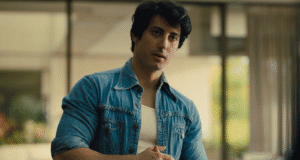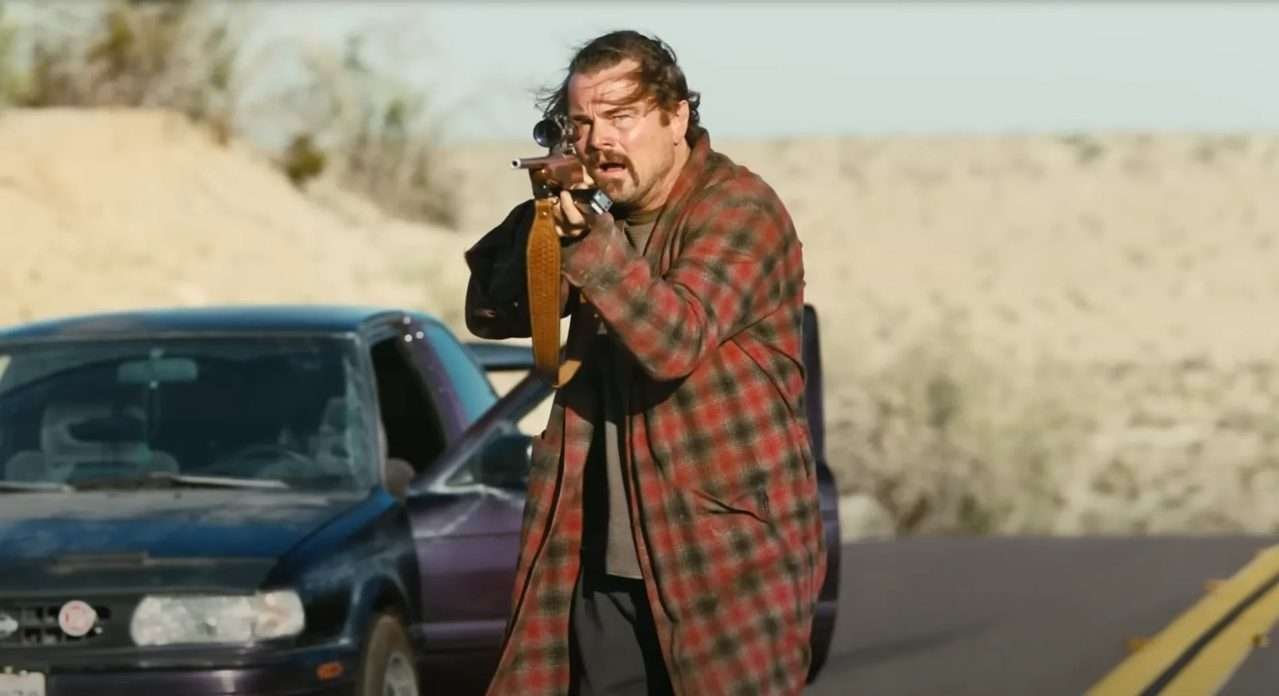
Leonardo DiCaprio makes a memorably frazzled revolutionary in Paul Thomas Anderson’s thriller.
Paul Thomas Anderson’s One Battle After Another makes a terrific chase movie out of a father’s panic by letting him be about as useful in a crisis as his teenage daughter suspects he is.
Bob Ferguson (Leonardo DiCaprio) has spent years living off the grid with his daughter, Willa (Chase Infiniti). A former revolutionary, he has pretty good grounds for thinking somebody might come after him. He also spends enough time stoned that it’s fair to question his judgment on the particulars. When Colonel Steven J. Lockjaw (Sean Penn), an enemy from Bob’s radical days, resurfaces after 16 years and Willa goes missing, you might expect Bob’s old training to kick in. Unfortunately for Willa, having once been good at something and being able to do it this afternoon are two different things.
Anderson, who wrote the film with inspiration from Thomas Pynchon’s Vineland, gets wonderful comic mileage out of that distinction. Take the routine business of a revolutionary password. It makes sense that people engaged in dangerous work would want to establish who’s on the other end of the line. It makes equally good sense that a dad trying to find his kid would have no patience for a memory test. DiCaprio plays the resulting frustration beautifully: the more urgently Bob needs help, the less convincing he sounds as someone it would be wise to help. The joke lasts precisely because the security precaution is reasonable. You can sympathize with everybody involved and still desperately want somebody to give this man a break.
What DiCaprio brings to Bob, beyond a considerable willingness to look foolish, is the touchiness of a parent who knows he’s lost some standing. He can sound aggrieved and frightened in the same breath. Across from him, Infiniti has the less showy job of making Willa’s independence look like an ordinary feature of their household rather than a special quality the screenplay has conferred on her for the emergency. She’s particularly good at registering the difference between hearing her father and taking his advice. When they’re separated, it’s possible to enjoy Bob’s scramble without spending every minute of Willa’s story wishing the movie would cut back to its star.
Penn goes in quite another direction. Where Bob seems barely able to hold himself together, Lockjaw moves as if relaxing a muscle might constitute a breach of discipline. It’s an outsize physical performance, sometimes funny before Penn even opens his mouth. The risk is that the colonel will become easier to laugh at than to fear, and a few of the film’s broadest satirical strokes do little more than underline how grotesque he is. But Anderson understands something important about this particular bully: Lockjaw doesn’t need to inspire much confidence in person when he has the resources of a military operation behind him. His absurdity offers remarkably little protection to anyone in his way.
There’s a welcome change of tempo whenever Benicio del Toro turns up as Sensei Sergio. Del Toro underplays competence as deftly as DiCaprio overplays exasperation; next to Bob, taking a moment to think looks like a near-superhuman gift. The sprawling cast isn’t served quite evenly. Teyana Taylor gives Willa’s mother, Perfidia, such force in the early stretch that her diminished place in the rest of the story leaves a gap. Bob’s years as a father complicate our picture of the man he used to be. Perfidia, by contrast, has to carry a great deal of the movie’s revolutionary history in comparatively little time.
For all the pleasure Anderson takes in these people and their peculiarities, he also knows when to clear the chatter away. A car chase on a rolling stretch of road is the standout. The rises are high enough to hide a vehicle, then reveal it again, and suddenly the most interesting thing in a wide expanse of daylight is the little patch of pavement nobody can see. The road itself does the work that frantic cutting might do in another thriller. There’s genuine suspense in waiting for a car to crest a hill, and a particular satisfaction in realizing that Anderson has taught us what to watch for without stopping to explain a thing.
That stretch is reason enough to recommend One Battle After Another to someone who likes a well-built action sequence and has no particular investment in Anderson or Pynchon. What gives it staying power, though, is the affection it finds for a father who badly wants to be the hero of a rescue movie. Bob’s love for Willa is never in doubt. Whether she needs the kind of rescuing he has in mind is a much better question, and the film has the good sense to give her a say in the answer.