
In the end, The Boys proved that beneath all the violence and chaos, its greatest strength was always the damaged humanity underneath the capes.
From the beginning, The Boys announced itself as something different. Violent, vulgar, cynical, and frequently outrageous, the series never cared much about playing by the rules of the traditional superhero genre. It arrived at a time when comic book stories had become increasingly polished, inspirational, and corporate. Then suddenly came a show willing to spray blood across the screen, humiliate its heroes, and ask what would actually happen if superpowered celebrities existed in a world driven by marketing, ego, and unchecked power.
What made the show compelling, however, was never simply the shock value. The gore, profanity, and absurdity grabbed attention in the pilot, but none of that alone could have carried five seasons. The reason viewers stayed invested was because underneath all the ugliness was a surprisingly character-driven story. The best stretches of the series understood that perfectly. Beneath the exploding bodies and dark satire were broken people trying to survive a world that rewarded cruelty.
From the first episode, Hughie Campbell, played by Jack Quaid, became the audience’s way into that chaos. Hughie was never presented as a classic heroic figure. He was awkward, frightened, indecisive, and often overwhelmed by the insanity around him. That vulnerability made him relatable.
Across the series there were moments where the character flirted with becoming unlikeable, particularly when the show leaned too hard into self-righteousness or when his emotional indecision became repetitive. Yet Hughie consistently remained the closest thing the series had to a moral center. Even when he made mistakes, the audience understood where those mistakes came from. He was a normal person desperately trying not to lose himself in a world where almost everyone eventually did.
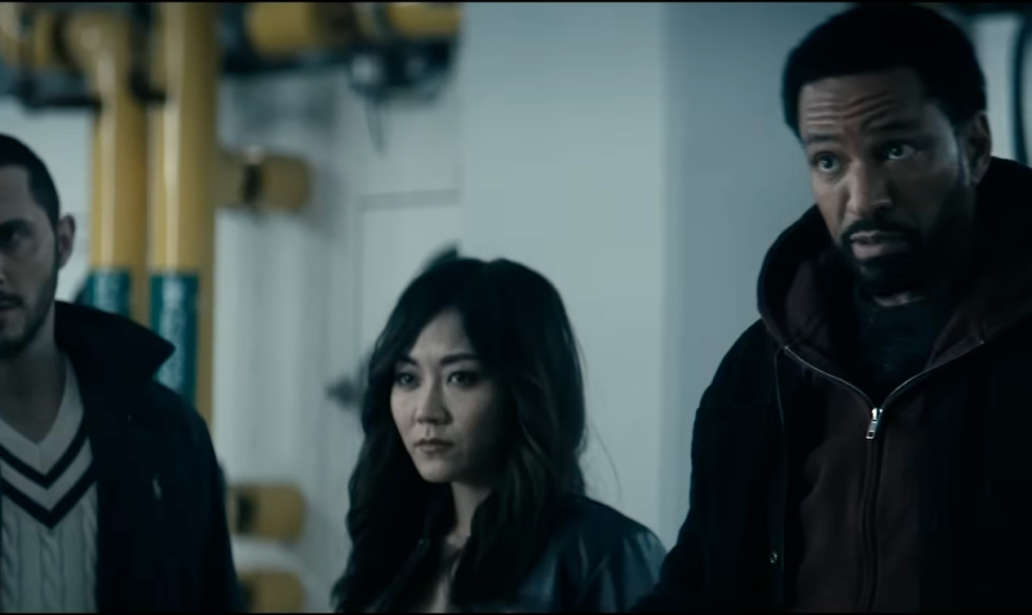
The emotional core of the series, though, often rested with the quieter relationships among the members of The Boys themselves. Mother’s Milk, played by Laz Alonso, brought humanity and exhaustion to the story. MM felt like the one character who truly understood the cost of everything happening around him. He carried trauma, responsibility, and frustration in equal measure, and Alonso grounded even the most absurd situations with believable emotional weight.
Frenchie and Kimiko became the beating heart of the show in a completely different way. Tomer Capone and Karen Fukuhara gave the series something it desperately needed amid all the cruelty: tenderness. Their relationship could be messy, tragic, and chaotic, but it was genuine. In a show where manipulation and betrayal became almost second nature, Frenchie and Kimiko felt sincere. Watching the two of them struggle toward some form of peace became one of the show’s strongest emotional through-lines.
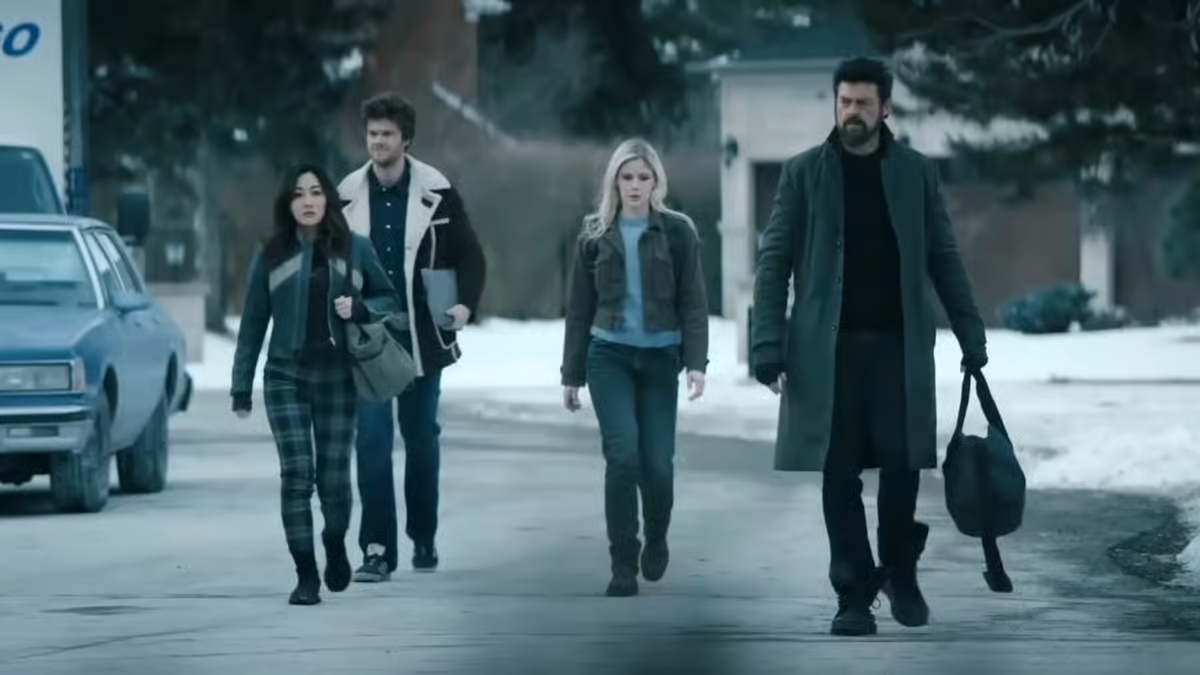
The supporting characters also helped keep the show unpredictable across its long run. Starlight, portrayed by Erin Moriarty, evolved from naive idealist into someone hardened by experience without entirely losing her conscience. Her arc occasionally stumbled when the writing became overly repetitive, but she remained an essential counterbalance to the darkness surrounding her.
A-Train, played by Jessie T. Usher, may have had one of the most interesting journeys in the entire series. Initially introduced as selfish, cowardly, and deeply corrupted, the character slowly became more tragic with each passing season. His guilt, fear, and desperate need for redemption gave the show one of its most compelling long-term arcs.
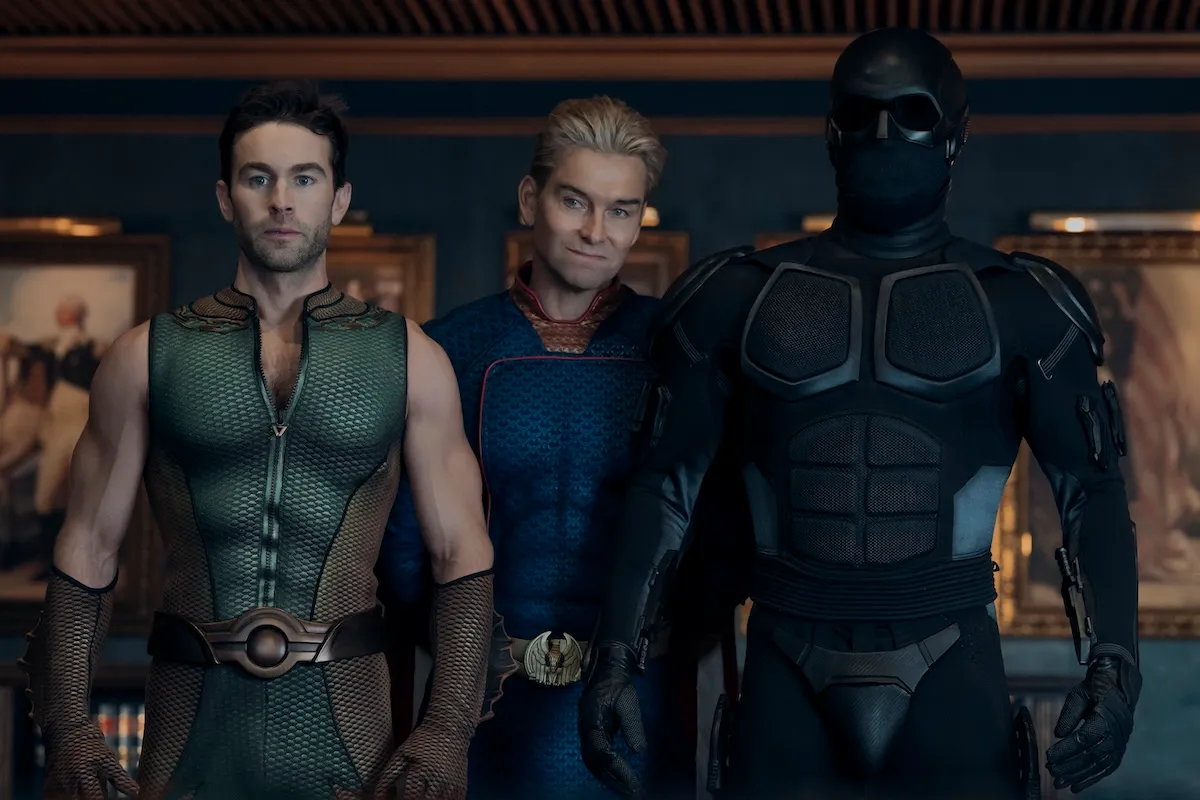
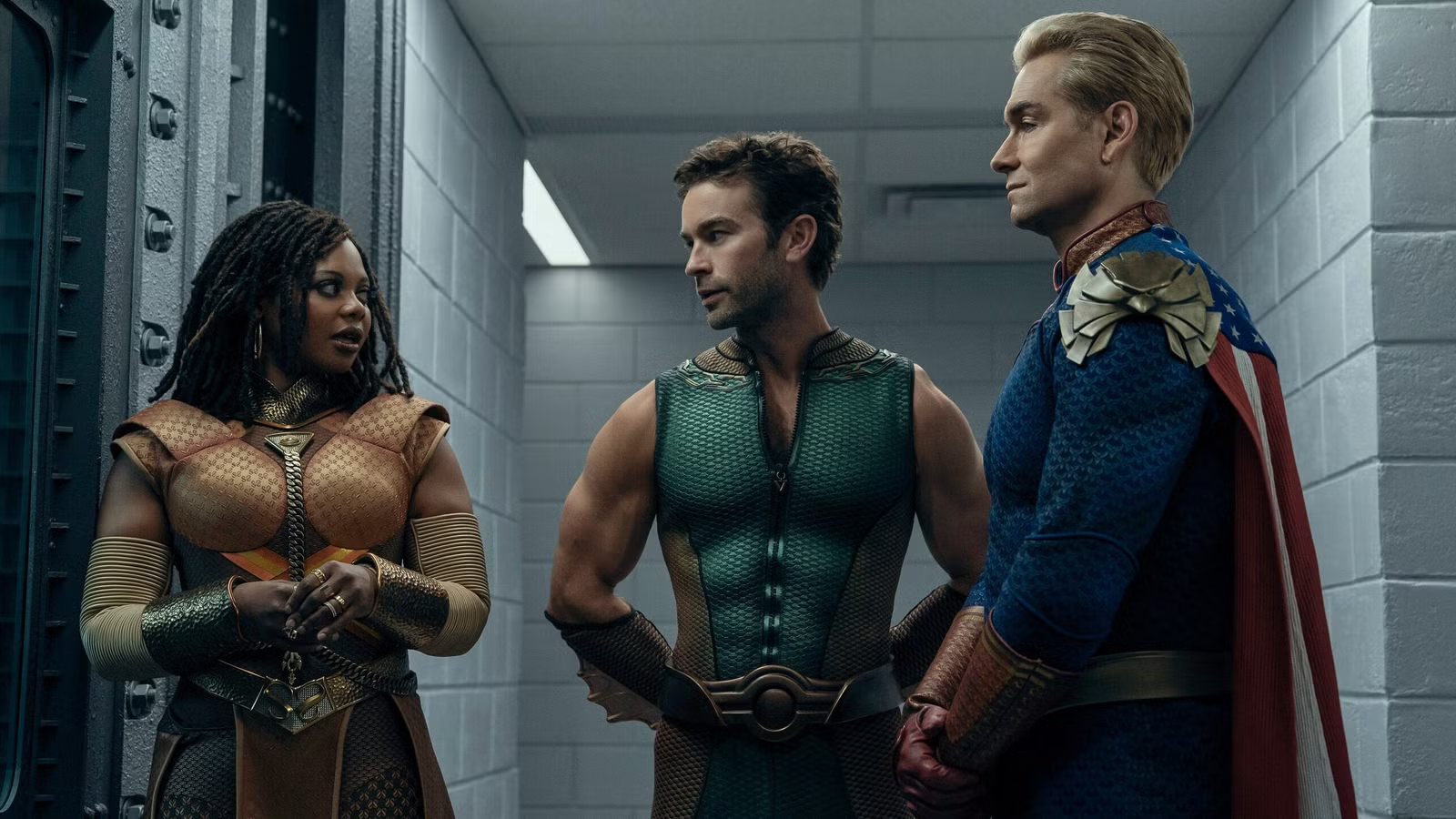
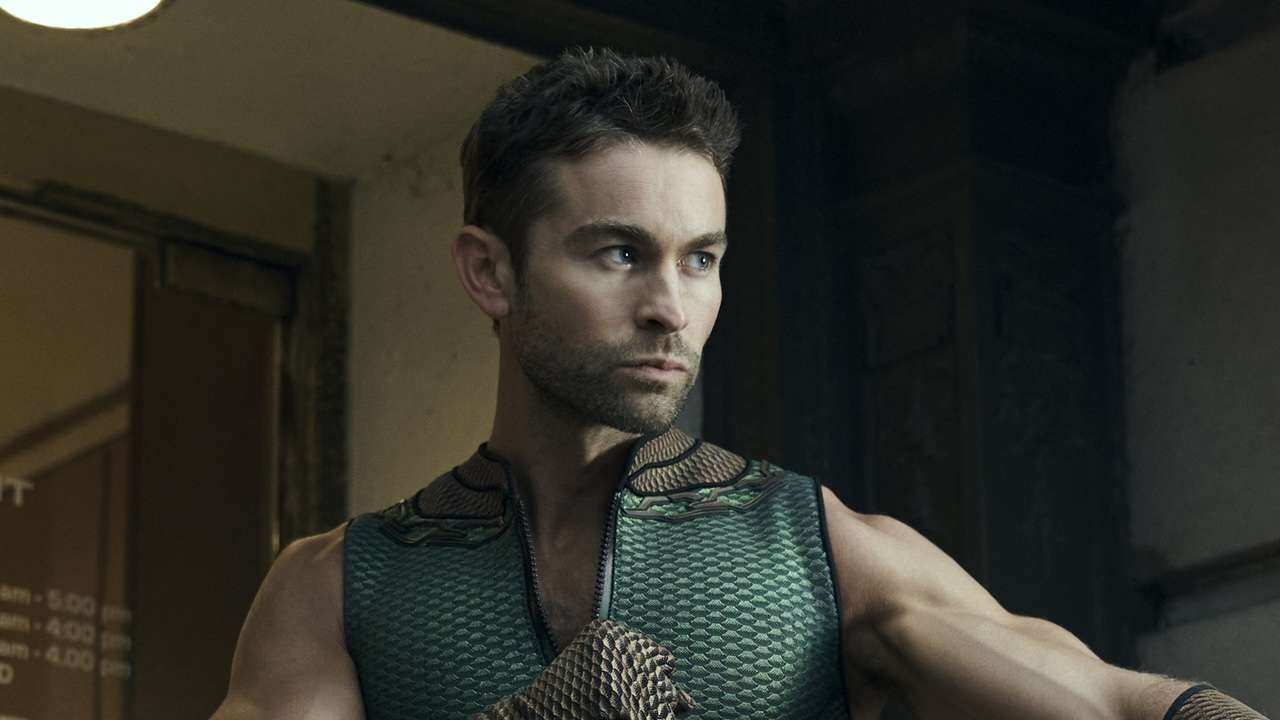
Then there was The Deep, portrayed by Chace Crawford. The show consistently walked a bizarre line with him, balancing pathetic comedy with genuine darkness. The character often served as comic relief, but underneath the absurdity was someone completely hollowed out by insecurity and narcissism. The audience frequently laughed at him while simultaneously recognizing how miserable and broken he truly was. That uncomfortable balance became part of what made the character memorable.
One area where the later seasons felt somewhat underdeveloped was the integration of characters from Gen V. The potential was certainly there. The spin-off introduced several compelling figures and expanded the mythology of the universe in meaningful ways. Yet when the stories began converging, the connection never fully reached the emotional or narrative weight it could have achieved. The crossover elements often felt more functional than organic. It was not damaging to the overall series, but there remained a lingering sense that a larger opportunity was missed.
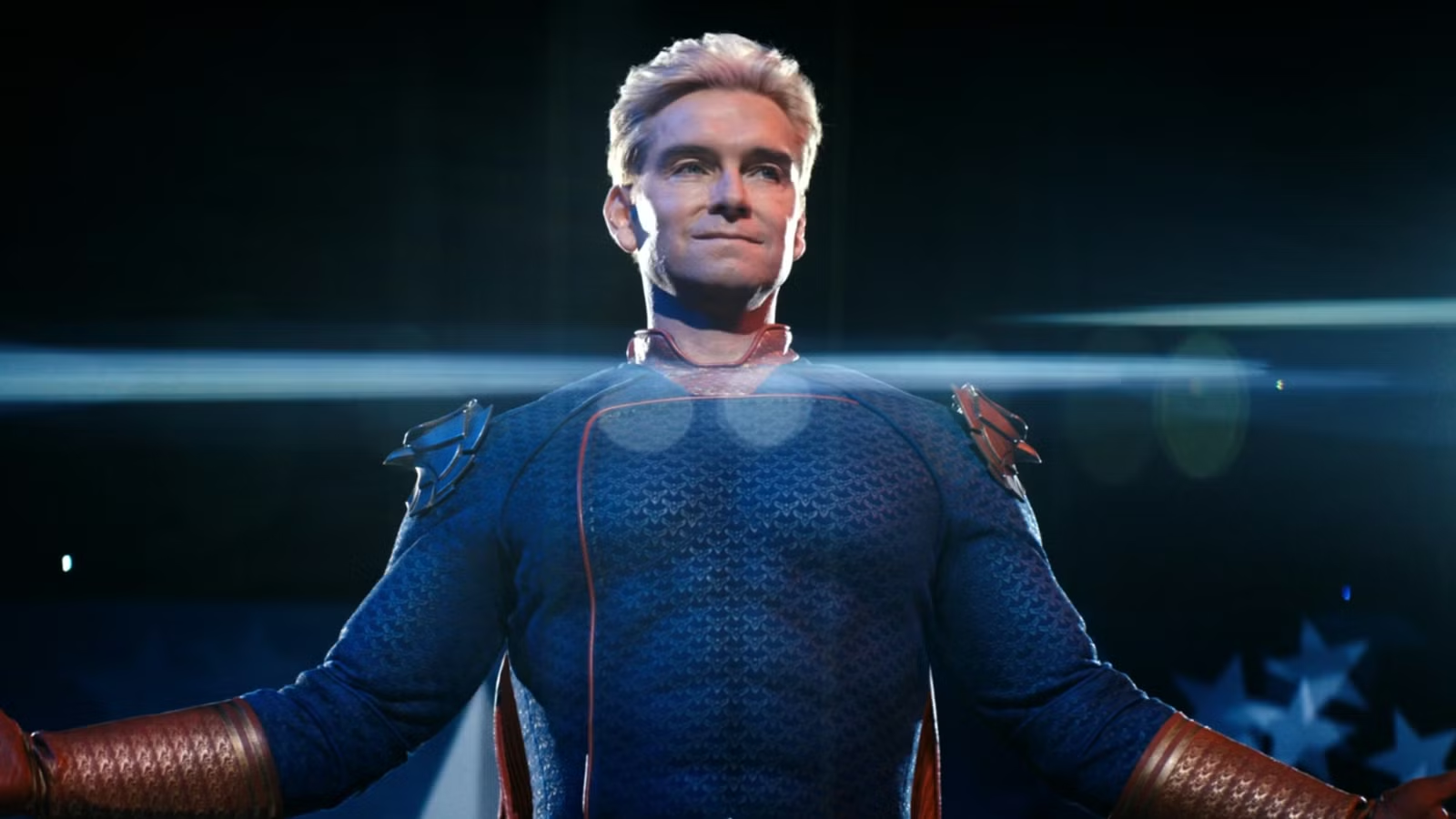
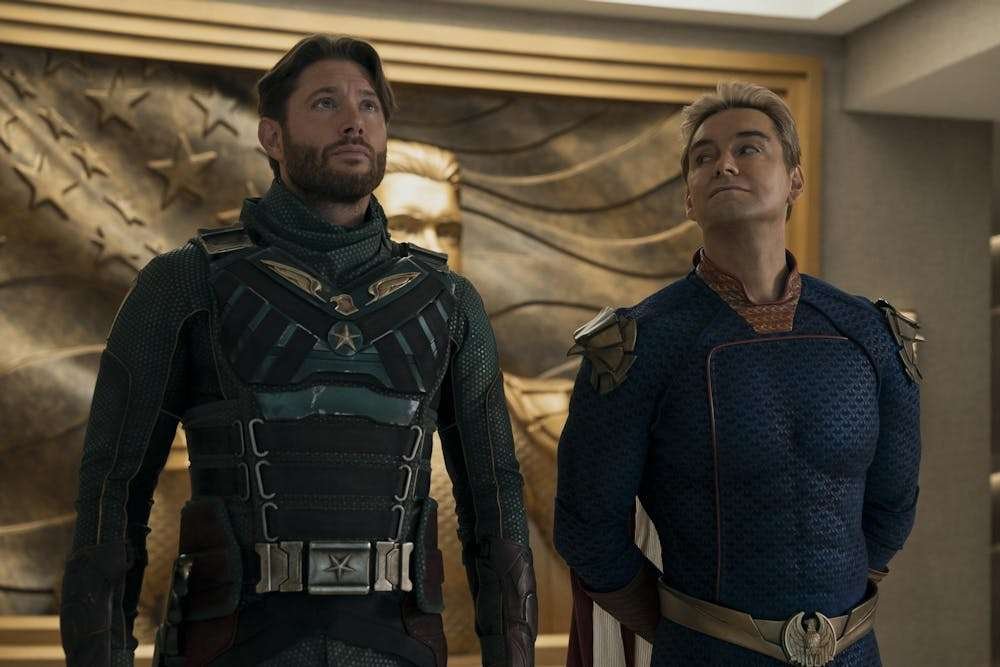
Still, as much as the ensemble mattered, Anthony Starr and Karl Urban were ultimately the engines that powered the show from beginning to end. Homelander and Billy Butcher were not simply protagonist and antagonist. They were mirrors of one another. Both were driven by rage, ego, trauma, and obsession. Both believed the world had fundamentally betrayed them. Both justified horrific actions because they believed the ends mattered more than the means.
Anthony Starr’s performance as Homelander deserves enormous credit for why the series worked as well as it did. The character could have easily become cartoonish, especially given the show’s increasingly extreme situations. Instead, Starr played Homelander with terrifying instability. The most frightening moments were rarely the violent outbursts themselves. It was the silence before them. The slight twitch in his expression. The desperate need for approval hiding beneath absolute narcissism. Homelander was horrifying because he constantly felt one emotional slight away from complete collapse.
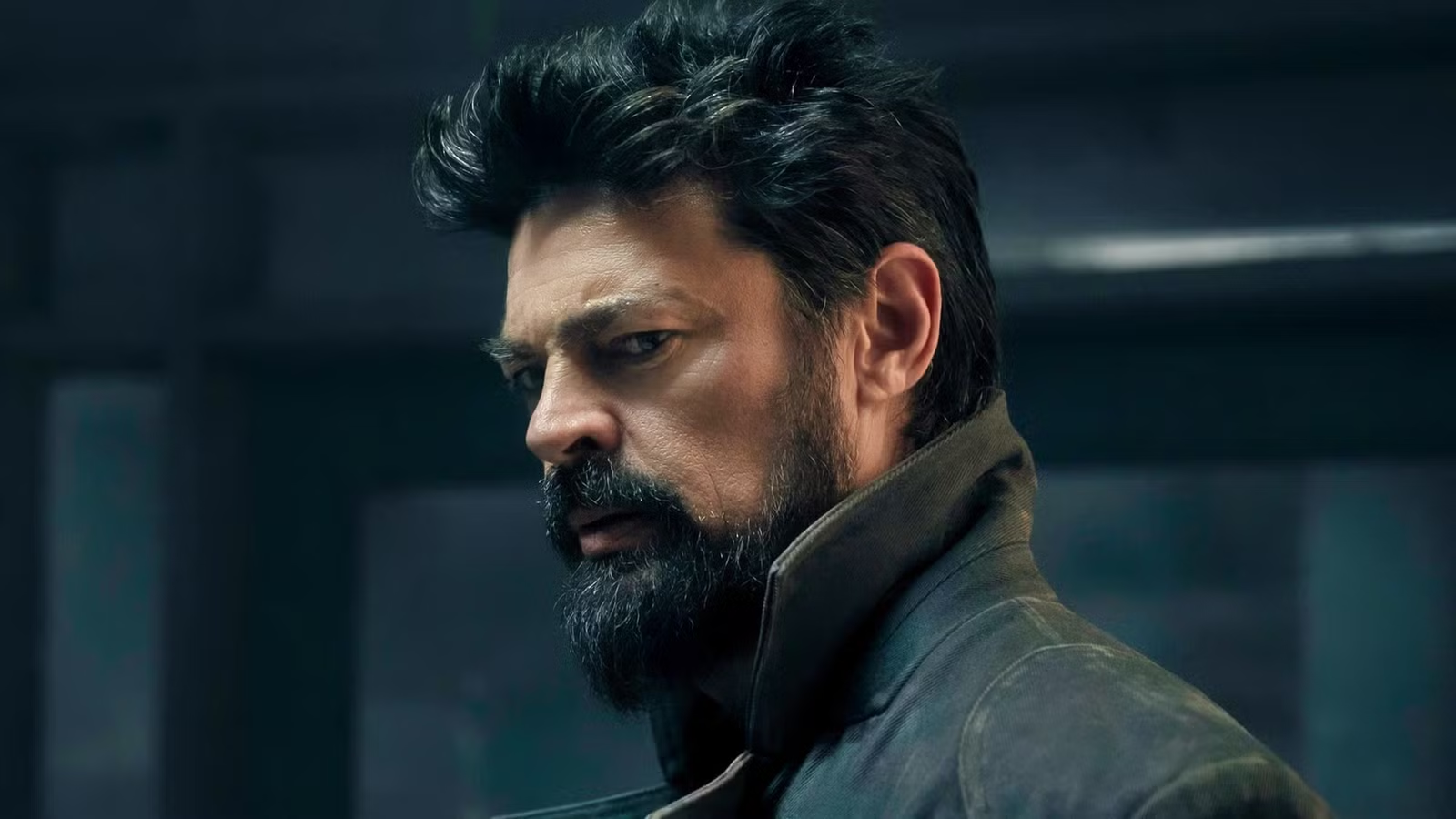
Karl Urban’s Butcher, meanwhile, carried the show’s rage. Profane, manipulative, and self-destructive, Butcher was frequently just as dangerous as the people he hunted. Yet Urban’s performance kept the audience emotionally connected to him even when the character crossed moral lines that should have made him irredeemable. Underneath all the swagger and brutality was a man completely consumed by grief and revenge. The show wisely never tried to clean him up into a traditional hero.
The first three seasons of the series represented the show at its strongest. The storytelling felt focused, the character arcs moved naturally, and the balance between satire, violence, and emotional investment worked remarkably well. The show knew how to surprise viewers without becoming entirely dependent on shock value. There was momentum to the storytelling and a confidence in its pacing.
Season Four showed signs of strain. That does not mean it was bad. Far from it. There were still strong performances, memorable moments, and compelling ideas. But the cracks became more visible. Some plotlines stretched too long. Certain satirical elements became heavier and less subtle. A few characters felt trapped in narrative loops rather than genuinely evolving. This happens to many long-running shows, particularly ones built around escalation. Eventually the challenge becomes finding ways to continue raising stakes without exhausting the audience.
Season Five encounters perhaps the hardest challenge any major television series faces: ending itself. Very few long-running shows manage to conclude in a way that satisfies everyone. Audiences build personal expectations over years. Characters become emotionally owned by viewers in different ways. Some want redemption. Some want punishment. Some want closure while others want ambiguity. Trying to satisfy every expectation usually results in storytelling paralysis.
What makes the ending of The Boys work more often than not is that the show largely resisted the temptation to become pure fan service. The final season occasionally stumbled under the weight of its sprawling mythology, but the last three episodes remembered what made the series compelling in the first place: character journeys. Not spectacle. Not twists. Not internet theories. Character.
SPOILERS AHEAD:
There was never going to be another ending for Butcher. The character was too damaged, too consumed, and too far gone to ride off into the sunset. Any attempt at a clean redemption would have betrayed everything the show established about him. His fate feels tragic, inevitable, and strangely fitting. Butcher was always destroying himself long before the story actually killed him.
Homelander also needed to die, and more importantly, he needed to die pathetically. A glorious or sympathetic ending would have undermined the horror of the character. What made his conclusion satisfying was not simply the violence of it, but the emptiness surrounding it. Homelander spent the entire series demanding worship, love, and fear. To see that power collapse into something humiliating and desperate felt appropriate. The monster did not deserve grandeur.
A-Train’s redemption arc may have been the saddest in the entire show precisely because it felt earned. The character spent years compromising himself, betraying people, and making selfish choices. Even when he attempted to do the right thing, there was always the lingering feeling that he was too late. That tragedy gave his story emotional weight. His fate felt expected, but no less painful because of it.
The Deep receiving exactly what he deserved also felt right. Yet the show cleverly maintained that uncomfortable pity surrounding him almost until the very end. As pathetic and morally bankrupt as he was, there remained something sad about him. That tension between disgust and sympathy became one of the show’s stranger accomplishments.
Frenchie’s ending was heartbreaking, but some level of sacrifice from major characters always felt inevitable. The series consistently established that survival came with consequences. Loss had to matter. Frenchie’s fate hurts because the audience understood how desperately he wanted peace.
Firecracker, played by Valorie Curry, exiting the story in un-spectacular fashion felt almost cathartic. The character was intentionally irritating, manipulative, and exhausting, and the show understood exactly how much viewers would enjoy seeing her finally meet consequences.
Meanwhile, Oh Father, portrayed by Daveed Diggs, was a fascinating late addition who perhaps deserved more screen time than he ultimately received. Even so, his death landed effectively because the character carried such unsettling energy whenever he appeared. And it was somewhat rewarding having a ball gag finally be the method of silencing him!
END OF SPOILERS!
In the end, the greatest accomplishment of The Boys may simply be that it remained willing to take risks all the way through. Whether viewers agreed with every creative decision is almost beside the point. The series consistently chose messy character-driven storytelling over safe crowd-pleasing resolutions. Sometimes that approach led to uneven stretches. Sometimes it frustrated audiences. But it also prevented the show from becoming hollow.
The final seasons may not reach the heights of the first three, but the conclusion still succeeds where many major series fail: it understands its characters. The surviving characters and the dead ones alike arrive at endings that feel emotionally truthful to who they became. Not every storyline ties together perfectly. Not every subplot lands cleanly. But life rarely works that way either.
For all its blood, chaos, vulgarity, and insanity, The Boys ultimately succeeded because it never forgot that the real story was never about superheroes. It was about damaged people trying to hold onto pieces of themselves in a world designed to corrupt them. And by the time the credits finally roll, the show earns the rare privilege of feeling both satisfyingly complete and unapologetically itself.