Holo is a Sci-Fi Short That Shines with Emotional Clarity and Visual Precision
by Jennifer Noonan
From the outset, Holo presents a deceptively simple setup. Claire, played by Morgan Kohan, has lost her partner, Jared (Shane West) and approaches a mysterious corporation called Looking Glass Technologies to undergo a holographic face-to-face session with his digital manifestation. On the other side of the glass is Grey (Zelda Williams), an operator whose job is to orchestrate the encounter. What begins as a confrontation of past trauma quickly turns into a layered exploration of grief, agency, memory, and the blurred lines between technology and reality.
In a short runtime, the film explores both the emotional terrain of abuse and the complexities of technological mediation. It asks what it means to face the ghosts of the past, how people attempt to gain closure, and whether technology offers comfort or simply reopens wounds. The simplicity of the premise hides a story that grows more intricate with every exchange between Claire, Grey, and the holographic projection.
One of the most striking elements of the film is its visual style. The cinematography and production design create a world that feels sleek and cold, yet still charged with emotion. Scenes of Claire sitting in a minimalist waiting area and the glass-walled chamber where the encounter takes place feel carefully composed. The lighting is soft and diffused, highlighting the reflective surfaces of the set. This creates a clean, clinical environment that mirrors the characters’ internal states. Every shot feels deliberate, supporting the storytelling without ever overwhelming it.

The way the filmmakers use glass and light creates both distance and intimacy. The hologram is always there, close enough to feel real, yet separated by a transparent barrier that makes every interaction just slightly unreal. This approach gives the film a distinctive look that draws the viewer in. Rather than relying on elaborate effects or futuristic spectacle, the film builds its science fiction world through atmosphere and careful design.
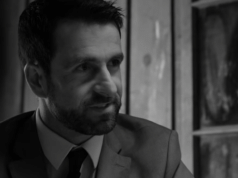
The acting in the film is equally strong. Morgan Kohan gives a layered and deeply emotional performance as Claire. She moves between anger, fear, vulnerability, and a desperate desire for control in a way that feels honest and unforced. Her character is not neatly resolved, and that makes her journey compelling to watch. Zelda Williams, as Grey, provides a steady and calm counterpoint. Her performance hints at the emotional weight carried by someone whose job is to mediate other people’s pain while remaining detached. Shane West manages to bring both charm and menace to the holographic projection of Claire’s partner. His presence gives the scenes real tension, keeping the emotional stakes high.

The story is simple but explores meaningful themes. It considers how people seek closure and whether that closure can ever come from technology. It questions whether confronting a digital projection of someone who hurt you can bring peace or if it simply keeps the wounds open. The hologram, the glass wall, and the carefully structured encounters act as metaphors for memory, trauma, and control.
The script treats these ideas with care and restraint. Instead of spelling everything out, the film allows the performances and visuals to carry the weight. It raises questions about how society might commodify grief and trauma, and about the emotional labor of people like Grey, who act as intermediaries in this imagined future. The story doesn’t linger on the mechanics of the technology but focuses on the human cost behind it.
The climax of the film contains emotional turns that feel earned rather than forced. The direction by Alexander DeSouza keeps the pacing calm and deliberate, allowing silences to stretch and emotions to surface naturally. The film doesn’t rush. Instead, it creates space for reflection, drawing the viewer deeper into Claire’s state of mind.
Technically, the film is impressive. The hologram effects are subtle, blending seamlessly into the set without distracting from the performances. The lighting and sound design work together to maintain a mood of controlled tension. The editing is clean and precise, reinforcing the themes of distance and confrontation. Everything works in harmony, resulting in a film that feels polished and carefully crafted.

The greatest strength of this film is how it combines high production values with an emotional core. Many short science fiction films look good but lack substance. This one does both. It feels like a fully realized world contained within a small, focused story. It suggests a larger universe beyond what we see on screen without losing its intimacy.
As a short film, it also succeeds in feeling complete. It could easily serve as the basis for a larger story, perhaps a series exploring different facets of the same technology, but it stands on its own. It has a beginning, middle, and end that satisfy without overexplaining.
The cast and crew deliver something remarkable in a short runtime. Morgan Kohan’s performance anchors the story. Zelda Williams provides nuance and emotional complexity. Shane West brings the unsettling presence the story requires. Alexander DeSouza’s direction is confident and controlled, making every visual and emotional beat count.
Holo is a rare example of short science fiction that is both visually beautiful and emotionally resonant. It raises interesting questions, tells a meaningful story, and does so with skill and care. For anyone who enjoys science fiction that focuses on human emotion rather than spectacle, this film is worth seeking out.
It is proof that a short film can be powerful, elegant, and moving without needing to rely on grand effects or endless exposition. The strength of the visuals, the sharp performances, and the thoughtful direction make it a standout. This is the kind of film that lingers in your mind long after it ends.
Jennifer’s Score: 9.5/10