
Stray Dog may not offer easy answers or traditional storytelling comforts, but Lai Cheuk Nam’s hypnotic visual poem leaves behind something arguably more valuable: the lingering feeling that we have witnessed the scattered evidence of a world quietly losing its humanity.
Lai Cheuk Nam’s Stray Dog is not a film that unfolds in a traditional sense. It drifts, lingers, observes, and quietly interrogates the viewer through fragmented imagery and philosophical suggestion. At only twenty-one minutes long, the experimental short understands exactly how long it should remain inside the audience’s mind before exhaustion begins to replace fascination. In that sense, Nam demonstrates remarkable restraint. This is not an abstract film that mistakes confusion for depth. Instead, Stray Dog operates as a carefully assembled visual poem, one that asks the viewer to participate in its meaning rather than simply consume it.
The director describes the film as an inquiry into “Necropolitics” and the “State of Exception,” ideas rooted in philosophical discussions about systems of power, discarded lives, and the dehumanizing machinery of modern society. Thankfully, Stray Dog never feels like a lecture. The concepts exist underneath the imagery rather than above it. Nam trusts the audience enough to absorb the feeling first and decipher the ideas later.
The opening sequence immediately establishes this tone. An hourglass sits quietly as dripping sounds echo through the soundtrack, time literally bleeding away one grain at a time. A mysterious figure covered in white blows into a horn-like instrument while stark monochromatic photography transforms the screen into something halfway between dream and evidence. That distinction becomes important because Stray Dog often feels less like watching a story and more like examining a crime scene after civilization has already collapsed.
Nam’s use of the phrase “forensic witness” is perhaps the most compelling way to approach the film. A witness traditionally sees events unfold and interprets them emotionally. A forensic witness studies remains. Details matter more than explanations. Texture matters more than plot. Throughout Stray Dog, the camera behaves exactly this way. It lingers on surfaces, decay, industrial spaces, and physical gestures as though documenting evidence left behind by modern existence itself. Humanity becomes fragmented into traces and rituals. The audience is not asked to empathize in a conventional cinematic sense. Instead, we are asked to observe.
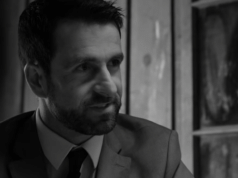
The wandering man at the center of the film becomes the vessel for this observation. Dressed in vaguely militant clothing and carrying a briefcase through isolated urban spaces, he moves like a displaced worker wandering through the ruins of mechanical progress. The handheld camerawork follows him at an uneasy distance, creating the feeling that we are tracking somebody already spiritually disconnected from the world around him. When a train violently interrupts the silence, it feels symbolic of the machinery Nam is protesting against: systems of motion, productivity, and standardization that dwarf the individual.
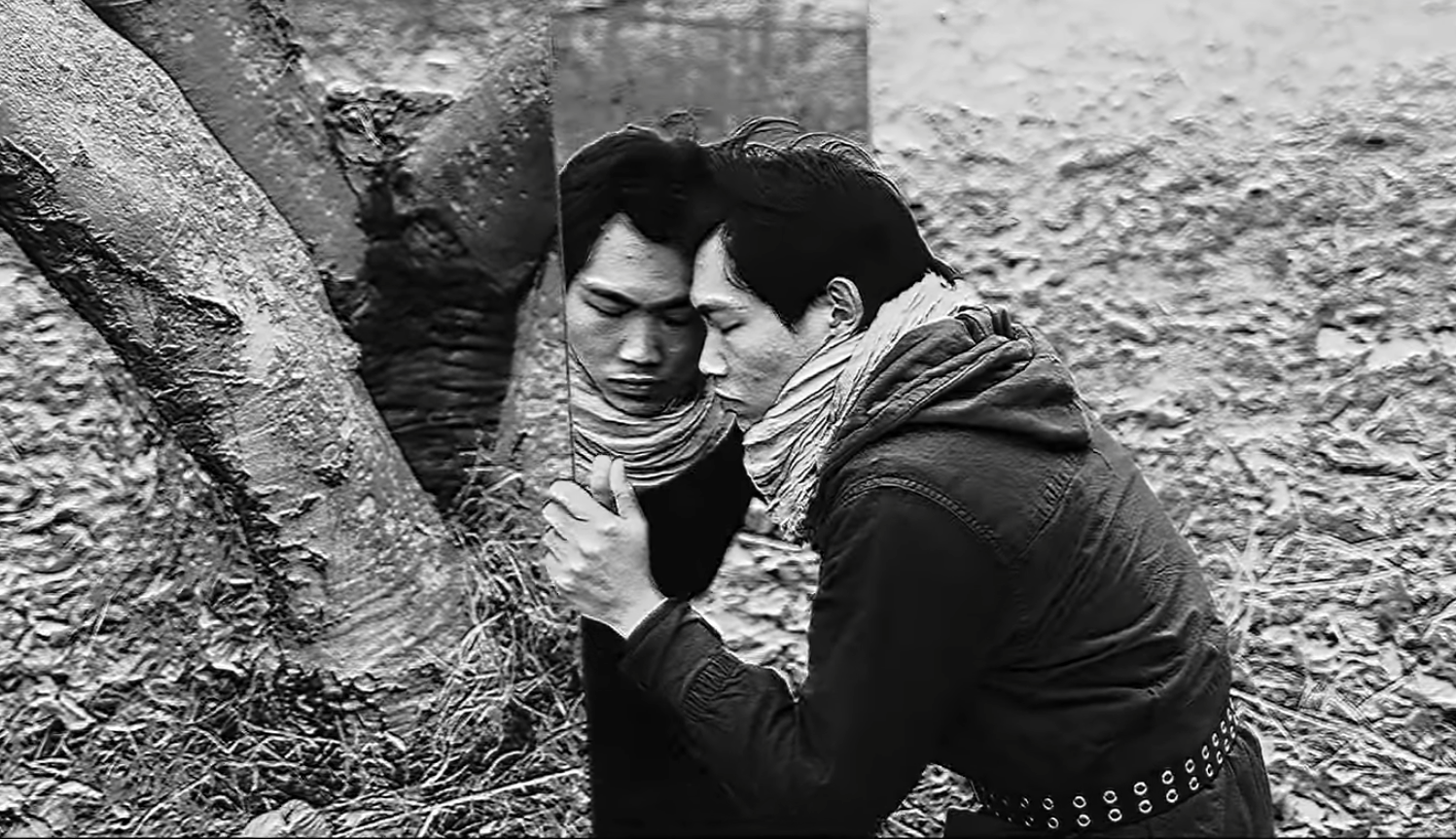
The film’s first movement, culminating with the discovery of the mirror hidden beneath the cloak, is mesmerizing enough to stand entirely on its own. In fact, one could argue that this section functions as a complete short film independently. The imagery is sparse yet loaded with implication. The strange device embedded in the earth, the kneeling gesture, and the touching of the mirror all feel ritualistic without ever becoming fully explainable. Nam wisely refuses to over clarify these moments. The mystery is the point.
What makes the sequence so effective is the total absence of dialogue. Silence dominates the early portion of Stray Dog, forcing the viewer to engage visually rather than verbally. Many experimental films overload themselves with spoken philosophy in an attempt to signal importance. Nam avoids that trap. Here, silence becomes language. The monochromatic imagery, ambient sound design, and deliberate pacing create a hypnotic rhythm that genuinely resembles freeform poetry translated into cinema.
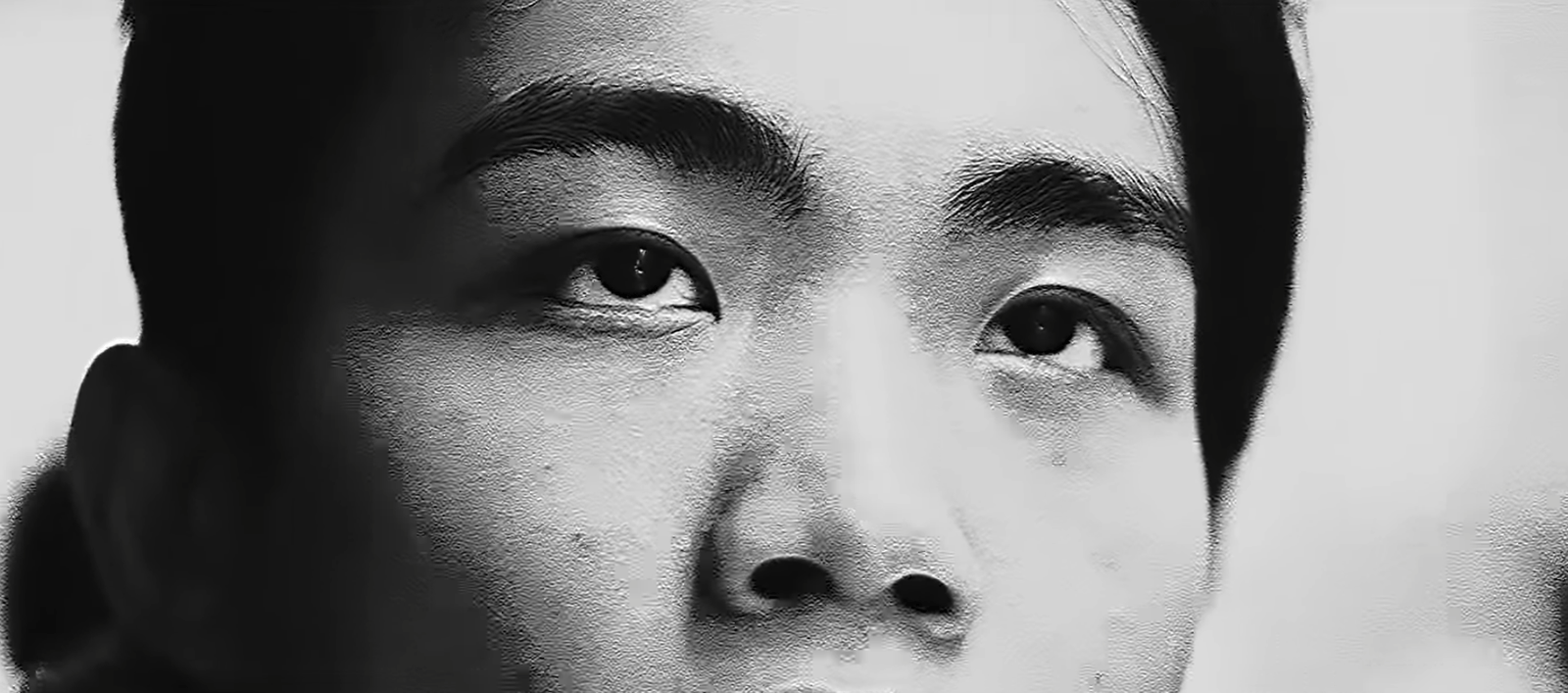
When spoken words finally do emerge later in the film, they land with surprising force precisely because silence has prepared the audience for them. The philosophical monologue delivered in the restroom sequence does not function as exposition. Instead, it feels like an intrusion from another dimension, as though the film itself briefly becomes self-aware. The character asks ancient questions regarding identity, love, and existence, but the answers remain elusive. That ambiguity is essential to Stray Dog’s design. Nam is not interested in solving philosophical problems. He is interested in dramatizing humanity’s endless attempt to solve them.
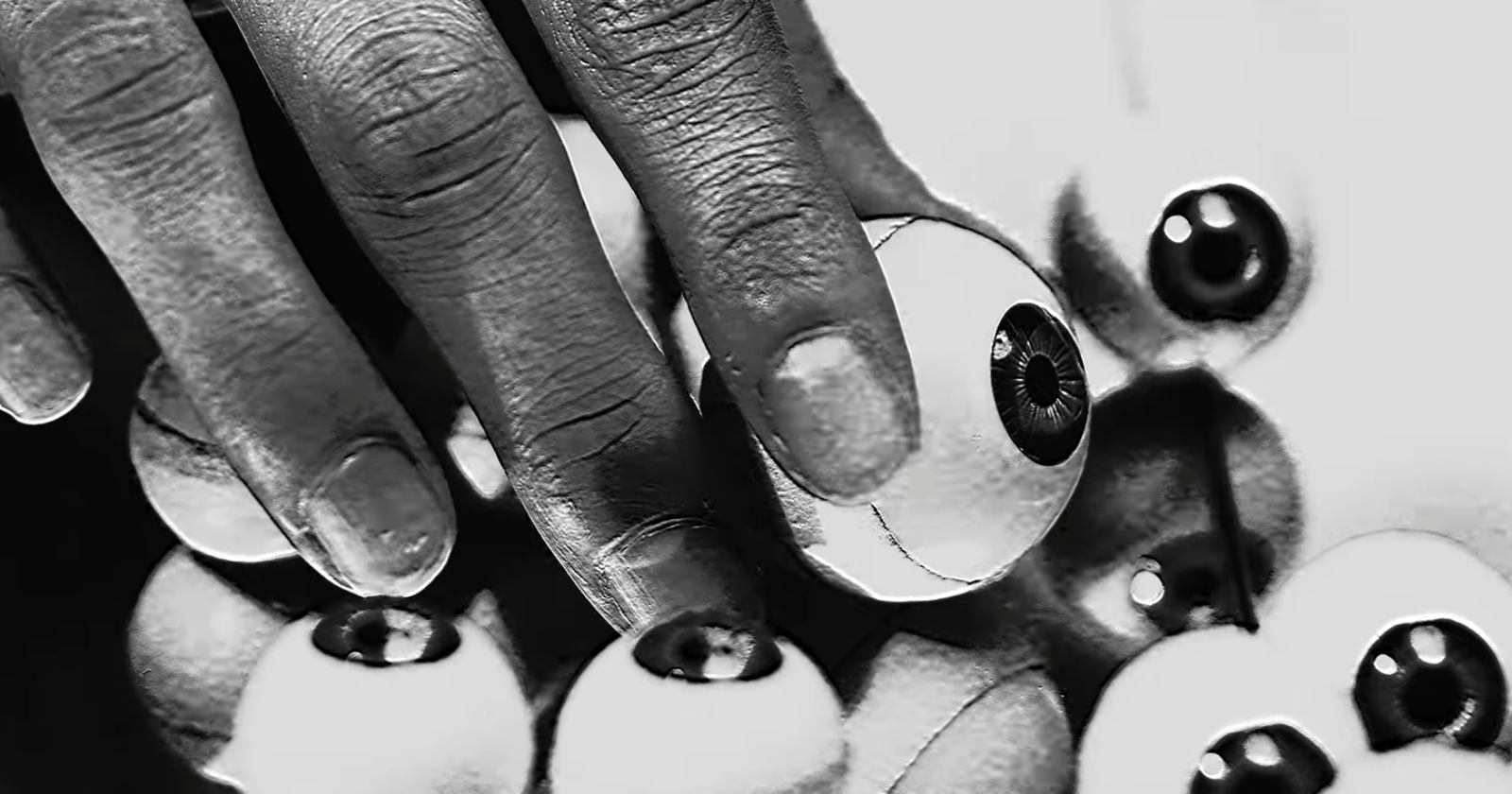
The second portion involving the snail, the eyeball-like dice, and the woman staring directly into the camera initially feels disconnected from the wandering man’s story, yet the emotional and thematic links eventually become apparent. The snail in particular is photographed in a deeply unsettling manner, transformed into something almost grotesque through sound and close-up imagery. It becomes another forensic object under examination, another living thing trapped inside systems larger than itself.
The imagery throughout this section recalls E. Elias Merhige’s Begotten, particularly in the way both films use harsh monochromatic visuals to create philosophical horror. Like Begotten, Stray Dog feels ancient and modern simultaneously, as though excavated from some forgotten cinematic ritual. Yet Nam’s film is less interested in shock and more interested in meditation. The grotesque elements are not there simply to disturb; they are there to force reflection.
Visually, Stray Dog is striking from beginning to end. The high-contrast black-and-white cinematography gives ordinary objects and locations an almost mythological quality. Public restrooms, train tracks, tables, and mirrors become transformed into symbols of decay and existential confusion. The production design and framing are meticulous without appearing artificial. Every image feels intentional.
Most importantly, the film remains compelling throughout its runtime. Experimental cinema often struggles with maintaining engagement once audiences realize traditional storytelling rules no longer apply. Stray Dog avoids that problem because Nam understands rhythm. Even when the meaning remains uncertain, the viewer continues searching for connections between the images. The film invites interpretation rather than resisting it.
Personally, Stray Dog reminded me of long college discussions about philosophy, poetry, and existential literature, the kind of conversations where certainty mattered less than exploration. This is philosophical visual storytelling in its purest form. It is not attempting to entertain in a mainstream sense, but it is trying to communicate something deeply human about alienation, observation, and survival in a mechanized world.
The ultimate question, however, is whether other viewers will connect with it. Experimental cinema always risks alienating audiences who demand concrete answers or conventional structure. Some viewers may find Stray Dog frustratingly abstract. Others may discover themselves unexpectedly absorbed by its haunting imagery and meditative atmosphere.
That uncertainty is part of the film’s power. Like the wandering figure at its center, Stray Dog exists somewhere between observer and participant, poetry and evidence, dream and forensic examination. Whether viewers fully decipher it may not matter nearly as much as whether they feel compelled to keep thinking about it after it ends.
Gordo’s Score: 9/10