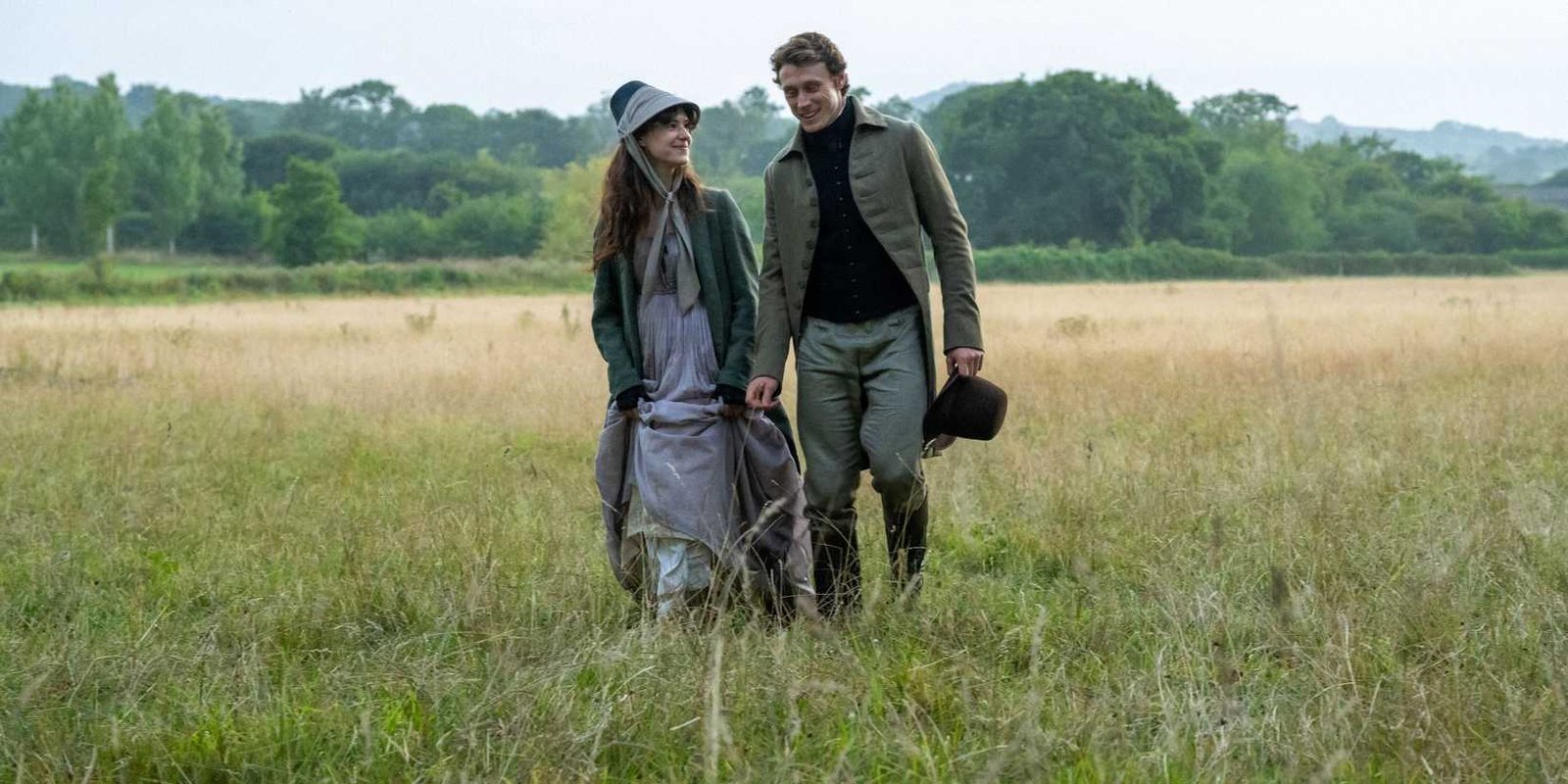
The Dashwood sisters have suitors to consider, a home to replace, and very different ideas about what honesty costs.
The best reason to revisit Sense and Sensibility in 2026 is Jane Austen’s wonderfully unromantic setup: before either Dashwood sister can decide what she wants from love, somebody has to work out what the family can afford.
That’s a case for the adaptation, not yet a verdict on the finished film. Rotten Tomatoes has featured a cast conversation about romance and adapting Austen, but that coverage doesn’t establish what critics or audiences thought of the movie, or where it’s currently playing in the US. Without film-specific reviews and audience responses to draw on, this is a preview of what makes the material promising rather than a judgment on the performances. Fortunately, Austen gives a prospective moviegoer something more interesting to go on than the prospect of another handsome country house. She starts by asking who gets to keep it.
In the novel, the death of Mr. Dashwood leaves his widow and daughters with considerably less security than the comfort of their home might suggest. The estate goes to his son from an earlier marriage. He means to help his stepmother and half sisters, and Austen has wicked fun with what becomes of that intention. In conversation with his wife, he gradually discovers that doing less for his relatives might actually be the thoughtful thing to do. It’s a terrific piece of comedy because nobody has to announce a change of heart. He gets to keep both his money and his good opinion of himself.
For a filmmaker, there’s a useful clue in that conversation. A discussion of an inheritance sounds like the sort of business a screenplay ought to get through quickly so the romance can begin. But each little concession makes the joke better, and each one leaves the Dashwood women with fewer options. Give the exchange room and you get to know two people rather well while the circumstances of four others change. Hurry it along and all you’ve really learned is that the heroines have to move.
It’s tempting to sort the older Dashwood girls by temperament and leave it there. Elinor is the practical one; Marianne would rather say what she feels. But imagine being the sister who has to tell her mother that a perfectly desirable house is beyond their means. Some of what looks like Elinor’s natural caution is a job she’s ended up doing because somebody has to. And Marianne has a fair objection to the sort of politeness her sister practices so well: if good manners let their half brother pass for a generous man, why set so much store by them?
That disagreement is where the acting challenge gets interesting. Elinor needs to be readable to the audience without being quite so readable to the people who depend on her composure. Marianne presents the reverse problem. Everybody knows when she’s delighted or disappointed, which can make it easy to overlook the intelligence behind her enthusiasms. Her pleasure in finding someone who shares her taste in books and music makes perfectly good sense. The question is how much that tells her about what the man will do when being agreeable costs him something. You don’t need a working knowledge of Regency courtship to recognize that particular dating problem.
Ang Lee’s 1995 film offers a useful point of comparison in Emma Thompson’s Elinor. Part of the pleasure of that performance is seeing how much attention Elinor pays to everyone else. It gives her reserve an object: she’s busy figuring out what another person needs, even when it would be a relief to talk about herself. A new interpretation needn’t imitate Thompson’s delivery to find something equally revealing. Who notices Elinor doing that work? Who takes it for granted? Where the camera looks after someone finishes speaking can matter as much as the speech.
The occupational hazard of adapting Austen is that practically everything in the room is liable to be lovely. A cottage that represents a serious loss of standing for the Dashwoods might look like a splendid place to spend a vacation. The trick isn’t to make it ugly. It’s to keep track of who chose to live there, who can afford to visit on a whim, and who has to be grateful for a lift home. Those distinctions give the flirting a little bite. They also make a sister who remembers the cost of keeping a horse surprisingly good company in a love story.
If you’re deciding whether to keep the 2026 Sense and Sensibility on your watchlist, the useful question isn’t whether you loved the 1995 movie. It’s whether you like a romance in which the person who best understands a heroine might be sitting beside her after the gentleman leaves. For viewers drawn to that kind of intimacy, the adaptation is worth keeping an eye on. No Austen homework required; just spare a thought for the sister who has to balance the books.